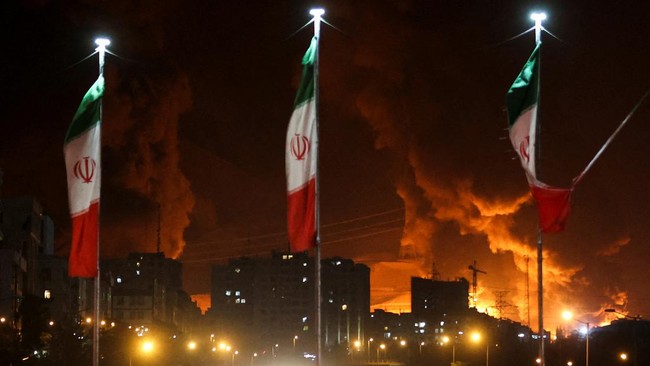
France Condemns US-Israel Strikes on Iran as Illegal, Calls for De-escalation
Paris has sharply criticized recent military actions taken by the United States and Israel against targets within Iran, asserting that the strikes violate international law and lack a clear strategic objective. The rebuke, delivered by French Foreign Minister Jean-Noel Barrot, signals a significant divergence in approach between France and its key allies regarding the escalating tensions in the Middle East. This stance underscores France’s commitment to a diplomatic resolution and its concerns about the potential for wider regional conflict.
Speaking in an interview with France 2 television on Tuesday, March 11, 2026, Barrot stated unequivocally that France does not approve of the military actions. He emphasized that the strikes were conducted without a solid legal basis and failed to articulate a transparent strategic goal. “France cannot approve of the attacks by US and Israeli forces in Iran given that these attacks were carried out outside of international law and without a clearly defined objective,” Barrot said, as reported by Anadolu Agency. This position reflects a growing concern within the French government about the potential ramifications of escalating military engagement in the region.
The French Foreign Minister further elaborated that, from Paris’s perspective, the series of attacks lacked measurable strategic targets, and the unilateral actions did not meet globally recognized legal standards for resolving interstate conflicts. This assessment highlights France’s adherence to a rules-based international order and its skepticism towards actions perceived as potentially destabilizing. France’s position is particularly noteworthy given its close security and diplomatic ties with both the United States and Israel.
France Maintains Distance from Conflict, Seeks De-escalation
Alongside its condemnation of the strikes, France has firmly stated its intention to remain distanced from the armed conflict unfolding in the Middle East. Barrot affirmed that French military forces would not be drawn into operations led by Washington and Tel Aviv. “We do not approve of this war, and we are not participating in it,” he stated, reinforcing France’s commitment to avoiding direct military involvement. This decision aligns with France’s long-standing policy of prioritizing diplomatic solutions and avoiding entanglement in regional conflicts.
Despite its criticism of its allies, France continues to urge for immediate de-escalation in the region to prevent a broader conflict. Barrot specifically called on Tehran to alter its regional policies, which many parties view as provocative. “We hope that Iran will break away from its status as a destabilizing and dangerous force,” he added. This call for a change in Iranian behavior reflects a broader international effort to address concerns about Iran’s regional influence and its support for proxy groups.
According to Barrot, lasting peace in the Middle East can only be achieved if Iran demonstrates a fundamental shift in its diplomatic approach, including a willingness to make significant compromises at the negotiating table. This sentiment underscores the belief that a political solution, rather than military force, is the only viable path towards long-term stability in the region. France has consistently advocated for a comprehensive approach to the Middle East, encompassing political, economic, and security dimensions.
Securing the Strait of Hormuz: France Seeks International Support
In a parallel effort, France is actively rallying international support to safeguard the vital trade route of the Strait of Hormuz. Barrot revealed that several nations have expressed interest in joining an international defense mission aimed at securing maritime oil shipments through the strategically important waterway. “Potential participants include a number of European countries, but likewise countries in the region,” he explained, referencing an initiative previously floated by President Emmanuel Macron. The Strait of Hormuz is a critical chokepoint for global oil supplies, and its security is paramount to maintaining global energy markets.
This initiative comes in the wake of escalating tensions following the joint US-Israel large-scale air strikes, dubbed “Operation Epic Fury,” on February 28, 2026. Reports indicate that these strikes resulted in over 1,200 fatalities and at least 10,000 injuries on the Iranian side. The scale of the attacks underscores the severity of the current crisis and the potential for further escalation.
In response, Iran launched retaliatory waves of drone and missile attacks targeting locations in Israel, Jordan, Iraq, and Gulf states hosting US military assets. This reciprocal action has significantly heightened the risk of a wider regional war, prompting international calls for restraint and de-escalation. The exchange of attacks demonstrates the volatile nature of the situation and the potential for miscalculation to lead to a full-scale conflict.
Macron’s View on Regime Change in Iran
President Emmanuel Macron has also weighed in on the possibility of regime change in Iran, stating that significant changes in the country’s leadership cannot be achieved “simply through bombardment.” Speaking from aboard the French aircraft carrier Charles de Gaulle in the Mediterranean Sea on March 9, 2026, Macron cautioned that the ongoing conflict could persist for “several weeks,” according to Al Arabiya. This statement reflects a pragmatic assessment of the situation and a recognition that military force alone is unlikely to resolve the underlying political issues in Iran.
Macron emphasized that France and its allies are preparing a “defensive” mission to reopen the strategically vital Strait of Hormuz. He explained that the mission aims to escort container ships and tankers, gradually allowing the strait to reopen “after the end of the hottest phase of the conflict.” This initiative underscores France’s commitment to protecting international trade and ensuring the stability of global energy supplies. “This proves important for international trade, but also for the flow of gas and oil, which must be able to leave the region again,” Macron stated during a visit to Cyprus to discuss regional security.
The current escalation represents a critical juncture in Middle Eastern geopolitics, with potentially far-reaching consequences for regional and global stability. France’s position, advocating for de-escalation, diplomatic solutions, and the protection of vital trade routes, reflects its commitment to a multilateral approach to international security. The coming weeks will be crucial in determining whether a path towards de-escalation can be found, or whether the region will be plunged into a wider and more protracted conflict.
As the situation remains fluid, international observers will be closely watching for further developments and assessing the potential for a negotiated settlement. The next key event to watch will be the upcoming emergency session of the United Nations Security Council scheduled for March 15, 2026, where the international community will attempt to forge a unified response to the crisis. Readers are encouraged to share their thoughts and perspectives on this evolving situation in the comments below.
Worth a look