
In a decisive move to reshape the landscape of French centrist politics, Gabriel Attal is preparing to present a series of “new proposals” aimed at stabilizing and unifying the country’s central political bloc. The former Prime Minister, a prominent figure within the Renaissance party, is expected to advocate for a structural overhaul of how the centrist coalition operates, most notably through the introduction of a formalized “primary calendar.”
The announcement comes at a critical juncture for France, as the political establishment grapples with the aftermath of the recent legislative elections that left the National Assembly deeply fragmented. For the centrist coalition—often referred to as the “central bloc” or “Ensemble”—the challenge is no longer just about governance, but about survival and the prevention of further splintering among its constituent parts.
According to recent reports from within the Renaissance party, these proposals are intended to provide a clearer roadmap for the coalition’s future, ensuring that the various factions under the Macronist umbrella can coordinate their efforts more effectively. The centerpiece of this strategy, the proposed primary system, seeks to inject a sense of democratic legitimacy and internal order into a movement that has faced increasing criticism for being top-down and disconnected from its grassroots.
Navigating the Post-Election Fragmentation
The necessity for Attal’s intervention is underscored by the current state of the French National Assembly. Following the snap elections held in the summer of 2024, the traditional dominance of the centrist bloc was significantly curtailed. The rise of both the left-wing New Popular Front (NFP) and the far-right National Rally (RN) has created a tri-polar political environment where no single group holds an absolute mandate.
This fragmentation has made the task of legislative maneuvering increasingly complex. For the centrist allies—including Renaissance, MoDem, and Horizons—the lack of a unified strategy has occasionally led to internal friction and a perceived inability to act as a cohesive force against the opposition. Attal’s mission is to bridge these gaps, moving the central bloc from a loose collection of interests toward a more disciplined political entity.
Political analysts suggest that the “new proposals” will likely touch upon several key areas: resource allocation among coalition partners, a shared policy platform to prevent ideological drift, and, most importantly, a standardized method for candidate selection. By addressing these structural weaknesses, Attal aims to transform the central bloc into a more formidable and predictable partner in the French parliamentary system.
The ‘Primary Calendar’ Concept: A Bid for Legitimacy?
Perhaps the most significant and potentially controversial element of Attal’s plan is the introduction of a “calendrier de primaire”—a primary election calendar. In the context of French politics, where candidate selection has traditionally been managed by party leadership, the move toward a primary system represents a significant shift in political culture.
The proposal suggests a structured timeline during which members of the centrist coalition would participate in internal elections to select candidates for future local and national contests. This approach is designed to achieve several strategic objectives:
- Internal Cohesion: By establishing a clear, predictable schedule for candidate selection, the coalition can avoid last-minute infighting and “spoiler” candidates from within the same ideological camp.
- Democratic Legitimacy: A primary system allows rank-and-file members of Renaissance and its allies to feel a greater sense of ownership over the movement, potentially revitalizing a base that has felt sidelined by executive decision-making.
- Countering Populism: By institutionalizing a form of internal competition, the centrist bloc may be able to present a more dynamic and responsive image to an electorate that is increasingly drawn to the populist rhetoric of the far-right and far-left.
However, the implementation of such a calendar is not without risk. Critics within the centrist movement argue that a primary system could exacerbate divisions if the results do not align with the strategic interests of the party leadership. There is also the concern that a highly publicized primary could drain political capital and resources that would be better spent on broader electoral campaigns.
Strengthening the Renaissance Core
As a key architect of the current centrist movement, Gabriel Attal’s influence within the Renaissance party remains substantial. Despite stepping down from the premiership, his ability to mobilize party members and influence the direction of the “Ensemble” coalition makes him a central figure in the maneuvering for France’s political future.
The Renaissance party, which serves as the backbone of the central bloc, is currently in a period of introspection. The party must balance the need for ideological clarity with the pragmatic requirements of maintaining a broad coalition. Attal’s proposals are seen as a way to provide that clarity without alienating the smaller, crucial allies that make the centrist majority possible.
The role of the Renaissance Secretary-General will be pivotal in translating Attal’s vision into actionable party policy. The upcoming months will determine whether these proposals are adopted as a formal strategy or if they remain mere suggestions in a period of intense political volatility. The success of these measures will likely dictate whether the centrist bloc can reclaim its role as the stabilizing force in French politics.
The Broader Impact on French Governance
The implications of Attal’s potential reforms extend far beyond the internal mechanics of the Renaissance party. The stability of the French government and its ability to pass significant legislation—ranging from economic reforms to social policy—depend heavily on the cohesion of the central bloc.
If Attal succeeds in creating a more unified and disciplined centrist front, it could lead to a more stable parliamentary environment, even in the absence of an absolute majority. A cohesive center would be better positioned to negotiate with other factions, potentially forming more enduring working majorities to tackle the country’s pressing challenges, such as fiscal management and European integration.
Conversely, if the proposals fail to gain traction or lead to further internal conflict, the central bloc may face continued fragmentation. This would likely deepen the political paralysis currently affecting the National Assembly, making it even more demanding for the French government to respond effectively to domestic and international crises.
Key Takeaways: Attal’s Strategic Pivot
- Strategic Goal: Gabriel Attal aims to unify the “central bloc” (Renaissance, MoDem, Horizons) to prevent political fragmentation.
- The Primary Model: A proposed “primary calendar” would introduce internal elections for candidate selection to boost legitimacy and cohesion.
- Political Context: The move is a direct response to the fractured National Assembly following the 2024 legislative elections.
- Core Objective: To transition the centrist movement from a loose coalition into a more disciplined and organized political force.
- Potential Risks: Internal resistance to primary systems and the risk of deepening ideological divides within the coalition.
As the French political landscape continues to evolve, the attention of both domestic and international observers will remain fixed on the Renaissance party’s next steps. The ability of Gabriel Attal to implement these “new proposals” will be a litmus test for the resilience of Macronism in a post-absolute-majority era.
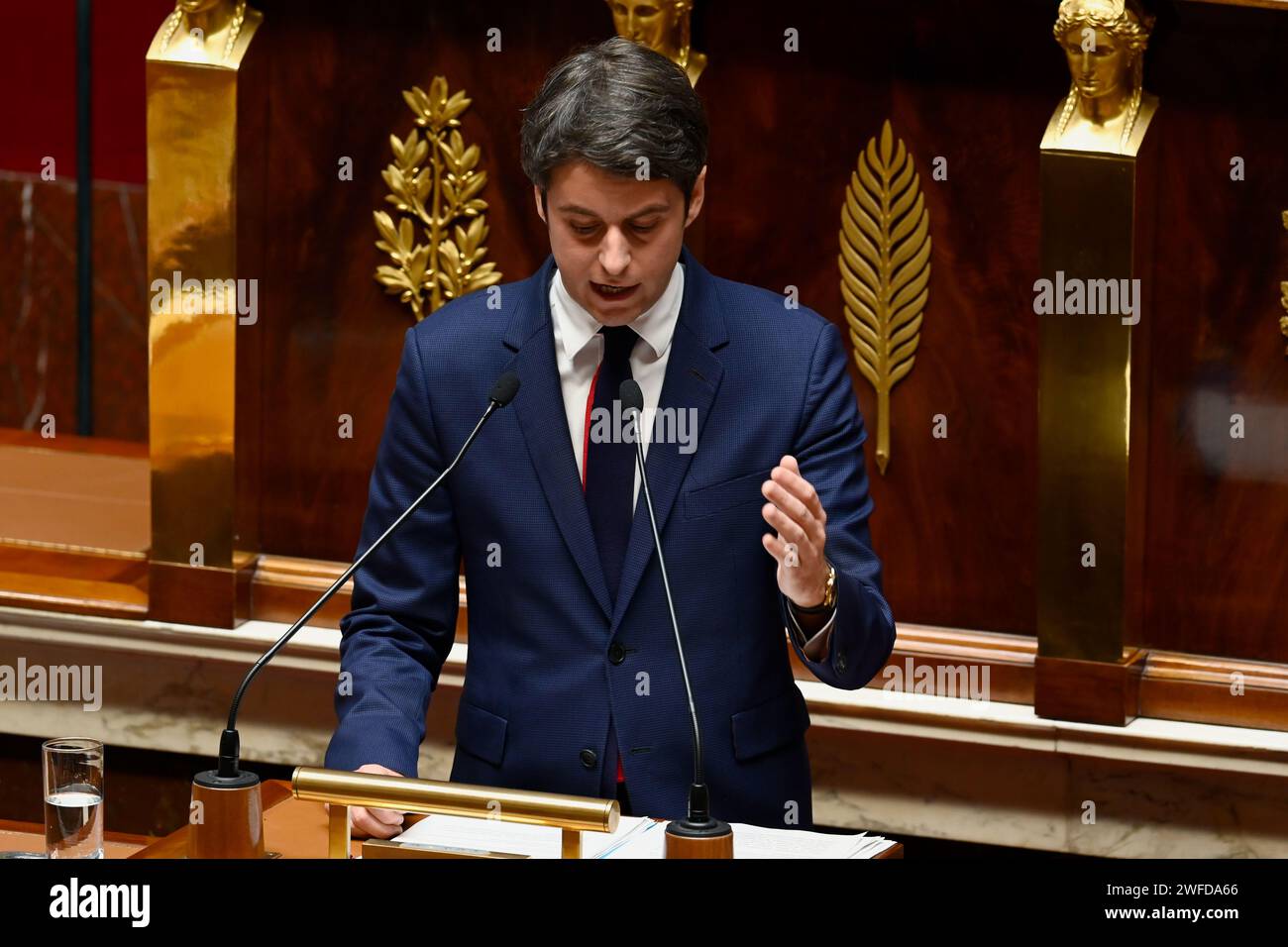
Next Checkpoint: The official presentation of these proposals to the Renaissance leadership and the subsequent reaction from coalition partners is expected in the coming weeks. We will continue to monitor official party communications and legislative developments for further updates.
What do you think about the proposal for a primary system in French politics? Can it provide the stability the centrist bloc needs, or will it cause more division? Let us know your thoughts in the comments below and share this article with your network.
Keep reading
- Medicare Part D Premiums May Rise in 2027 as Federal Subsidies End
- Heroic Rescue After Severe Head-On Collision Near Hurbanovo, Slovakia
- Trump Unveils $22.5 Billion Plan to Overhaul Dulles Airport Facilities (time.news)
- Montana Department of Justice Unveils New PSAs to Address State’s Missing Persons Cases (news-usa.today)