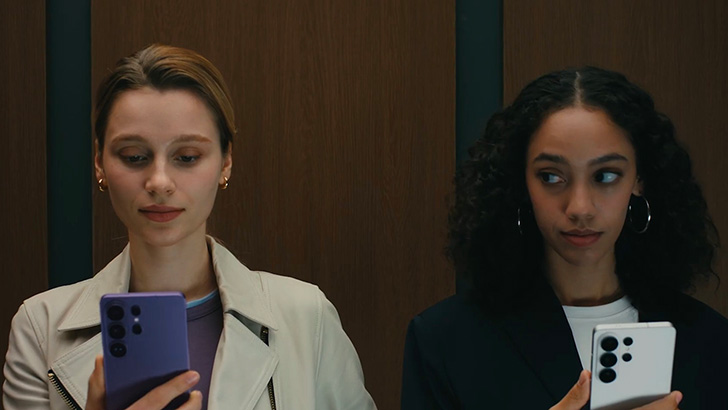
Samsung’s Galaxy S26 series has introduced a significant advancement in mobile privacy technology with the world’s first built-in Privacy Display, designed to protect sensitive on-screen content from prying eyes in public spaces. This hardware-level solution uses Flex Magic Pixel technology to control light emission, making the screen nearly unreadable from side angles while maintaining clear visibility for the user directly in front of the device. The feature addresses growing concerns about visual privacy in an era where smartphones are constantly used for personal communications, financial transactions, and confidential operate in shared environments like public transportation, cafes, and offices.
Beyond privacy protection, the Galaxy S26 series integrates advanced artificial intelligence capabilities under the Galaxy AI umbrella, enhancing user experience across photography, productivity, and daily device interactions. Features such as Nightography enable high-quality low-light photo and video capture by leveraging the device’s most advanced processor and brightest sensor technology, while Photo Assist uses AI to naturally enhance images by adding objects, restoring details, reframing shots, or applying styles that blend seamlessly with the original content. These tools are positioned not as gimmicks but as practical aids that empower users to achieve professional-level results without requiring specialized skills.
The Privacy Display feature can be activated quickly through the device’s Quick Panel by swiping down from the top of the screen and tapping the Privacy display icon, then toggling the feature on. Once enabled, users can switch it on or off as needed depending on their environment and sensitivity of displayed content. This on-demand functionality ensures that privacy protection does not compromise usability in private settings where full screen visibility is preferred, such as at home or in secure workspaces.
Samsung positions these innovations as particularly relevant for modern users who navigate digital life with heightened awareness of personal data security. The company emphasizes that the technology is not merely about preventing shoulder surfing but about enabling confident device usage in any setting without self-consciousness about nearby observers. This approach aligns with broader industry trends where privacy is increasingly viewed as a core design consideration rather than an afterthought, especially as mobile devices store ever more sensitive personal and professional information.
The integration of Privacy Display directly into the hardware—rather than relying on software-based solutions or external screen protectors—represents a notable engineering achievement. By embedding the privacy function at the display level, Samsung avoids the brightness loss, touch sensitivity issues, or application compatibility problems sometimes associated with third-party privacy filters. This hardware integration also means the feature works consistently across all applications and operating system functions without requiring special permissions or configurations.
For users interested in maximizing their device’s photographic capabilities, especially in challenging lighting conditions, the Galaxy S26 Ultra’s Nightography system has been highlighted in user guides and community tips for capturing clear, detailed footage during events such as concerts. Specific recommendations include using Pro Video mode to manually adjust exposure and focus, stabilizing the device against the body or using a grip to reduce shake, and leveraging the AI-powered stabilization to maintain smooth footage even in dynamic environments. These techniques allow fans to record high-quality fancams of performances like BTS concerts without needing professional equipment.
Photo Assist further extends the creative potential of the Galaxy S26 series by enabling users to modify images in ways that previously required desktop editing software. Whether restoring faded details in old photographs, changing the composition of a shot after it’s taken, or adding contextual elements that weren’t present in the original frame, the AI processes these edits to maintain visual coherence and natural appearance. This capability supports both casual users looking to improve personal photos and content creators seeking efficient workflows for social media or professional projects.
The combination of hardware-based privacy protection and intelligent software features reflects Samsung’s broader strategy of addressing real-world user concerns through meaningful technological integration. Rather than pursuing specifications for their own sake, the company focuses on solving tangible problems—such as maintaining confidentiality in public spaces or capturing meaningful moments in low light—through innovations that are both advanced and accessible. This user-centric approach aims to build trust by demonstrating how technology can enhance daily life while respecting fundamental needs for security and privacy.
As mobile devices continue to serve as central hubs for personal identity, financial activity, and professional work, features like Privacy Display and Galaxy AI represent evolving expectations for what smartphones should offer. Users increasingly seek not just powerful hardware, but thoughtful design that anticipates and mitigates risks associated with constant connectivity and data exposure. Samsung’s implementation in the Galaxy S26 series provides a verified example of how these principles can be translated into tangible, user-controlled features that enhance both security and usability without compromise.
For official guidance on using Privacy Display and other Galaxy S26 features, users can refer to Samsung’s support documentation, which provides step-by-step instructions for activation and customization. The company maintains updated resources on its website to ensure users can fully utilize their device’s capabilities as software updates and new functionalities are released over time.
To stay informed about the latest developments in mobile privacy technology and AI-enhanced smartphone features, readers are encouraged to follow trusted technology news sources and official manufacturer announcements. Sharing experiences and tips about using features like Privacy Display in real-world scenarios helps build community knowledge about how these technologies can be best utilized to meet individual needs for privacy, creativity, and confidence in digital life.