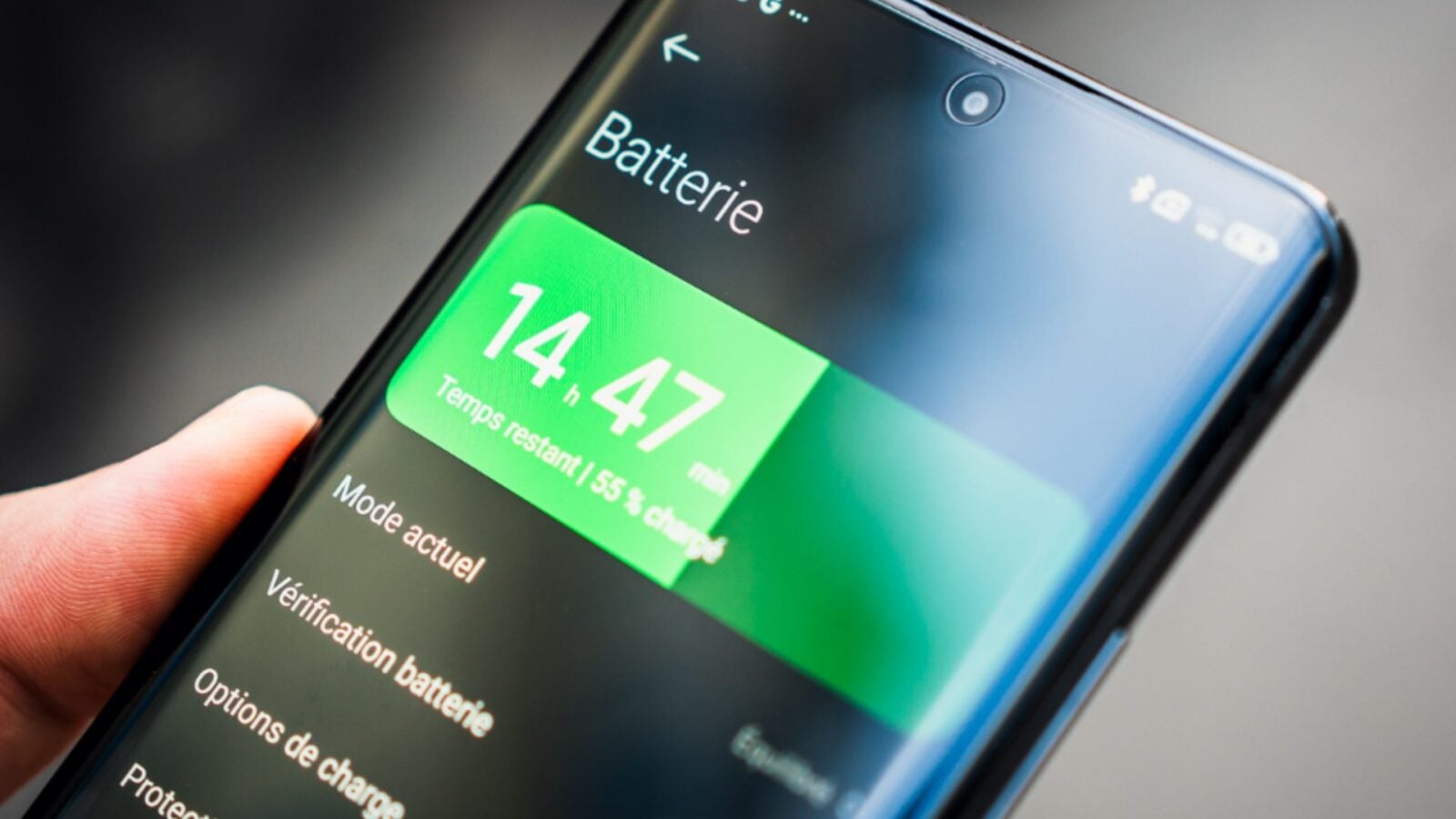
For years, Samsung has maintained a remarkably consistent, if somewhat stagnant, approach to the power cells in its most premium devices. From the S20 Ultra through the recently released S26 Ultra, the company has largely adhered to a 5,000mAh battery ceiling, leaving the burden of improving endurance almost entirely to processor efficiency and software optimization. However, emerging industry reports suggest that the Galaxy S27 Ultra battery may finally break this long-standing plateau.
The shift is expected to come not through a simple increase in physical size, but through a fundamental change in chemistry. Rumors within the supply chain indicate that Samsung is preparing to transition from traditional lithium-ion cells to silicon-carbon battery technology for its 2027 flagship. This move would signal a pivot toward higher energy density, potentially allowing the device to pack more capacity into the same internal footprint or maintain existing capacity even as significantly reducing the battery’s physical volume.
As a software engineer turned journalist, I have watched the “mAh war” play out across various brands. While Samsung has focused on the stability and longevity of its lithium-ion cells, several competitors—particularly those based in China—have already begun deploying silicon-carbon anodes to achieve capacities that far exceed the 5,000mAh mark without making the phones prohibitively thick. For Samsung, adopting this technology is less about chasing a number and more about reclaiming the lead in hardware innovation.
The Science of Silicon-Carbon Batteries
To understand why this transition is significant, one must look at the anode of a standard lithium-ion battery. Most current smartphones use graphite for the anode. While graphite is stable and reliable, it has a limited theoretical capacity for storing lithium ions. Silicon, by contrast, can hold significantly more lithium than graphite, which theoretically allows for a much higher energy density.
The primary challenge with pure silicon anodes is that silicon expands and contracts drastically during the charging and discharging cycles. This physical swelling can lead to the material cracking and the battery failing prematurely. Silicon-carbon technology solves this by incorporating silicon into a carbon matrix. The carbon acts as a structural buffer, absorbing the expansion of the silicon and maintaining the structural integrity of the cell. This allows manufacturers to increase the energy density—the amount of energy stored per unit of volume—without sacrificing the lifespan of the battery.
By integrating these materials, Samsung could potentially move past the 5,000mAh limit that has defined the Ultra series for six generations. This would be a critical upgrade for users who rely on their devices for heavy multitasking, high-resolution video recording and intensive AI processing, all of which drain power rapidly.
Breaking the 5,000mAh Plateau
The consistency of Samsung’s battery capacity has been a point of contention among tech enthusiasts. While the Galaxy S21 Ultra, S22 Ultra, S23 Ultra, S24 Ultra, S25 Ultra, and S26 Ultra all shared the same 5,000mAh capacity, the “real-world” battery life varied based on the efficiency of the Snapdragon or Exynos chips powering them. This approach meant that if a new chip was less efficient, the battery life suffered, as there was no “extra” capacity to act as a cushion.
A move to silicon-carbon technology for the Galaxy S27 Ultra would change this dynamic. If Samsung increases the capacity—perhaps to 5,500mAh or 6,000mAh—it provides a hardware-level solution to power anxiety. If they choose to keep the capacity at 5,000mAh but use the higher density to shrink the battery’s size, they gain valuable internal space. This space could be used to implement larger vapor chambers for better cooling or to further slim down the device’s profile without compromising endurance.
This evolution is particularly timely as mobile AI becomes more integrated. On-device Large Language Models (LLMs) and generative AI tools require significant computational power, which translates directly to higher battery drain. A more dense power source is no longer just a luxury; This proves becoming a requirement for the next generation of AI-driven smartphones.
Impact on the Competitive Landscape
Samsung’s hesitation to move away from graphite anodes has left a gap that other manufacturers have been quick to fill. Several high-end devices from brands like Honor and Xiaomi have already showcased the benefits of silicon-carbon chemistry, offering massive batteries in surprisingly thin chassis. This has created a perception that Samsung is lagging in battery hardware innovation, even while leading in display and camera technology.
The transition to a silicon-carbon battery in the S27 Ultra would be a strategic move to neutralize this competitive advantage. By matching or exceeding the energy density of its rivals, Samsung can ensure that its “Ultra” branding applies to every aspect of the hardware, not just the screen and the stylus. For the global consumer, this means a device that can potentially last two full days of moderate use, a milestone that has remained elusive for most mainstream flagship phones.
Key Technological Comparisons
| Feature | Traditional Lithium-Ion (Graphite) | Silicon-Carbon Technology |
|---|---|---|
| Energy Density | Standard | High |
| Physical Volume | Larger for same capacity | Smaller for same capacity |
| Anode Material | Primarily Graphite | Silicon embedded in Carbon |
| Main Advantage | Proven stability and longevity | Increased capacity/thinner design |
| Main Challenge | Capacity ceiling | Material expansion management |
What This Means for the End User
For the average user, the shift to silicon-carbon chemistry translates to three primary benefits: longer screen-on time, faster potential charging speeds, and a more durable device. As silicon-carbon batteries can be designed to be more efficient, they may too generate less heat during rapid charging cycles, which is one of the primary killers of long-term battery health.

the increased energy density could allow Samsung to experiment with new form factors. We have seen the industry move toward “ultra-thin” designs, but these often come at the cost of battery life. With this new technology, Samsung could potentially offer a thinner S27 Ultra that actually lasts longer than the bulkier S26 Ultra. This would be a significant win for ergonomics, especially for a phone that is already known for its large footprint.
However, it is significant to manage expectations. Transitioning a global supply chain to a new battery chemistry is a complex process. While leaks suggest the S27 Ultra is the target for this deployment, the actual implementation will depend on Samsung’s ability to maintain its strict quality control standards. The company has a history of being cautious with new battery tech to avoid the stability issues that have plagued the industry in the past.
Looking Ahead: The Road to 2027
While these reports are currently based on supply chain leaks and industry trends rather than official company statements, the trajectory of smartphone hardware makes this move highly probable. The industry is reaching a point where incremental gains in chip efficiency are no longer enough to satisfy consumer demand for multi-day battery life.
The next major checkpoint for this story will be the late 2026 leak cycle, where more specific mAh counts and chassis dimensions for the S27 series typically begin to surface. If the rumors hold true, the Galaxy S27 Ultra will not just be another iterative update, but a fundamental shift in how Samsung handles power.
Do you reckon a move to silicon-carbon batteries is overdue for Samsung, or is 5,000mAh still sufficient for your needs? Share your thoughts in the comments below and let us know if you’re waiting for the S27 Ultra to upgrade your device.
Related reading
- 超低遅延なRyzen向けDDR5-6000メモリ「Trident Z5 NeoX RGB」がG.SKILLから、EXPO ULL対応 – AKIBA PC Hotline!
- Viral auf Instagram – So geht Reissverschluss richtig: Kapo Zürich räumt mit Mythos auf
- Retail Sales Associate – Golf | DICK’s Sporting Goods/Golf Galaxy | Canton, OH (archynewsy.com)
- Ireland’s Government Sees Strong Budget Boost from €50bn Tax Returns (newsdirectory3.com)