Germany Bolsters Space Defenses Amid Growing Global Security Concerns
As geopolitical tensions rise and the character of modern warfare evolves, Germany is increasingly focused on space as a critical domain for national security. Once viewed primarily as a realm for scientific exploration and commercial ventures, space is now recognized as a potential battlefield, and Berlin is investing heavily in capabilities to protect its assets and deter aggression. This shift reflects a broader global trend – a new space race – driven by the understanding that control of space is essential for maintaining a strategic advantage on Earth.
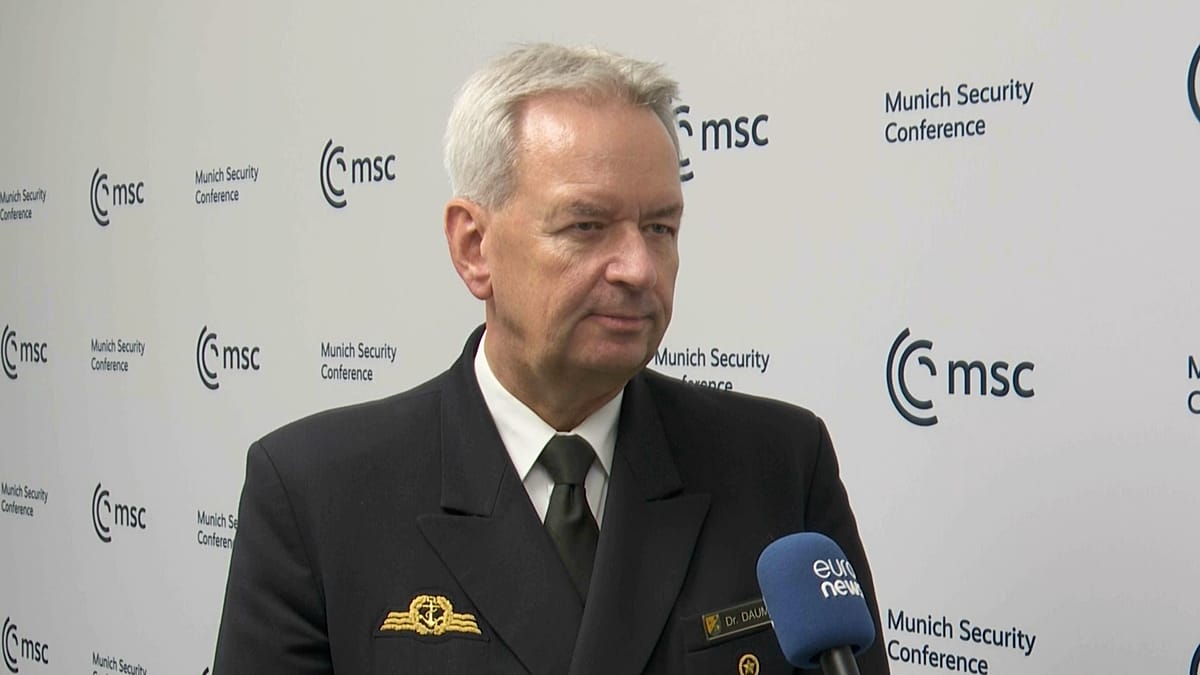
The German Armed Forces, the Bundeswehr, currently operates a fleet of between eight and ten satellites, primarily for reconnaissance and communications. However, this existing infrastructure is considered outdated and vulnerable. Vice Admiral Dr. Thomas Daum, Inspector of the Cyber and Information Domain of the German Armed Forces, has warned that a large-scale failure of satellite systems – a “day without space” – would be “essentially a disaster,” severely disrupting critical infrastructure and essential services. Daum highlighted the pervasive reliance on satellite technology, stating that even everyday transactions like withdrawing cash depend on functioning satellite networks. As reported by Euronews, Daum emphasized the risk of attacks targeting these systems.
This growing awareness of vulnerability has spurred a significant investment in new space-based capabilities. In September 2023, Defence Minister Boris Pistorius announced a commitment of roughly €35 billion by 2030, a substantial portion of which is earmarked for a space-based reconnaissance system known as “SPOCK.” This investment underscores Germany’s determination to establish a robust and resilient presence in space, capable of both monitoring potential threats and deterring hostile actions.
Deterrence Through Capability: The SPOCK System and Beyond
The SPOCK system, already in use since the beginning of 2026, is being developed in partnership with the Finnish firm Iceye and Germany’s Rheinmetall. It relies on a network of radar satellites utilizing synthetic aperture radar (SAR) technology. Unlike traditional optical satellites, SAR satellites can penetrate cloud cover and operate effectively day and night, providing continuous surveillance of the Earth’s surface. This all-weather, all-time capability is crucial for tracking movements and changes on the ground, offering a significant advantage in intelligence gathering. The development of SPOCK is a key component of Germany’s broader strategy of deterrence in space.
Daum explained that the principle of deterrence in space mirrors that of other military domains: demonstrating the capability to operate – and potentially interfere – in orbit signals to adversaries that their own systems are not invulnerable. However, this deterrence doesn’t necessarily require the destructive targeting of enemy satellites. “Non-kinetic measures” – actions that disrupt or degrade satellite functionality without causing physical destruction – are often considered more practical and politically acceptable. These include temporarily “blinding” optical reconnaissance satellites by dazzling their sensors, or jamming communications satellites by transmitting interfering signals. Such actions, whereas not physically damaging, can significantly impair an adversary’s capabilities on the ground.
Navigating the Political Landscape: Sustainability and the Artemis Accords
Germany’s approach to space security is also shaped by a commitment to sustainability and responsible behavior in space. In 2023, Germany signed the US-led Artemis Accords, a set of principles governing the exploration and use of outer space. A core tenet of these accords is the avoidance of creating space debris, which poses a threat to all spacefaring nations. This commitment translates into a preference for reversible measures – disrupting satellite functionality without generating long-lasting orbital wreckage.
However, this “zero debris” principle is not without its critics. Daum acknowledged that some political voices are questioning whether Germany should maintain such a restrictive approach, particularly in light of potential threats from adversaries who may not adhere to the same standards. While emphasizing that Germany does not currently intend to destroy enemy satellites, he noted that demonstrating the *capability* to do so could serve as a deterrent. This logic of “deterrence by punishment” – the idea that an opponent must factor in the risk of retaliation – is a central consideration in Germany’s evolving space security strategy. Any shift towards a more aggressive posture, however, would require a significant political decision.
The Rise of Small Satellite Constellations and the Ukraine Conflict
Beyond reconnaissance, secure and resilient communications are paramount for modern military operations. The Bundeswehr relies heavily on satellite communications, particularly for long-distance links. The “SATCOMBw Stage 4” project, the largest single space program in the Bundeswehr’s history, aims to connect tanks, ships, aircraft, and troops worldwide via satellite, with a particular focus on securing operations on NATO’s eastern flank, including the German brigade stationed in Lithuania.
However, SATCOMBw is based on a traditional model of a small number of large, geostationary satellites. This contrasts sharply with the emerging trend of large low Earth orbit (LEO) constellations, such as Starlink, operated by SpaceX. Starlink utilizes thousands of small, interconnected satellites, creating a far more resilient and flexible network. This distributed architecture offers multiple access points and significantly reduces the vulnerability associated with relying on a handful of high-value assets. The strategic importance of such systems has been vividly demonstrated by the ongoing conflict in Ukraine.
Both Russia and Ukraine have utilized the Starlink network to varying degrees, particularly for coordinating and operating drones. While SpaceX initially maintained a policy of not authorizing Starlink services for use in Russia, reports emerged in 2023 of Starlink terminals appearing with Russian units, allegedly entering the country through intermediaries in the Gulf or Central Asia. SpaceX has since taken steps to block Russian forces from accessing Starlink, a move that Ukraine claims has significantly hampered Russian operations, although Moscow disputes this assertion.
Looking Ahead: Continued Investment and Evolving Threats
Germany’s commitment to strengthening its space defenses is likely to continue in the coming years. The evolving geopolitical landscape and the increasing reliance on space-based assets necessitate a proactive approach to protecting national interests in orbit. Further investment in advanced technologies, such as improved satellite resilience, enhanced cyber defenses, and the development of non-kinetic warfare capabilities, will be crucial. The ongoing debate surrounding the “zero debris” principle will also likely continue, as policymakers grapple with the balance between responsible space behavior and the need for effective deterrence.
The next key development to watch will be the continued rollout of the SPOCK system and the progress of the SATCOMBw Stage 4 project. Further details regarding Germany’s long-term space security strategy are expected to be outlined in upcoming defense policy reviews. The situation in Ukraine will also continue to shape the debate, as the conflict highlights the critical role of space-based technologies in modern warfare and the potential for disruption and interference.
What are your thoughts on Germany’s evolving space defense strategy? Share your comments below and join the discussion.