
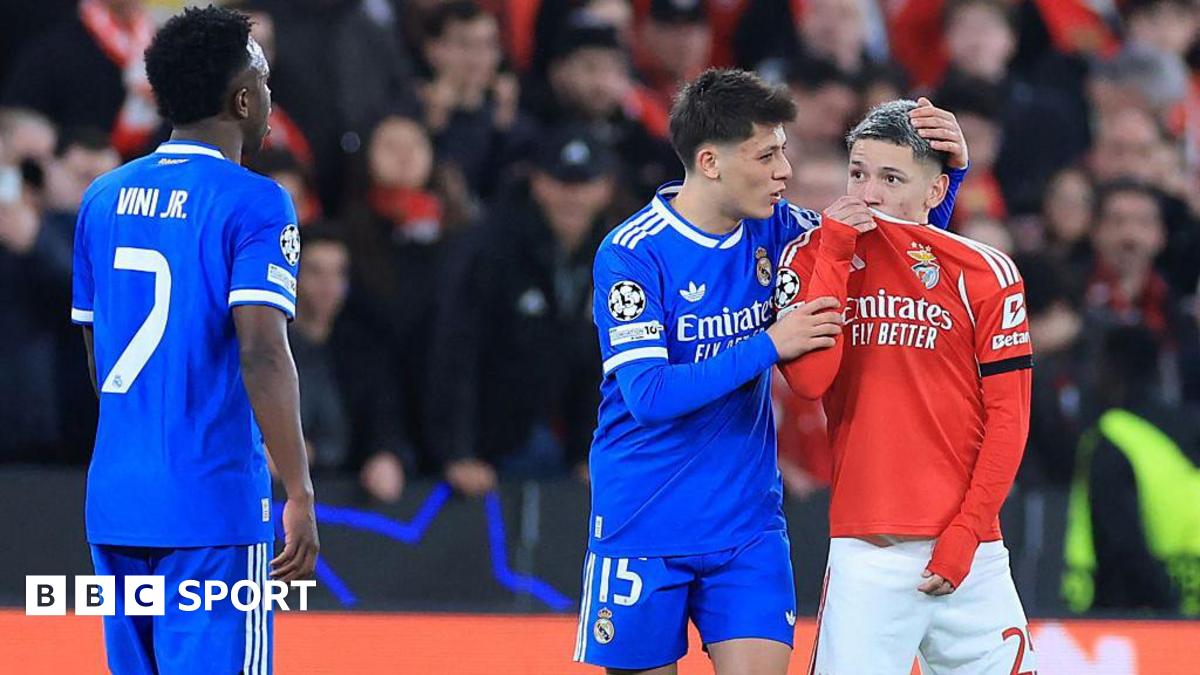
World Cup 2026: Players Who Cover Their Mouths During Confrontations Face Red Cards
Football’s governing body, FIFA, has approved a controversial new rule that will see players issued red cards for covering their mouths during confrontations with opponents at this summer’s World Cup in the United States, Canada, and Mexico. The decision, announced following a special meeting of the FIFA Council in Vancouver on Tuesday, marks a significant shift in how referees will interpret on-field behavior, particularly in high-pressure moments.
Under the new guidelines, match officials will have the discretion to send off players who cover their mouths while speaking to opponents, a gesture that FIFA President Gianni Infantino has linked to attempts to conceal offensive or abusive language. The rule will apply exclusively to the 2026 World Cup and will not extend to other competitions unless explicitly adopted by their governing bodies.
“If a player covers his mouth and says something, and this has a racist consequence, then he has to be sent off, obviously,” Infantino told Sky News in March, framing the rule as a deterrent against discriminatory behavior. “There must be a presumption that he has said something he shouldn’t have said, otherwise he wouldn’t have had to cover his mouth.”
The Incident That Sparked the Rule Change
The catalyst for FIFA’s decision was a high-profile incident during a UEFA Champions League match between Benfica and Real Madrid in February 2026. Benfica winger Gianluca Prestianni was accused of making racist remarks toward Real Madrid’s Vinicius Jr while covering his mouth with his shirt. Prestianni denied the racism allegations but was later found guilty of homophobic conduct by UEFA’s disciplinary committee. He received a six-match ban, with three matches suspended, following an investigation.

The case highlighted the challenges referees face in interpreting player interactions, particularly when gestures or body language obscure the content of conversations. Infantino’s comments in March underscored FIFA’s intent to address the issue proactively. “Football more broadly must act and be decisive to bring in something which has a deterrent effect,” he said, emphasizing the require for clarity in on-field communication.
FIFA’s new rule is part of a broader effort to curb unsporting behavior during the World Cup. In addition to the mouth-covering provision, the governing body has likewise instructed referees to issue red cards to players who leave the pitch in protest of a decision. This measure follows chaotic scenes during the 2026 Africa Cup of Nations final between Morocco and Senegal, where players and coaching staff clashed with officials over disputed calls.
How the Rule Will Be Enforced
The implementation of the new rule will rely heavily on the discretion of match officials. According to FIFA, referees will be instructed to consider the context of each incident before issuing a red card. Factors such as the player’s body language, the nature of the confrontation, and any prior warnings will be taken into account. The goal, FIFA says, is not to penalize every instance of mouth-covering but to deter players from using the gesture to hide abusive or discriminatory language.
Critics of the rule argue that it could lead to inconsistent enforcement, particularly in high-stakes matches where emotions run high. Some players and coaches have also expressed concerns that the rule may inadvertently punish innocent gestures, such as covering the mouth to shield conversations from wind or noise. However, FIFA has emphasized that the rule is intended to address deliberate attempts to conceal offensive language, not incidental behavior.
“The referee will have to leverage their judgment,” a FIFA spokesperson told reporters in Vancouver. “Here’s about ensuring that players are held accountable for their words and actions on the pitch.”
Broader Implications for Player Conduct
The new rule reflects FIFA’s ongoing efforts to address discrimination and unsporting behavior in football. In recent years, the organization has introduced stricter penalties for racist and homophobic abuse, including lifetime bans for repeat offenders. The 2026 World Cup will also feature enhanced monitoring systems, including real-time audio and video analysis, to assist referees in identifying and penalizing misconduct.
For players, the rule adds another layer of complexity to on-field interactions. Many footballers already use hand signals or coded language to communicate with teammates and opponents, particularly in noisy stadiums. The new guidelines could force players to adjust their behavior, particularly in confrontational moments where emotions are heightened.
“It’s a delicate balance,” said former Premier League referee Mark Clattenburg in an interview with BBC Sport. “Referees already have a lot to consider during a match, and this rule adds another variable. The key will be consistency—players need to know what to expect.”
What Happens Next?
The new rule will be formally introduced at the 2026 World Cup, which kicks off on June 11 in Mexico City. FIFA has not yet released detailed guidelines for referees on how to apply the rule, but officials are expected to receive additional training in the coming weeks. The governing body has also indicated that it will review the rule’s effectiveness after the tournament and consider whether to extend it to other competitions.
For now, players and teams are being urged to familiarize themselves with the new guidelines to avoid disciplinary action. With the World Cup just weeks away, the rule is likely to spark further debate about the balance between fair play and the practical realities of on-field communication.
Key Takeaways
- New FIFA Rule: Players who cover their mouths during confrontations with opponents at the 2026 World Cup may receive red cards, depending on the referee’s discretion.
- Context Matters: The rule is intended to deter players from concealing offensive or abusive language, not to penalize incidental gestures like shielding conversations from wind.
- Inciting Incident: The rule follows a February 2026 Champions League match where Benfica’s Gianluca Prestianni was banned for homophobic conduct after covering his mouth while speaking to Real Madrid’s Vinicius Jr.
- Broader Measures: FIFA has also instructed referees to issue red cards to players who leave the pitch in protest of decisions, following chaotic scenes at the 2026 Africa Cup of Nations final.
- Enforcement Challenges: Critics argue the rule could lead to inconsistent enforcement, particularly in high-pressure matches where emotions run high.
- Next Steps: The rule will be reviewed after the World Cup to assess its effectiveness and determine whether it should be extended to other competitions.
As the football world prepares for the 2026 World Cup, FIFA’s new rule is set to spark conversations about player conduct, referee discretion, and the evolving standards of fair play in the sport. For the latest updates on the tournament and its rules, follow World Today Journal’s sports coverage.
What do you think of FIFA’s new rule? Should players be penalized for covering their mouths during confrontations? Share your thoughts in the comments below and join the conversation on social media.