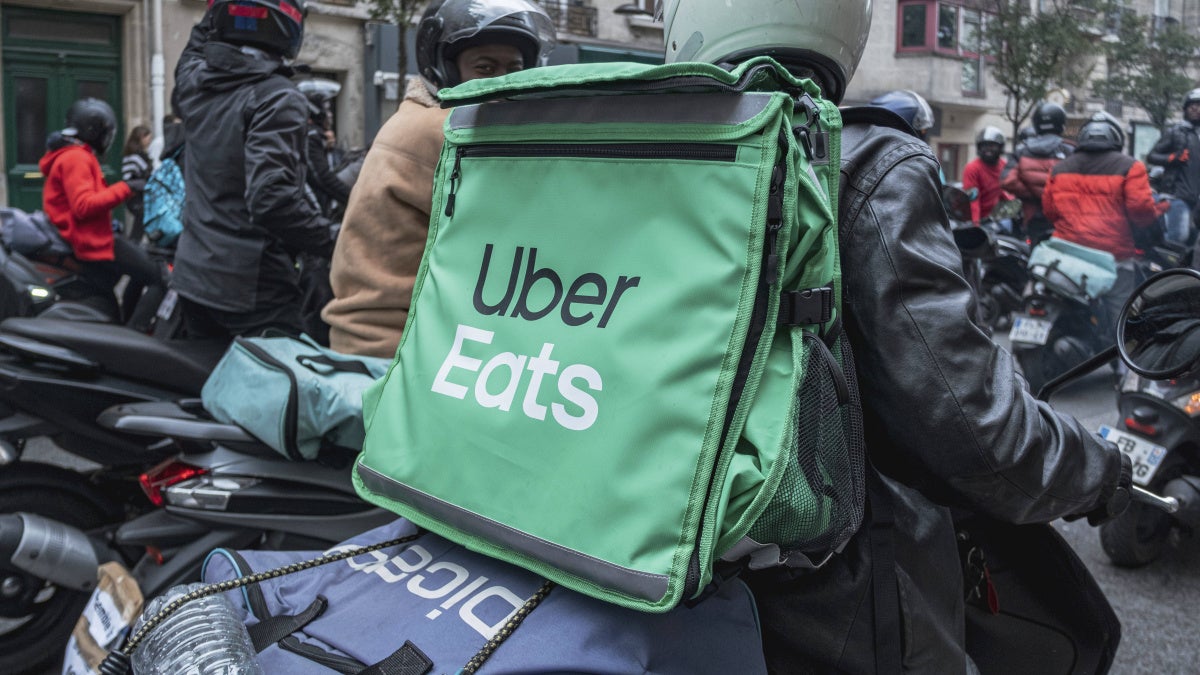
Across the bustling streets of Paris and Bordeaux, thousands of food-delivery workers navigate all weather conditions, working grueling hours for pay that often falls significantly below the national minimum wage. For a vast number of these couriers, the gig economy is not a flexible side hustle, but their sole source of survival.
The struggle for gig workers in France need protection as the legal landscape begins to shift. A recent survey of approximately 1,000 workers delivering for platforms such as Uber Eats and Deliveroo has highlighted the severe economic precariousness of this workforce, revealing a pattern of systemic instability and financial hardship.
The findings indicate a crisis of basic needs. 56 percent of the platform workers surveyed in France reported going an entire day without a proper meal in the past year due to a lack of funds. These conditions mirror trends documented by Human Rights Watch in the United States, where nearly two-thirds of platform workers in Texas reported similar difficulties paying for food and groceries.
At the heart of the issue is the classification of workers as self-employed. This designation allows platform companies to avoid providing social security contributions, insurance, and healthcare, shifting the entire burden of equipment maintenance and operational costs onto the workers themselves.
The Financial Reality of Platform Labor
While many couriers in France utilize bikes or e-bikes to keep transportation costs lower than car-based drivers in the U.S., they face unique and predatory financial hurdles. According to the survey, three-quarters of respondents reported renting access to someone else’s app account. These workers pay an average of €528 a month to a third party to maintain access to the platform.
This “account renting” is particularly prevalent among migrant workers who may lack secure immigration status, preventing them from registering an account in their own name. Such arrangements leave these individuals highly vulnerable to exploitation and further financial risk.
The resulting take-home pay is stark. On average, workers in France earned less than €4 an hour after accounting for expenses. This is a fraction of the French minimum wage, which stood at €11.65 an hour at the time of the survey.
Algorithmic Control and Worker Vulnerability
Beyond the financial strain, workers describe a digital environment characterized by “opaque algorithms” and constant surveillance. The fear of arbitrary account deactivation—where a worker can lose their entire livelihood instantly without a clear explanation or recourse—creates a state of permanent anxiety.

These conditions contribute to deteriorating physical and mental health. Because they are classified as self-employed, these workers face significant barriers to social protection, leaving them without a safety net during illness or injury.
Comparing Global Gig Economy Trends
The precariousness of the gig economy is not limited to Europe. In Texas, where many workers rely on cars, expenses can reduce take-home pay by up to 70 percent. This can bring earnings down to approximately US$5.12 (€4.35) an hour, which is below the U.S. Federal minimum wage of $7.25 (€6.16).
The Path Toward Regulation and Rights
The current crisis arrives at a pivotal regulatory juncture. European Union member states are now beginning to implement a 2024 EU directive specifically designed to improve the conditions of platform workers. This legislative move aims to address the misclassification of employees as independent contractors.
Simultaneously, the International Labour Organization (ILO) is set to deliberate on a new treaty focused on establishing decent function standards within the platform economy. These international efforts signal a growing recognition that the “gig” model, as currently practiced, often bypasses fundamental labor rights.
Human Rights Watch has advocated for several critical government interventions to protect these workers, including:
- Establishing a presumption of employment when platform companies exercise significant control over workers.
- Guaranteeing pay that accounts for all time worked and operational costs.
- Ensuring universal access to healthcare and social security.
- Ending the practice of arbitrary account deactivation.
As these regulations take shape, the goal is to transition the platform economy from a system of precarious labor to one where regulating the economy is treated as a matter of fundamental human rights.
The next critical development will be the continued implementation of the 2024 EU directive across member states and the upcoming deliberations by the International Labour Organization regarding the treaty for decent work.
We invite our readers to share their perspectives on the gig economy in the comments below. How should governments balance innovation with worker protection?
Worth a look