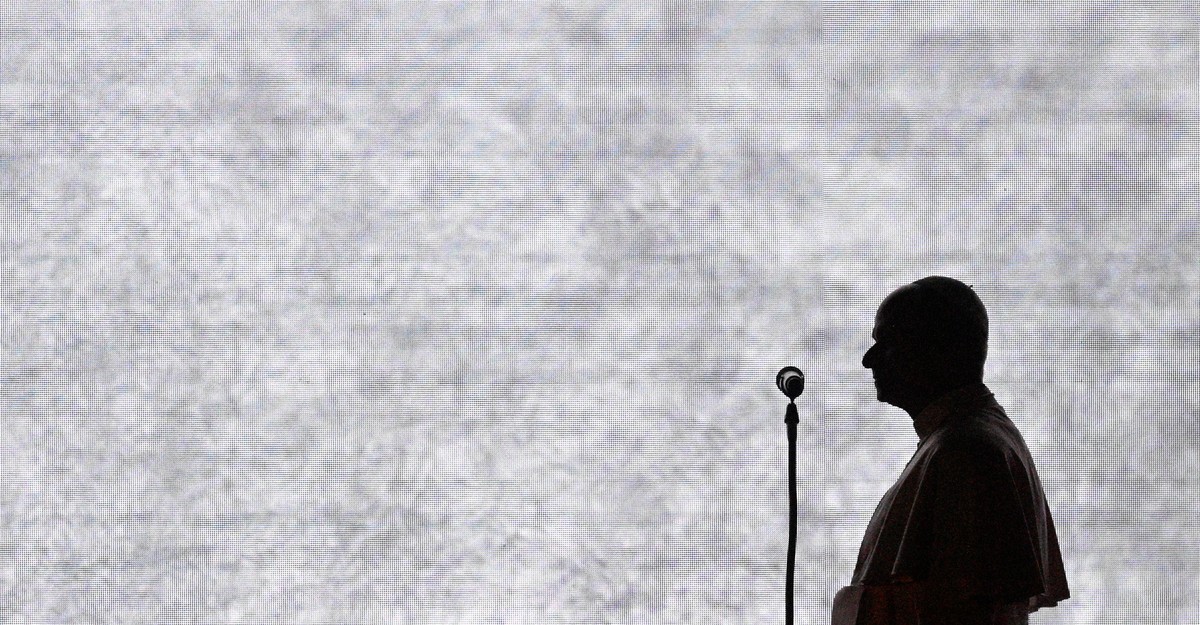
Relations between the White House and the Holy See have reached a historic low following a series of scathing attacks by President Donald Trump against Pope Leo XIV. The friction, which has escalated into public accusations of weakness and claims of blasphemy, centers on the pontiff’s vocal opposition to U.S. Military intervention and immigration policies.
The conflict intensified after President Trump launched a series of attacks on Truth Social, describing the pontiff as “WEAK on Crime and terrible for Foreign Policy” BBC News. The rhetoric marks a significant departure from traditional diplomatic norms, pitting the leader of the free world against the first-ever American-born pope.
At the heart of the dispute is the ongoing conflict in Iran. Pope Leo XIV has been a staunch critic of the war, specifically calling President Trump’s threat to destroy Iranian civilization “unacceptable” and urging the administration to uncover an “off-ramp” to end the hostilities BBC News. This theological and political clash has not only strained diplomatic ties but has also sparked a firestorm among the president’s own religious base.
The tension reached a fever pitch when the president shared an AI-generated image of himself depicted as Christ-like, ministering to a sick man against a backdrop of soldiers and an American flag. While the post was later deleted and the president claimed he believed the image depicted him as a doctor, the image was condemned as “blasphemy” by some of his religious allies, including Calvinist pastor Douglas Wilson.
The Conflict Over Iran and ‘Delusions of Omnipotence’
The immediate catalyst for the president’s ire appears to be a peace vigil hosted by Pope Leo XIV at St. Peter’s Basilica in Rome. During the service, the pope prayed for a kingdom of “dignity, understanding and forgiveness,” describing such values as a “bulwark against that delusion of omnipotence” that has become “increasingly unpredictable and aggressive.”
While the pontiff did not name the U.S. President explicitly, observers noted the remarks as a clear rebuke of the administration’s hubris in pursuing war without a clear explanation to the public or a defined exit strategy. In response, Trump doubled down on his criticism, stating on Monday that he would not apologize to a pope he characterized as “very weak” BBC News.
This clash highlights a fundamental disagreement over the role of the papacy in global affairs. For the Vatican, the pope’s mandate is to teach the faithful and advocate for peace, a tradition that includes Pope John Paul II’s 2003 condemnation of the Iraq War and Pope Leo XIII’s 19th-century critiques of unbridled capitalism in the encyclical Rerum Novarum. Trump, however, appears to view the pope’s moral guidance as mere political commentary.
Diplomatic Fallout and Internal Divisions
The fallout from the president’s rhetoric has extended to the highest levels of the U.S. Government and international alliances. Italian Prime Minister Giorgia Meloni, a close ally of Trump and a Catholic, described the president’s remarks about Pope Leo XIV as “unacceptable” BBC News. Meloni emphasized that it is “right and normal” for the head of the Catholic Church to call for peace and condemn war.
Within the U.S. Administration, the response has been more guarded. Vice President JD Vance, a converted Catholic, told Fox News that the Vatican should “stick to morality” and church affairs, while leaving the president to “stick to dictating US public policy” The Guardian.
Beyond the public outbursts, reports have surfaced regarding more clandestine tensions. On April 6, The Free Press reported that a meeting took place in January between Pentagon officials and Cardinal Christophe Pierre, who served as the Holy See ambassador to the U.S. Until March. The report alleged that the meeting was a “bitter lecture” warning the Church that the U.S. Had the military power to do as it wished and that the Church should side with the administration USA TODAY. A Pentagon spokesperson later dismissed these reports as “exaggerated and distorted.”
Religious Backlash and Theological Concerns
The president’s use of AI-generated imagery to cast himself as a divine figure has alienated several high-profile religious leaders who previously supported him. Archbishop Paul S. Coakley, president of the United States Conference of Catholic Bishops, stated he was “disheartened” by the disparaging words used against the Holy Father, defending the pope as the “Vicar of Christ.”
Similarly, Bishop Robert Barron, a longtime supporter, condemned the outburst as “entirely inappropriate and disrespectful,” noting that it is the pope’s prerogative to articulate the principles that govern moral life. These reactions underscore a growing rift between the president and the Catholic hierarchy, which views the pope not as a political rival, but as the servus servorum Dei—the servant of the servants of God.
The tension is palpable on the ground in Rome. In the Borgo Pio neighborhood bordering the Vatican, local shopkeepers and visitors have expressed shock at the deterioration of relations. Some have described the president’s behavior as “off the wall,” suggesting that the rupture caused by the strikes on Iran and the subsequent social media tirades is unprecedented in recent history The Guardian.
Key Developments in the Trump-Leo Conflict
| Event | Detail | Context |
|---|---|---|
| January 2026 | Pentagon-Vatican Meeting | Meeting with Cardinal Christophe Pierre; reports of a “bitter lecture” USA TODAY |
| April 6, 2026 | Reported Threats | The Free Press reports Pentagon warned the Church to side with the U.S. |
| April 10-12, 2026 | Fact-Check Period | USA TODAY confirms meeting took place but notes Pentagon denies “threats” |
| April 13-14, 2026 | Truth Social Outburst | Trump calls Pope Leo “WEAK on Crime” and posts AI-Jesus image |
The Papal Response
Pope Leo XIV has maintained a posture of composure in the face of the attacks. While speaking to reporters en route to Algeria, the pontiff stated that he did not wish to enter into a debate with the president but would continue to promote peace BBC News. He explicitly stated that he has “no fear” of the Trump administration and will not “shy away from announcing the message of the Gospel.”
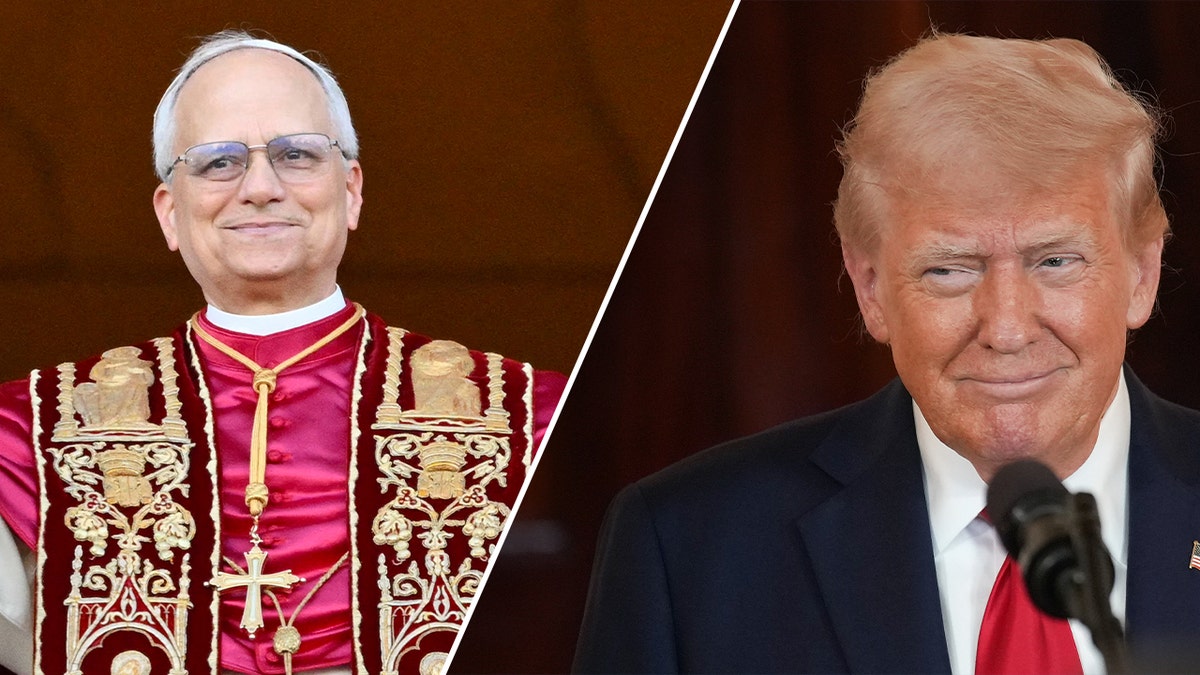
The pope’s refusal to be intimidated by political pressure reinforces the Vatican’s position as a global institution with a mandate that transcends the term of any single head of state. By calling for an “off-ramp” to the Iran conflict, Leo XIV has positioned the Church as a moral arbiter, challenging the administration’s approach to foreign policy through the lens of spiritual humility and the avoidance of war.
As the U.S. Continues its military engagement in Iran and the president continues to use social media to challenge the papacy, the diplomatic rift remains open. The next critical point of observation will be the administration’s official response to the Pope’s ongoing diplomatic missions in Africa and the Middle East, and whether the White House will seek a formal reconciliation or continue its strategy of public confrontation.
World Today Journal encourages readers to share their perspectives on the intersection of faith and foreign policy in the comments below.
Keep reading
- Abelardo De La Espriella: Special Manager for Bogotá and Transforming Casa de Nariño into a Museum
- Day Trips from Bremen to the Netherlands: Hidden Gems & Top Cities
- US Crypto Ownership Drops Despite Trump Push and ETFs (archyworldys.com)
- Trump Ordina Pausa Negli Attacchi Stati Unitesi contro l’Iran (archynewsy.com)