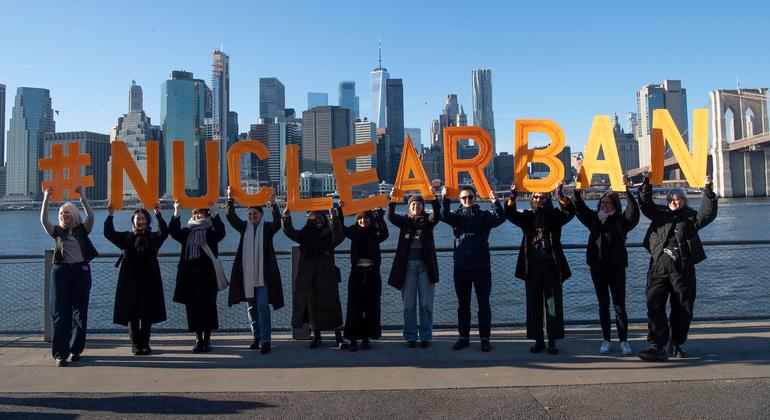
The Global Nuclear Security Pact Under Strain: Why the World’s Most Critical Arms Control Treaty Faces Its Greatest Test
On Monday, April 27, 2026, diplomats from nearly every nation convened at the United Nations headquarters in New York for a pivotal moment in global security: the quinquennial review of the Treaty on the Non-Proliferation of Nuclear Weapons (NPT). Signed in 1970 and ratified by 191 countries, the NPT has long been hailed as the cornerstone of international efforts to prevent the spread of nuclear arms, promote disarmament and foster the peaceful use of nuclear energy. Yet this year’s review arrives at a time of unprecedented crisis—one that threatens to unravel decades of progress and leave the world without a functioning framework to curb the most destructive weapons ever created.
The stakes could not be higher. The expiration of key arms control agreements, escalating geopolitical tensions, and a resurgence of nuclear rhetoric among major powers have created what UN officials describe as the most severe threat to the global nuclear security architecture in decades. With the war in the Middle East serving as a volatile backdrop, the question looms: Can the NPT survive in its current form, or is the world entering an era of unchecked nuclear risk?
The NPT’s Legacy: A Rare Success Story in a Dangerous World
The NPT’s achievements are undeniable. Since its inception, the treaty has helped prevent the use of nuclear weapons in conflict, with the bombings of Hiroshima and Nagasaki in 1945 remaining the only instances of nuclear warfare in history. It has also facilitated the establishment of Nuclear-Weapon-Free Zones (NWFZs) in regions such as Latin America, Africa, and Southeast Asia, reinforcing norms against proliferation. Under its framework, the number of nuclear-armed states has remained far lower than many experts once feared, with only nine countries currently acknowledged as possessing nuclear weapons: the United States, Russia, China, France, the United Kingdom, India, Pakistan, Israel, and North Korea.
Central to the NPT’s success has been its three-pillar structure: non-proliferation, disarmament, and the peaceful use of nuclear technology. The treaty obligates non-nuclear-weapon states to refrain from acquiring nuclear arms, even as nuclear-weapon states commit to pursuing disarmament negotiations in good faith. It guarantees all signatories the right to develop nuclear energy for civilian purposes, provided they adhere to international safeguards. This balance has allowed the treaty to maintain broad support, even among nations with divergent security interests.
The Collapse of Cold War-Era Agreements: A System in Freefall
Despite its successes, the NPT now faces existential challenges. The most immediate threat comes from the collapse of bilateral arms control agreements between the United States and Russia, which together possess approximately 90% of the world’s nuclear arsenal. The New Strategic Arms Reduction Treaty (New START), signed in 2010 and extended in 2021, was the last remaining pillar of this framework. It limited both nations to 1,550 deployed strategic nuclear warheads and imposed rigorous verification measures. Although, the treaty expired in February 2026 without a successor, marking the first time since the 1970s that the world’s two largest nuclear powers have operated without any legal constraints on their arsenals.
The demise of New START is not an isolated event but the culmination of a broader trend. Over the past decade, key arms control agreements have either been abandoned or allowed to lapse:

- Intermediate-Range Nuclear Forces (INF) Treaty (1987–2019): The U.S. And Russia withdrew from the treaty in 2019, citing violations by the other side. The INF had banned an entire class of ground-launched missiles with ranges between 500 and 5,500 kilometers, significantly reducing the risk of a nuclear exchange in Europe.
- Open Skies Treaty (1992–2020): The U.S. Withdrew in 2020, followed by Russia in 2021. The treaty allowed unarmed aerial surveillance flights over member countries to build transparency and trust.
- Comprehensive Nuclear-Test-Ban Treaty (CTBT, 1996): Though not yet in force, the CTBT has been signed by 186 countries and ratified by 178. However, key holdouts—including the U.S., China, and North Korea—have prevented its entry into force, undermining global efforts to ban nuclear testing.
The erosion of these agreements has been accompanied by a dangerous shift in nuclear rhetoric. In recent years, leaders of nuclear-armed states have increasingly invoked the possibility of nuclear use in conflicts, a departure from the post-Cold War norm of nuclear restraint. For example, in 2022, Russian President Vladimir Putin placed Russia’s nuclear forces on high alert following the invasion of Ukraine, while North Korea has conducted a record number of missile tests, including intercontinental ballistic missiles (ICBMs) capable of reaching the U.S. Mainland. Meanwhile, China is rapidly expanding its nuclear arsenal, with the U.S. Department of Defense estimating it could field 1,000 warheads by 2030, up from an estimated 400 in 2022.
Why the NPT Review Conference Matters—and What’s at Stake
The NPT review conference, held every five years, is the primary mechanism for assessing the treaty’s implementation and addressing emerging challenges. This year’s gathering, which runs from April 27 to May 22, 2026, is expected to be the most contentious in the treaty’s history. Key issues on the agenda include:
- Disarmament Stagnation: Nuclear-weapon states, particularly the U.S. And Russia, have made little progress toward fulfilling their NPT obligation to pursue disarmament. The expiration of New START has left no legal framework to guide further reductions, and both countries are modernizing their arsenals, raising concerns about a new arms race.
- Non-Proliferation Challenges: Iran’s nuclear program remains a flashpoint, with Tehran enriching uranium to levels close to weapons-grade despite the 2015 Joint Comprehensive Plan of Action (JCPOA) being effectively dead. Meanwhile, North Korea continues to expand its nuclear and missile programs, defying UN Security Council resolutions.
- Emerging Technologies: Advances in hypersonic missiles, artificial intelligence, and cyber warfare are complicating arms control efforts. Hypersonic weapons, which can travel at speeds exceeding Mach 5 and maneuver mid-flight, are particularly destabilizing because they reduce warning times and increase the risk of miscalculation.
- Nuclear Energy and Safeguards: The treaty’s third pillar—peaceful nuclear energy—faces scrutiny amid concerns about the diversion of nuclear materials for weapons programs. The International Atomic Energy Agency (IAEA) has reported increased challenges in verifying Iran’s compliance with safeguards agreements, while tensions persist over the AUKUS pact, which will provide Australia with nuclear-powered submarines.
Diplomats and experts warn that failure to address these issues could lead to a breakdown in the NPT’s consensus-based approach. Unlike other treaties, the NPT requires unanimous agreement among its parties to adopt substantive decisions. In 2015, the review conference collapsed without a final document, and in 2020, the conference was postponed due to the COVID-19 pandemic. A similar outcome in 2026 could further erode confidence in the treaty’s viability.
The Economic and Geopolitical Ripple Effects
The unraveling of the global nuclear security framework carries profound economic and geopolitical consequences. For businesses and investors, the heightened risk of nuclear conflict introduces unprecedented uncertainty into global markets. A 2023 study by the RAND Corporation estimated that a limited nuclear exchange between India and Pakistan could cause global temperatures to drop by 1–2°C, disrupting agriculture and triggering a global famine. The economic fallout from such a scenario would dwarf the impacts of the COVID-19 pandemic, with potential losses in the trillions of dollars.
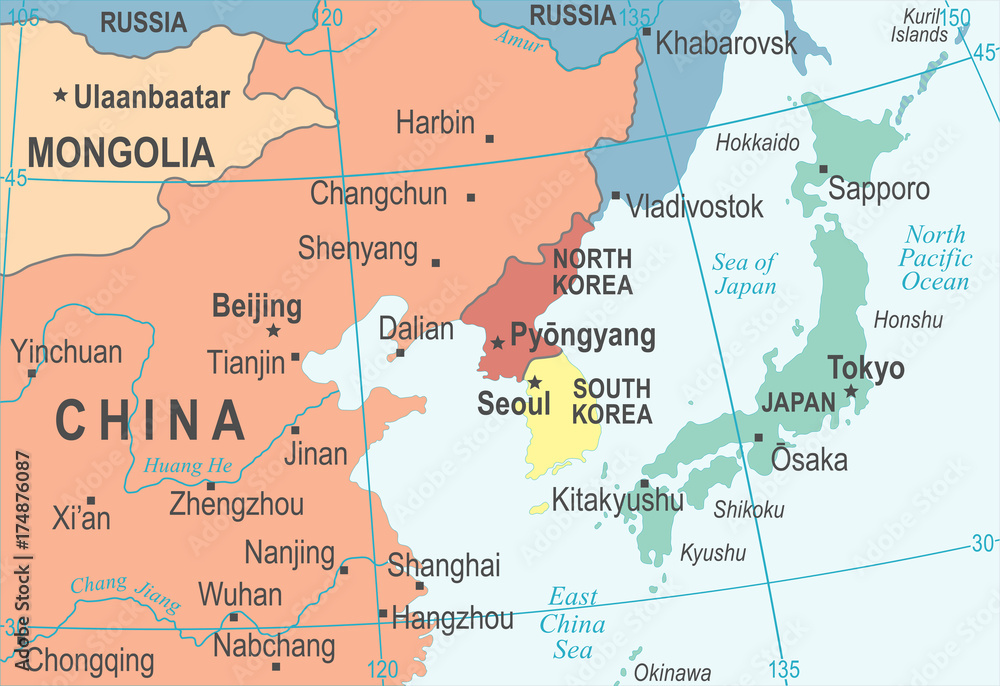
Geopolitically, the collapse of arms control agreements has already begun to reshape alliances and security strategies. NATO members, particularly those in Eastern Europe, are increasingly concerned about Russia’s nuclear posture, with some calling for a stronger nuclear deterrent. In Asia, Japan and South Korea—both non-nuclear-weapon states under the NPT—have debated whether to pursue their own nuclear capabilities in response to North Korea’s advances. Such moves could trigger a domino effect, leading to further proliferation and undermining the NPT’s core objectives.
the breakdown of trust between nuclear powers has spillover effects in other areas of global governance. The UN Security Council, where the U.S., Russia, China, France, and the UK hold veto power, has been paralyzed on issues ranging from climate change to conflict resolution. The inability to cooperate on nuclear security raises questions about the international community’s capacity to address other existential threats, such as climate change and pandemics.
Can the NPT Be Saved?
Despite the grim outlook, there are glimmers of hope. Civil society groups, scientists, and a growing number of non-nuclear-weapon states are pushing for renewed efforts to strengthen the NPT. The International Campaign to Abolish Nuclear Weapons (ICAN), which won the Nobel Peace Prize in 2017, has been a vocal advocate for the Treaty on the Prohibition of Nuclear Weapons (TPNW), a 2017 agreement that bans nuclear weapons outright. While none of the nuclear-armed states have joined the TPNW, its supporters argue that it complements the NPT by reinforcing the norm against nuclear weapons.
Some experts also point to the potential for “minilateral” agreements—smaller, targeted deals between like-minded countries—as a way to fill the gap left by the collapse of broader treaties. For example, the U.S. And Russia could agree to extend New START’s verification measures even without a formal treaty, or NATO and Russia could establish new confidence-building measures to reduce the risk of accidental escalation. However, such efforts would require a level of trust that currently does not exist.

the fate of the NPT may hinge on whether nuclear-weapon states can demonstrate a genuine commitment to disarmament. Article VI of the treaty obligates them to “pursue negotiations in good faith on effective measures relating to cessation of the nuclear arms race at an early date and to nuclear disarmament.” Yet progress has been glacial. The U.S. And Russia’s arsenals remain at levels far above what is necessary for deterrence, while China, India, and Pakistan continue to expand their capabilities. Without tangible steps toward disarmament, non-nuclear-weapon states may grow increasingly frustrated, potentially leading to a mass exodus from the treaty.
What Happens Next?
The NPT review conference will conclude on May 22, 2026, with a final document outlining the parties’ commitments and recommendations. However, given the deep divisions among member states, the likelihood of a substantive agreement remains uncertain. In the meantime, the following developments are worth monitoring:
- U.S.-Russia Dialogue: While formal negotiations on a New START successor are unlikely in the near term, backchannel discussions could lay the groundwork for future agreements. The U.S. Has indicated a willingness to engage, but Russia has conditioned any talks on the withdrawal of Western support for Ukraine.
- Iran’s Nuclear Program: The IAEA’s next quarterly report on Iran, expected in June 2026, will provide critical insights into Tehran’s compliance with safeguards agreements. A further escalation in enrichment levels could trigger a new crisis.
- North Korea’s Missile Tests: Pyongyang has continued to test ballistic missiles in violation of UN resolutions. A seventh nuclear test, which intelligence agencies believe is imminent, would further destabilize the region.
- China’s Nuclear Expansion: The U.S. And its allies are closely watching China’s nuclear modernization efforts. Any indication that Beijing is moving toward a “launch-on-warning” posture—where nuclear weapons are kept on high alert—would mark a significant shift in its deterrence strategy.
For now, the world’s best hope for averting a nuclear catastrophe rests on the fragile consensus of the NPT. Yet with each passing day, that consensus grows weaker. The choices made in the coming months will determine whether the treaty can adapt to a new era of nuclear risk—or whether the world will be left to navigate a future without guardrails.
Key Takeaways
- The NPT at a Crossroads: The Treaty on the Non-Proliferation of Nuclear Weapons, a cornerstone of global security since 1970, is facing its most severe crisis in decades due to the collapse of key arms control agreements and rising geopolitical tensions.
- Collapse of Bilateral Agreements: The expiration of New START in February 2026 has left the U.S. And Russia without any legal constraints on their nuclear arsenals for the first time since the 1970s, raising the risk of a new arms race.
- Escalating Nuclear Rhetoric: Leaders of nuclear-armed states have increasingly invoked the possibility of nuclear use, reversing decades of post-Cold War restraint and heightening the risk of miscalculation.
- Economic and Geopolitical Risks: The breakdown of nuclear security frameworks introduces unprecedented uncertainty into global markets and could trigger a domino effect of proliferation, particularly in Asia.
- Civil Society Pushback: Groups like ICAN are advocating for the Treaty on the Prohibition of Nuclear Weapons (TPNW) as a complementary tool to reinforce the norm against nuclear arms, though nuclear-weapon states remain opposed.
- Uncertain Future: The outcome of the 2026 NPT review conference will determine whether the treaty can adapt to a new era of nuclear risk or whether the world will face a future without guardrails.
The next official update on the NPT review conference is expected on May 22, 2026, when the final document is released. In the meantime, readers can follow developments through the UN Office for Disarmament Affairs and the Arms Control Association.
As the world grapples with this unprecedented challenge, the stakes could not be clearer. The decisions made today will shape the security landscape for generations to come. Share your thoughts in the comments below: Can the NPT be saved, or is the world entering a new era of nuclear risk?
Keep reading