For decades, the entertainment industry operated on a relatively stable, if often contentious, social contract: creators produced the work, copyright law protected it, and distributors paid for the privilege of sharing it. From the golden age of cinema to the vinyl boom, the lines of ownership were clear. But today, that contract is being shredded in real-time.
The convergence of ubiquitous streaming and the explosive rise of generative artificial intelligence has created a perfect storm for intellectual property. We are no longer just debating how music is delivered or how movies are watched; we are questioning the particularly definition of “authorship.” As a journalist who has spent over 15 years navigating the halls of Hollywood and the red carpets of Cannes, I have seen the industry pivot through many digital revolutions, but none feel as existential as this one.
At the heart of the conflict is copyright law and artificial intelligence, a legal frontier where the rules are being written as the lawsuits are filed. The tension lies in a fundamental disagreement: is an AI model “learning” from existing art in a way that mirrors human inspiration, or is it engaging in high-tech plagiarism on an industrial scale? While streaming shifted the economic model from ownership to access, AI is now threatening to decouple the creative act from the human creator entirely.
This shift is not merely a technical glitch but a systemic upheaval affecting everyone from independent songwriters in Nashville to blockbuster screenwriters in Los Angeles. As the legal battlegrounds shift from local courts to international regulatory bodies, the outcome will determine who owns the future of culture.
The AI Training Dilemma: Inspiration or Infringement?
The primary flashpoint in the current crisis is the process of “training” large language models (LLMs) and image generators. These systems are fed billions of data points—books, articles, paintings, and songs—often scraped from the internet without the explicit consent of the original creators. The tech companies argue that this falls under “fair use,” a legal doctrine that allows for the transformative use of copyrighted material without permission.
However, creators argue that this is not transformation, but exploitation. When an AI can generate a painting “in the style of” a living artist or write a script that mimics a specific screenwriter’s voice, it creates a direct market competitor using the artist’s own life’s work. The U.S. Copyright Office has maintained a firm stance on the necessity of human authorship, ruling in several instances that works created entirely by AI without significant human creative control cannot be copyrighted.
This creates a paradoxical landscape: AI can ingest copyrighted human work to learn, but the output it produces may not be eligible for the same legal protections. This “authorship gap” leaves studios and labels in a precarious position, as they struggle to protect content that is increasingly assisted or generated by algorithms.
The High-Stakes Legal Battlegrounds
The theoretical debate has moved into the courtroom with several landmark cases that will likely set the precedent for the next century of creativity. High-profile lawsuits, such as those brought by authors and visual artists against companies like Stability AI and Midjourney, center on whether the act of copying images into a training set constitutes a violation of copyright, regardless of what the final output looks like.
Similarly, the publishing world is fighting back. Major lawsuits from news organizations and authors allege that AI companies have “stolen” vast archives of journalism and literature to build products that now compete with the very outlets they raided. These cases are testing the limits of the fair use doctrine, questioning whether the commercial nature of these AI tools outweighs any perceived public benefit of the technology.
Streaming: The Erosion of Ownership and Value
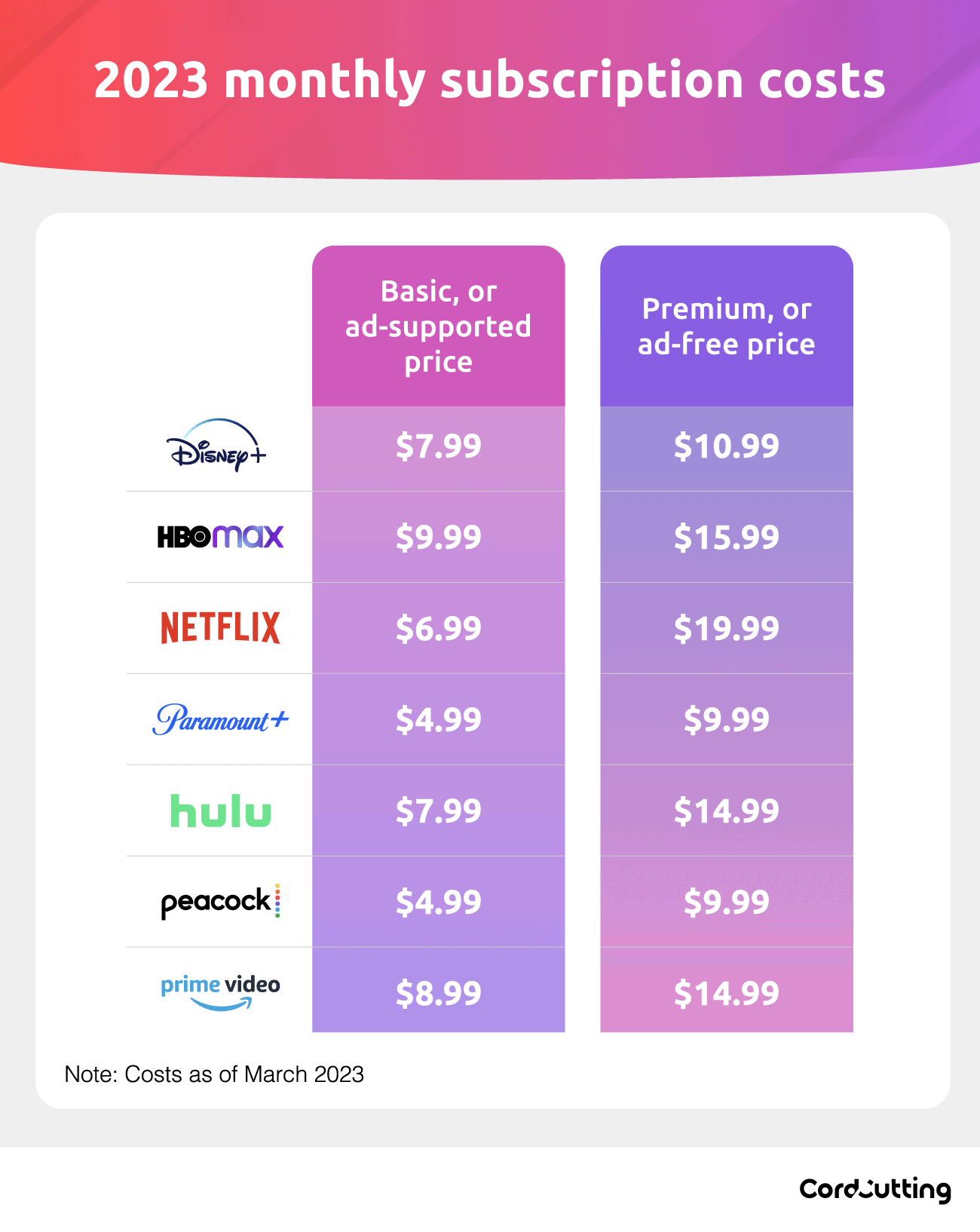
While AI represents a new threat, the streaming revolution laid the groundwork for this instability by fundamentally altering how creative value is captured. The transition from physical sales (CDs and DVDs) to subscription-based access shifted the power balance heavily toward the platforms.
In the traditional model, a sale was a discrete transaction. In the streaming era, revenue is fragmented into “micro-payments” based on play counts. This has led to what industry insiders call the “value gap,” where the massive growth in consumption does not proportionally translate to increased earnings for the mid-level creator. For many musicians and filmmakers, the streaming economy has turned art into a commodity where volume is the only path to viability.
This economic fragility makes the AI threat even more potent. When creators are already struggling with streaming royalties, the prospect of AI-generated “functional music”—lo-fi beats or ambient tracks designed for focus or sleep—further cannibalizes the revenue streams of human composers. We are seeing the emergence of a landscape where the platform owns the distribution, the AI provides the content, and the human creator is left as an optional consultant.
The “Fake Artist” Phenomenon
The intersection of streaming and AI became visceral with the rise of “deepfake” audio. The appearance of AI-generated tracks that perfectly mimic the voices of global superstars has highlighted a massive loophole in current law: copyright protects the composition and the recording, but it does not explicitly protect the sound of a human voice. This has sparked a push for new “right of publicity” laws to prevent the unauthorized digital cloning of a performer’s identity.
Global Regulatory Responses: The EU AI Act
While the United States relies heavily on litigation to define boundaries, the European Union has taken a more proactive regulatory approach. The EU AI Act represents the world’s first comprehensive attempt to regulate artificial intelligence, introducing strict transparency requirements for generative AI models.
Under these regulations, AI developers must provide detailed summaries of the copyrighted data used to train their models. This transparency is a critical victory for creators, as it provides the evidentiary trail needed to demand compensation or opt out of training sets. By forcing the “black box” of AI training open, the EU is attempting to shift the burden of proof from the artist to the tech company.
This regulatory divergence creates a complex environment for global entertainment companies. A movie produced in Los Angeles may be subject to one set of copyright rules in the US and another when distributed via streaming in Paris or Berlin. The industry is now calling for a harmonized international standard to prevent a “copyright haven” effect, where AI companies move their operations to jurisdictions with the weakest intellectual property protections.
What This Means for the Future of Creativity
As we look forward, the entertainment industry is splitting into two camps. One sees AI as a tool for “augmented creativity,” where the machine handles the drudgery—storyboarding, color grading, or basic rhythmic structuring—leaving the human to focus on high-level emotional resonance and storytelling.
The other camp views AI as a replacement. If a studio can generate a plausible script and a photorealistic actor using a library of licensed (or unlicensed) data, the incentive to hire human talent diminishes. This was a primary driver in the recent historic strikes by the Writers Guild of America (WGA) and SAG-AFTRA, where the fight was not just about wages, but about the legal guarantee that AI would not be used to undermine human credit and compensation.
The ultimate goal for most creators is not the total ban of AI—which is likely impossible—but the establishment of a “Consent, Credit, and Compensation” framework. This would ensure that:
- Consent: Artists must opt-in to have their work used in training sets.
- Credit: AI-generated or assisted works must be clearly labeled.
- Compensation: A royalty system is established where a portion of AI subscription fees flows back to the creators whose data made the model possible.
| Feature | Analog Era | Streaming Era | AI Era |
|---|---|---|---|
| Primary Value | Physical Ownership | Access/Subscription | Algorithmic Generation |
| Revenue Model | Unit Sales | Per-stream Micro-payments | Subscription/API Credits |
| Ownership | Clear (Artist/Label) | Complex (Platform/Artist) | Contested (AI/Human/None) |
| Barrier to Entry | High (Studio/Label) | Low (Digital Upload) | Near Zero (Prompting) |
The Path Forward
The tension between creation and automation is not new, but the scale is unprecedented. We are moving toward a world where “human-made” may become a premium brand, similar to “organic” or “hand-crafted” labels in other industries. The challenge for the legal system is to evolve fast enough to protect the humans behind the art without stifling the innovation that AI offers.
The next critical checkpoint for this evolution will be the upcoming series of rulings in the US federal courts regarding the “fair use” of training data, which are expected to provide clearer guidance on whether the act of ingestion itself is an infringement. These decisions will either validate the current trajectory of AI development or force a massive restructuring of how these models are built and monetized.
As an editor and a witness to the evolving landscape of pop culture, I believe the heart of entertainment will always be the human connection—the shared experience of a story that resonates because it comes from a place of lived emotion. Technology can mimic the pattern of that emotion, but it cannot experience it. Protecting the creator is, about protecting the human element of our culture.
What do you think? Should AI companies be required to pay every artist whose work is used for training, or is that an impossible standard? Let us know in the comments and share this article to join the conversation.
Keep reading