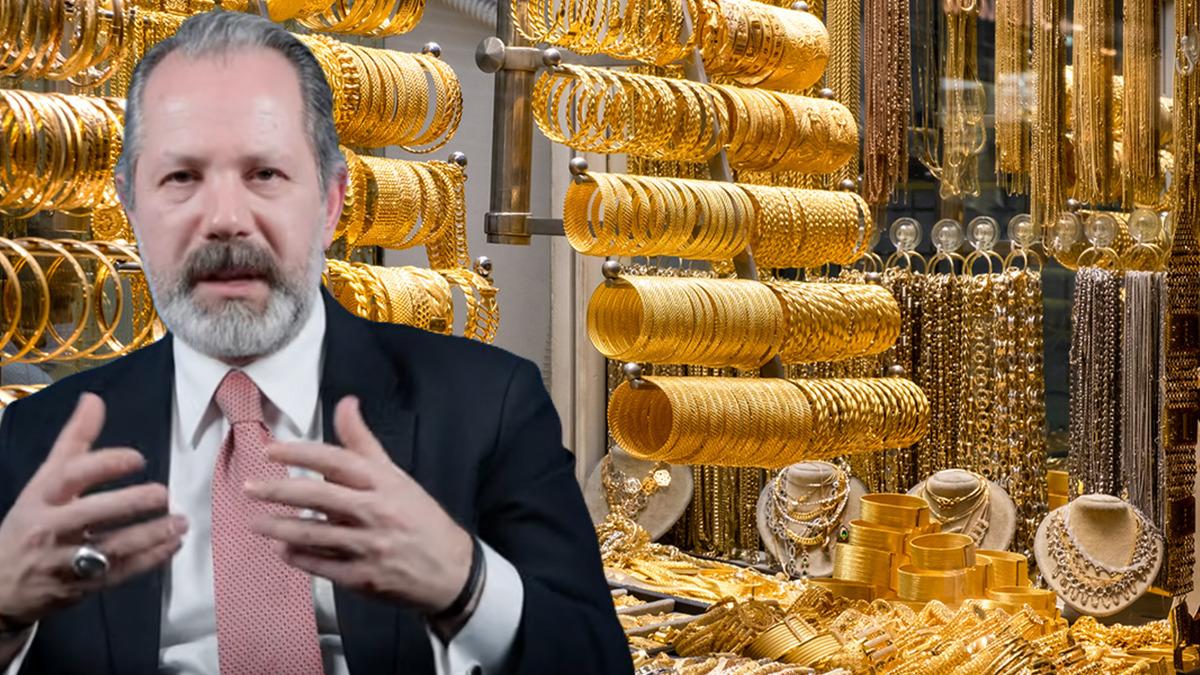
Turkish financial analyst İslam Memiş has issued a stark warning to investors, stating that holding gold alone is insufficient as a protective strategy amid ongoing market volatility. His comments, delivered during a televised financial analysis segment, emphasize the need for a broader, long-term investment approach rather than relying solely on gold as a safe haven. Memiş specifically cautioned against short-term trading, urging investors to develop disciplined strategies to preserve their assets in uncertain economic conditions.
The analyst’s remarks arrive at a time when gold prices in Turkey have experienced significant fluctuations, driven by geopolitical tensions, inflation concerns, and currency instability. While gold has traditionally been viewed as a hedge against economic turmoil, Memiş argued that depending on it exclusively fails to address broader portfolio risks. Instead, he advocated for a balanced approach that includes diversification and patience, particularly highlighting the months of July and August as potential turning points for gold prices to test the 8,000 Turkish lira per gram level.
According to verified reports from CNBC-e and Sözcü Gazetesi, Memiş referenced January 2026 as a period when gold prices had formed what he described as a “balloon” — an unsustainable surge fueled by speculative behavior. During that month, gram gold reached as high as 8,157 Turkish lira, while ounce gold traded near $5,600. He warned that such rapid increases created a false sense of security among investors, leading many to believe prices would continue rising indefinitely. When the correction followed, those who had entered at peak levels faced significant losses.
Memiş reiterated his long-standing advice: avoid short-term speculation and focus on enduring value. “In 2026, stay away from short-term moves. Determine a long-term strategy and protect your assets,” he stated, a message he has repeated across multiple media appearances. He stressed that true financial resilience comes not from chasing price spikes but from owning and managing one’s holdings with discipline.
Looking ahead, Memiş projected that gram gold could surpass the 8,000 lira threshold during the summer months, with a year-end target of 10,000 lira per gram. These estimates are contingent on macroeconomic factors including inflation trends, interest rate policies, and global demand for safe-haven assets. He noted that while gold often follows movements in international markets, its local pricing is also influenced by the Turkish lira’s exchange rate against the dollar, which he expects to remain in the 52–53 range for much of the year.
The analyst also addressed silver markets, observing that while silver tends to track gold’s performance, its downward corrections are typically less severe and shorter-lived due to dual demand from industrial and investment sectors. However, he maintained that neither metal should be viewed as a standalone solution for wealth preservation.
As of late April 2026, gram gold was trading in the 6,800–6,900 lira band, showing gradual recovery from a March low of around 6,300 lira. Ounce gold hovered between $4,750 and $4,850, reflecting a modest rebound from earlier losses tied to geopolitical developments. Memiş acknowledged that while the worst-case scenario from March may have passed, uncertainty remains, and investors should remain vigilant.
His guidance aligns with broader principles of prudent investing: avoid emotional decisions, resist herd behavior, and prioritize capital preservation over speculative gains. By discouraging reliance on any single asset — even one as historically resilient as gold — Memiş underscores the importance of holistic financial planning in volatile times.
Investors seeking official updates on precious metals markets can refer to regulatory disclosures from Turkey’s Capital Markets Board (SPK) or international sources such as the World Gold Council for verified data on price trends and demand patterns. No further public statements from Memiş regarding specific price targets have been confirmed beyond those reported in late April 2026.
For readers interested in understanding how macroeconomic forces influence commodity prices, or how to build a resilient investment portfolio amid uncertainty, continued engagement with credible financial analysis is recommended. Share your thoughts on gold’s role in modern portfolios in the comments below, and consider sharing this article with others navigating today’s complex financial landscape.
Worth a look
- Cristina Kirchner’s Lawyers Claim She Can Run in PASO Elections
- How Trump and DOGE Weakened Food Safety, Fueling the Largest Cyclosporiasis Outbreak in US History
- Gold Prices React to Fed Rate Decision and Market Volatility (newsdirectory3.com)
- Dow Jones Plunges 555 Points as Middle East Tensions Spike Oil Prices (archyworldys.com)