Chile’s economic outlook is facing significant headwinds as experts warn that the nation’s growth trajectory may be stalling. Patricio Rojas, an economist with Rojas y Asociados, has stated that the Chilean economy is unlikely to grow above 2% this year, suggesting that the possibility of exceeding that threshold has practically vanished.
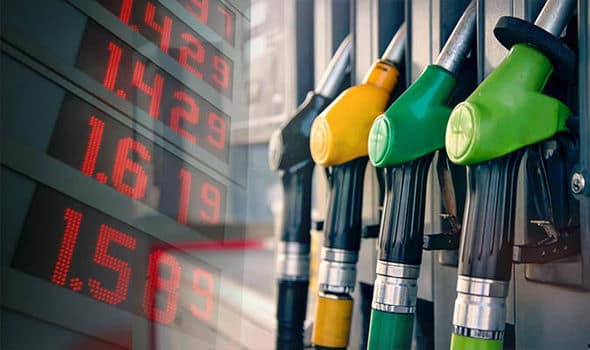
The current economic climate is being shaped by a complex interplay of fuel pricing policies, inflation pressures, and the government’s approach to fiscal stabilization. Central to this discussion is the Mecanismo de Estabilización del Precio de los Combustibles (Mepco), a system designed to smooth out the volatility of international oil prices and exchange rates for local consumers.
While the government has moved to “sincer” fuel prices—aligning them more closely with market realities—Rojas notes that the administration has shouldered the political cost of these moves alone by failing to involve Congress in the changes to the Mepco. This lack of legislative collaboration, combined with stagnant growth, creates a precarious environment for the country’s financial stability.
The stakes are particularly high for the first half of 2026. Analysis indicates that the first quarter of the year may have seen growth near 0%, signaling a period of stagnation that complicates the government’s efforts to reactivate the economy. To counter this, experts suggest that any upcoming reactivation packages should be separated and expedited to provide the necessary stimulus to the market.
The Role and Risk of the Mepco System
The Mepco is a critical tool for the Chilean government, intended to stabilize the retail prices of automotive gasoline, diesel, liquefied petroleum gas (LPG), and compressed natural gas (CNG). It achieves this by adjusting specific taxes on fuels to mitigate the impact of sudden spikes in global petroleum prices.
According to Rafael Romero, an academic at the Universidad Alberto Hurtado, the primary function of the Mepco is to soften the transition of international price fluctuations and currency exchange volatility into local prices. However, any modification or removal of this system could trigger immediate inflationary pressure. Romero warns that eliminating the Mepco would likely accelerate the rise of the Consumer Price Index (IPC) via fuel costs as the mechanism currently smooths these variations.
The potential for rapid price adjustments is a significant concern for policymakers. If the government decides to modify the mechanism to allow for faster price pass-throughs—for example, moving from a $30 adjustment every 20 days to a $50 adjustment every 15 days—the impact on the IPC could be immediate. Patricio Rojas estimates that such a change could add three tenths of a percentage point to inflation in April, potentially bringing the monthly IPC to 0.5%, with a similar increase possible in May.
Inflation Projections and Economic Stagnation
The intersection of fuel pricing and broader economic growth has led to sobering projections for 2026. Rojas warns that the 12-month inflation rate could approach 5% by June. If the Mepco were to be eliminated entirely, the effects would be even more pronounced, with a probable 1% increase in the April IPC and indirect effects continuing into May which could push annual inflation toward 4% in 2026.
This inflationary pressure arrives at a time when the real economy is struggling. The observation that the first quarter grew by approximately 0% underscores a broader trend of economic fragility. When combined with the risk of rising fuel costs, the path to achieving growth above 2% becomes increasingly narrow.
Key Economic Indicators at Risk
- GDP Growth: Projections suggest it will be hard to exceed the 2% mark.
- Quarterly Performance: First quarter growth is estimated at nearly 0%.
- Inflation (IPC): Potential for monthly spikes of 0.5% in April and May if Mepco is altered.
- Annual Inflation: Potential to border 4% in 2026 if the stabilization mechanism ceases to operate.
What This Means for the Chilean Market
For businesses and consumers, the “sincering” of fuel prices means that the era of artificial price stability may be ending. While this is a necessary step for long-term economic health—preventing the buildup of unsustainable subsidies—the short-term transition is painful. The government’s decision to handle these changes without congressional backing has limited the political cushioning available to absorb public dissatisfaction.

The broader implication is that the Chilean economy is in a transition phase where it must balance the need for market-driven pricing with the need to prevent an inflationary spiral that could further dampen growth. The call to separate and accelerate reactivation packages is a recognition that monetary policy and price adjustments alone cannot drive growth; targeted fiscal stimulus is required to move the needle beyond the current stagnation.
Comparison of Mepco Scenarios
| Scenario | Estimated IPC Impact (April/May) | Annual Inflation Effect |
|---|---|---|
| Modified Pass-through (Faster/Higher) | Approx. 0.5% per month | +0.6 percentage points |
| Complete Elimination | Probable 1% increase in April | Borders 4% for 2026 |
| Current Operation | Smoothed transitions | Lower immediate volatility |
As the government prepares to introduce projects to modify the Mepco, the market remains watchful. The balance between price transparency and social stability remains the central challenge for the administration’s economic strategy.
The next critical checkpoint will be the formal introduction of the government’s project to modify the Mepco in Congress, which is expected to define the speed and magnitude of fuel price adjustments for the remainder of the year.
Do you believe the government should prioritize price stability or market transparency in its fuel policies? Share your thoughts in the comments below.
Related reading