
Surfer Faces Perilous Encounter with Shark Off California Coast
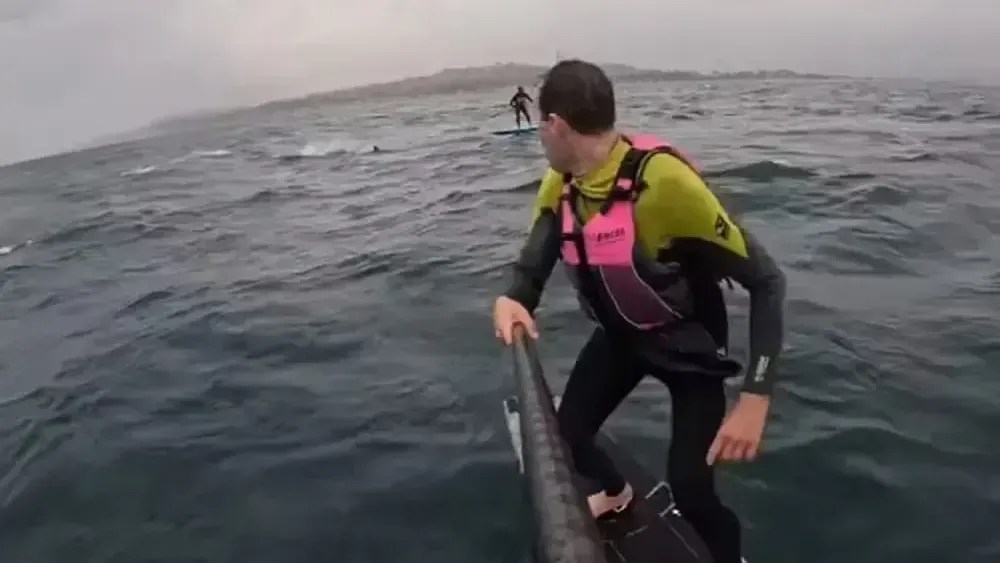
A surfer experienced a harrowing ordeal off the coast of Santa Barbara, California, after being pursued by a shark for an extended period. The incident, captured on video and widely shared on social media, has sparked discussion about shark activity and safety protocols for water sports enthusiasts. The surfer, identified as Ron Takeda, was utilizing a hydrofoil – a surfing technique that lifts the board above the water – when the encounter unfolded on April 25th. The incident underscores the inherent risks associated with ocean activities and highlights the importance of vigilance in marine environments.
The dramatic footage, initially posted on Instagram by Takeda’s friend Tavis Boise, shows the surfer maintaining his balance and speed as a large shark circles and approaches. Boise, who was filming from a nearby vessel, can be heard repeatedly urging Takeda to remain upright and continue paddling, shouting “Don’t fall!” and “Don’t stop!” The prolonged nature of the encounter, lasting several minutes and covering a significant distance, is particularly striking. This incident adds to a growing number of documented shark encounters along the California coastline, prompting increased awareness and safety measures.
Prolonged Pursuit and Close Calls
According to Takeda’s account, the initial indication of the shark’s presence was the sound of “thumps and bubbles” behind his board. Upon looking back, he initially mistook the approaching shape for a dolphin, but quickly realized it was a considerably larger and more dangerous creature. Boise’s video corroborates this, showing a dark shape persistently tracking Takeda as he navigated the waves. The surfer described the shark as being remarkably close at times, even within a meter of his board, alternating between direct pursuit and periods of seeming disinterest before re-engaging.

The pursuit reportedly spanned over 3 kilometers (approximately 1.86 miles) and lasted between 10 and 12 minutes, according to Boise’s social media post. Takeda emphasized the difficulty of maintaining composure and balance while simultaneously attempting to outmaneuver the shark. He stated that the shark “would surge to match every turn and increase speed to try and catch me,” and at times appeared directly beneath his board.
Recent Shark Encounters in California
This incident is not isolated. Just weeks prior, on March 19, 2026, a 39-year-old surfer was attacked by a shark at Big River beach in California, sustaining leg injuries. As reported by O Globo, the attack prompted a response from lifeguards who provided immediate first aid before transporting the surfer to a hospital. The presence of the shark near the shore after the attack further heightened concerns among beachgoers.
Another recent incident, detailed by Terra, involved a foil surfer being pursued by a shark estimated to be 4 meters (approximately 13 feet) in length. This encounter, likewise captured on video, demonstrates the increasing frequency of these interactions and the potential danger posed to those participating in water sports. The surfer in that incident, also Ron Takeda, described the experience as intensely focused, requiring constant concentration to avoid falling from the hydrofoil.
Hydrofoiling and Shark Interactions
The use of hydrofoils, while offering a unique surfing experience, may contribute to increased shark attention. The reduced drag and higher speed associated with hydrofoiling can create vibrations and disturbances in the water that attract sharks. The surfer’s elevated position above the water may create a silhouette that resembles prey from below. Experts suggest that surfers employing hydrofoils should be particularly vigilant and aware of their surroundings.
While shark attacks remain relatively rare, experts emphasize the importance of understanding shark behavior and taking appropriate precautions. These include avoiding surfing at dawn or dusk, when sharks are most active, and staying away from areas where seals or other marine mammals are present. The California Department of Fish and Wildlife provides resources and information on shark safety, including recent sightings and potential hazards.
Understanding Shark Behavior and Mitigation Strategies
The reasons behind increased shark sightings and interactions along the California coast are complex and multifaceted. Factors such as warming ocean temperatures, changes in prey distribution, and the recovery of marine mammal populations may all play a role. Researchers are actively studying shark behavior and developing strategies to mitigate the risk of encounters. These strategies include the use of drone technology for shark detection, the implementation of warning systems, and public education campaigns.

The incident with Ron Takeda serves as a stark reminder of the power and unpredictability of the ocean. While sharks are an integral part of the marine ecosystem, their presence necessitates caution and respect. Surfers and other water sports enthusiasts must remain aware of the potential risks and seize appropriate measures to ensure their safety. Continued research and monitoring efforts are crucial to understanding shark behavior and minimizing the likelihood of future encounters.
Authorities continue to monitor shark activity along the California coastline. Further updates and safety advisories can be found on the California Department of Fish and Wildlife website. The ongoing investigation into the recent incidents aims to provide a clearer understanding of the factors contributing to increased shark encounters and to develop more effective mitigation strategies.
What are your thoughts on this close encounter? Share your comments below and let us know what safety measures you take when enjoying the ocean. Don’t forget to share this article with your friends and family to raise awareness about shark safety.