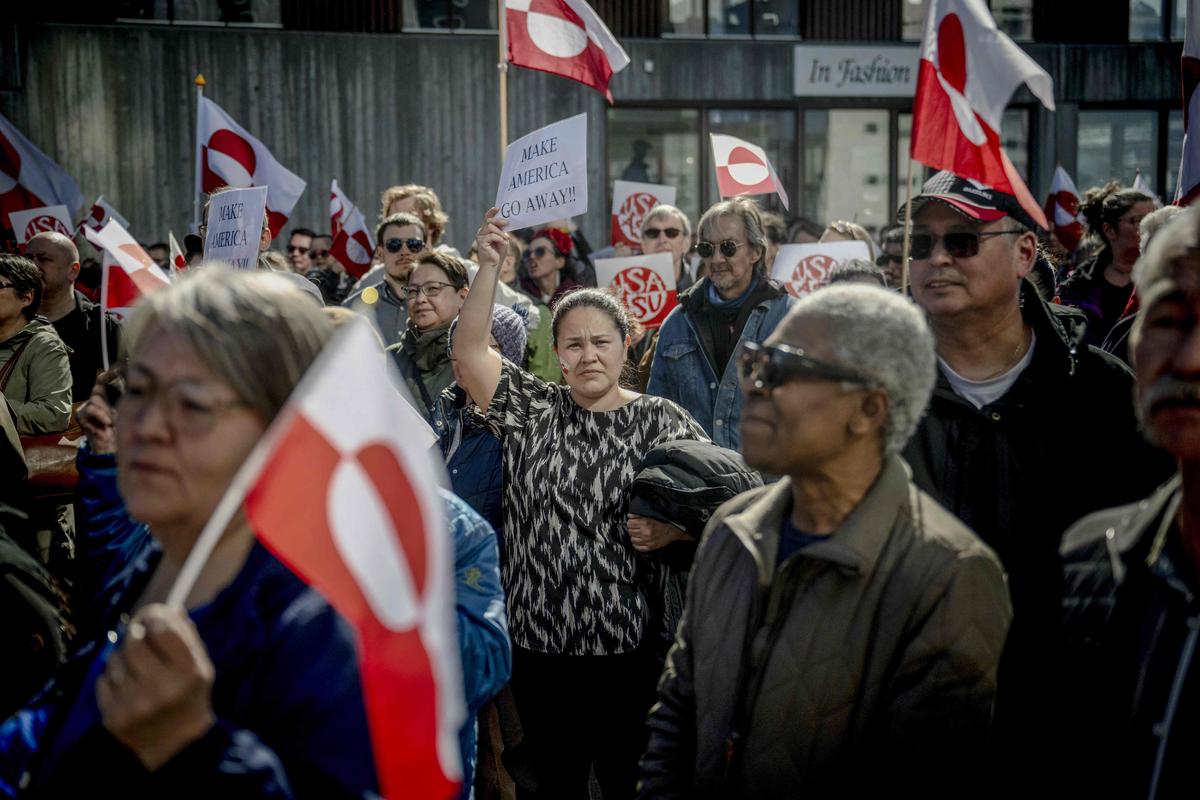
NUUK, Greenland — The opening of a new United States diplomatic hub in Greenland’s capital has been met with significant local opposition, as hundreds of demonstrators gathered in Nuuk to protest what they describe as an encroachment on Greenlandic sovereignty. The demonstrations, which took place on Friday, underscore the escalating tensions between Washington’s strategic ambitions in the Arctic and the self-determination movements within the semi-autonomous territory.
The protests coincide with a heightened U.S. Diplomatic presence in the region, following a visit from a special envoy to the territory. While Washington characterizes its expanded footprint as a move toward deeper diplomatic engagement and regional stability, local voices in Nuuk have expressed profound concerns regarding the implications of increased American influence over the island’s political and territorial future.
For Greenlanders, the arrival of expanded U.S. Diplomatic infrastructure is not merely a matter of administrative presence. it is viewed through the lens of a long-standing struggle for autonomy. The recent demonstrations, marked by chants emphasizing local control, reflect a deep-seated apprehension that the Arctic’s increasing geopolitical importance may come at the expense of the people living there.
A Growing Diplomatic Footprint in the High North
The establishment of the new consulate in Nuuk represents a significant shift in how the United States engages with the North Atlantic and Arctic regions. Historically, U.S.-Greenland relations have been mediated largely through the Kingdom of Denmark, with much of the strategic focus centered on the Thule Air Base (now Pituffik Space Base). However, the recent move to expand diplomatic hubs directly within Greenland suggests a more bilateral approach by the U.S. State Department.
This expansion comes at a time when the Arctic is undergoing rapid transformation. As ice cover diminishes, new shipping lanes and access to vast, untapped mineral resources have turned the region into a theater of intense competition. U.S. Officials have increasingly framed their presence in Greenland as a necessity for national security, citing the need to monitor the activities of other global powers, most notably Russia and China, in the increasingly contested waters of the High North.
The visit of a U.S. Special envoy to Greenland this week—a move that drew criticism from local organizers for occurring without a formal invitation—signals that Washington is accelerating its efforts to establish a permanent and influential role in the territory. While the U.S. Administration maintains that these efforts are aimed at easing diplomatic tensions and fostering cooperation, the local reaction suggests a significant gap between Washington’s strategic goals and Nuuk’s political priorities.
The Sovereignty Debate: ‘Not for Sale’
At the heart of the Nuuk demonstrations is a fundamental question of ownership and agency. Protesters have been vocal in their rejection of any rhetoric that suggests Greenlandic territory could be subject to foreign acquisition or undue influence. The sentiment that Greenland is “not for sale” has become a rallying cry for those who fear that the island’s strategic value to the United States may overshadow its right to self-governance.

The tension is exacerbated by the unique political status of Greenland. As a semi-autonomous territory within the Kingdom of Denmark, Greenland possesses significant control over its internal affairs, yet its foreign and security policies remain closely tied to Copenhagen. The direct engagement of the United States with Nuuk through a larger consulate creates a complex triangular relationship between Nuuk, Copenhagen, and Washington, complicating the path toward Greenlandic independence.
For many residents, the increased U.S. Presence feels less like a diplomatic partnership and more like a strategic imposition. Demonstrators in the capital have expressed that the timing of these diplomatic moves—coming after periods of intense political debate regarding U.S. Interest in the island—only serves to heighten fears of a return to older, more paternalistic diplomatic styles.
| Period | Key Development | Strategic Impact |
|---|---|---|
| 2019–2020 | Heightened U.S. Interest in Greenlandic territory | Triggered diplomatic friction with Denmark and local sovereignty concerns. |
| 2021–2025 | Increased Arctic militarization (Russia/China) | Accelerated U.S. Interest in securing Arctic shipping and resource routes. |
| May 2026 | Opening of new U.S. Diplomatic hub in Nuuk | Directly challenged local perceptions of autonomy and sparked Nuuk protests. |
Geopolitical Drivers: Minerals, Shipping, and Security
To understand why the United States is prioritizing a larger diplomatic presence in Greenland, one must look at the broader geopolitical landscape of the Arctic. The region is no longer a frozen periphery; it is a central corridor of global trade and security.
1. The Race for Critical Minerals: Greenland holds significant deposits of rare earth elements, which are essential for the global transition to green energy and the production of advanced military technology. As the world seeks to diversify supply chains away from dominant players like China, Greenland’s mineral wealth has become a primary interest for Western powers.

2. Arctic Shipping Routes: The melting of Arctic sea ice is opening new maritime routes, such as the Northern Sea Route and the Northwest Passage. These routes could significantly reduce transit times between Asia and Europe, making control over Arctic maritime access a matter of immense economic and strategic importance.
3. Great Power Competition: The Arctic is increasingly becoming a zone of competition between the United States, Russia, and China. Russia has significantly expanded its military footprint in the High North, and China has declared itself a “near-Arctic state,” seeking to participate in regional governance and infrastructure projects. For the U.S., a stronger diplomatic and strategic presence in Greenland is seen as a necessary counterweight to these developments.
The Impact on Denmark and the Kingdom’s Stability
The U.S. Move also places the Danish government in a delicate position. Copenhagen has long been responsible for the foreign and security policy of the entire Kingdom, including Greenland. The direct, high-level engagement between Washington and Nuuk tests the strength of the relationship between the Danish state and its autonomous territories.
If the United States continues to bypass traditional diplomatic channels to deal directly with Greenlandic authorities, it may inadvertently fuel the movement for full Greenlandic independence. The perception that the U.S. Is treating Greenland as a separate strategic entity rather than a part of the Danish Realm could weaken the cohesive political structure of the Kingdom.
the diplomatic crisis sparked by recent U.S. Ambitions has required high-stakes talks to resolve. The challenge for the international community will be to balance the legitimate security concerns of the United States with the sovereign rights and political aspirations of the Greenlandic people.
Key Takeaways: The Arctic Standoff
- Sovereignty vs. Strategy: The central conflict lies between Greenland’s push for autonomy and the U.S. Drive for Arctic security and resource access.
- Diplomatic Shift: The opening of the Nuuk consulate signals a move toward more direct U.S. Engagement with Greenland, potentially bypassing traditional Danish-led channels.
- Geopolitical Stakes: The Arctic’s importance is driven by the race for rare earth minerals, new shipping lanes, and the need to counter Russian and Chinese influence.
- Local Resistance: Protests in Nuuk indicate that the Greenlandic population remains deeply skeptical of increased American influence and “ownership” rhetoric.
As the diplomatic fallout from the consulate’s opening continues to unfold, the international community will be watching closely to see how the U.S., Denmark, and Greenland navigate this new era of Arctic geopolitics. The next phase of this tension will likely depend on whether Washington can transition from a policy of strategic interest to one of genuine, respectful partnership with the people of Greenland.
The next scheduled diplomatic briefing regarding the status of the new consulate is expected from the U.S. State Department later this month.
What do you think about the shifting geopolitics in the Arctic? Should the U.S. Increase its presence in Greenland, or does it threaten local sovereignty? Share your thoughts in the comments below and share this article with your network.
Worth a look
- Spain Strengthens Borders with Morocco to Combat Surge of Illegal Immigration
- Olivia Rodrigo Joins The Smashing Pumpkins at Lollapalooza Chicago
- Federal Reserve Chair Kevin Warsh Resists Trump Rate Cuts Amid Inflation (archyworldys.com)
- Trump Legal Team Defends Accountability Efforts Amid Ongoing Proceedings (world-today-news.com)