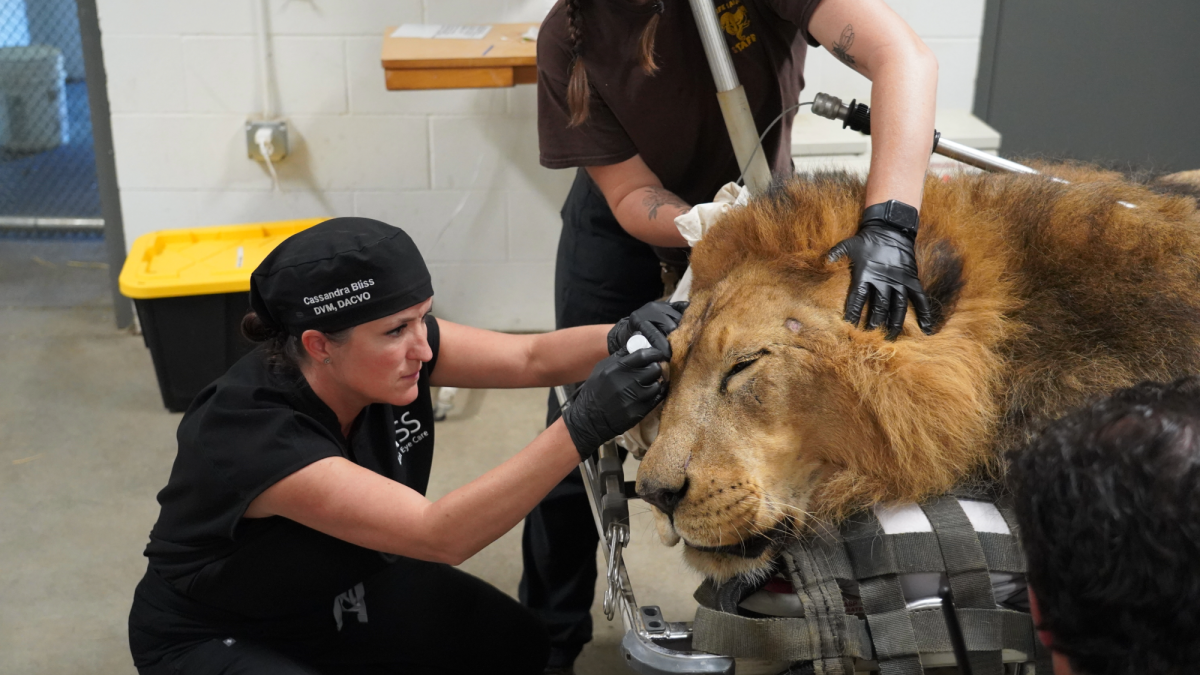
An African lion named Tsavo at Oregon’s Wildlife Safari has become the first known lion to undergo successful double cataract surgery, marking a milestone in veterinary ophthalmology. The three-hour procedure, completed on June 12, replaced both clouded lenses with custom-made implants, restoring his vision and improving his quality of life.
Tsavo, rescued as a cub in 2013 and now 12 years old, had been living with advanced cataracts for over six months before the surgery. His case required an international collaboration of veterinary specialists, including ophthalmologists from Bliss Animal Eye Care and the Wildlife Safari’s carnivore team. The surgery’s success demonstrates how advanced human medical techniques can be adapted for animals, with the lion’s recovery now being closely monitored.
Vision restoration isn’t just about seeing—it’s about reclaiming a lion’s natural behaviors, from hunting to social interactions. Experts say Tsavo’s surgery could set a precedent for treating cataracts in other big cats, though challenges remain due to the unique anatomy of feline eyes.
Why This Surgery Is a Breakthrough for Animal Medicine
Cataract surgery in humans is one of the most common and successful procedures worldwide, with over 3.5 million surgeries performed annually in the U.S. alone. But adapting the technique for a 400-pound lion presented unique challenges. “The biggest difference is the scale,” says Cassandra Bliss, a veterinary ophthalmologist at Bliss Animal Eye Care who co-led the team. “A lion’s eye is nearly three times larger than a human’s, requiring specialized equipment and larger artificial lenses.”
Unlike humans, lions rely heavily on binocular vision for hunting and social interactions. “Restoring depth perception is critical,” Bliss explains. “It’s not just about seeing—it’s about how they navigate their environment, recognize familiar faces, and engage with enrichment activities.” The surgery restored Tsavo’s visual pathways, and veterinarians expect him to regain full binocular vision within weeks.
The procedure itself mirrored human cataract surgery closely, with key differences in anesthesia and patient positioning. “Lions are much more sensitive to stress during recovery,” says Benjamin Alcantar, Head Veterinarian at Wildlife Safari and co-lead of the surgery. “We had to ensure his environment was calm and familiar to minimize complications.” Tsavo was back in his enclosure by 5:15 p.m., under 24-hour monitoring by the carnivore care team.
“The surgery itself is almost identical to modern human cataract surgery. The biggest differences are the anatomy and the patient.”
How the Surgery Worked: Step-by-Step
The operation began at 2 p.m. local time and lasted under three hours. Here’s how the team approached it:
- Preparation: Tsavo was sedated using a combination of drugs tailored for large felines, ensuring minimal stress. His eyes were prepped with antiseptic solutions to prevent infection.
- Incision and Removal: A small incision was made in each cornea to access the clouded lens. Using ultrasound technology, the cataracts were emulsified and removed.
- Implantation: Custom-made artificial lenses, designed to match Tsavo’s larger eye structure, were inserted. The lenses were pre-calibrated to ensure proper focus.
- Recovery: The incisions sealed naturally, requiring no stitches. Tsavo was moved to a recovery area with controlled lighting and limited stimulation.
Unlike human patients, lions cannot communicate discomfort, making postoperative care critical. “We’re watching for signs of irritation, changes in behavior, or any signs of infection,” Alcantar notes. “Tsavo’s first few days are the most critical.”
What This Means for Big Cat Conservation
Tsavo’s surgery isn’t just a medical achievement—it’s a potential game-changer for big cat conservation. Cataracts are common in aging lions, especially those in captivity, where stress and diet can accelerate eye degeneration. “This procedure could extend the quality of life for other lions in sanctuaries,” says Bliss.
Wildlife Safari has already performed similar surgeries on two other lions in 2023, but Tsavo’s case was more complex due to bilateral cataracts. The park’s veterinarians are now evaluating whether the technique can be applied to other species, including tigers and leopards. “The technology exists,” Alcantar says. “Now it’s about refining the approach for different anatomies.”
For now, Tsavo’s recovery is the focus. Veterinarians expect him to regain full vision within 4–6 weeks, though some adjustments in depth perception may take longer. “He’s already showing curiosity about his surroundings,” Alcantar reports. “That’s a great sign.”

Key Takeaways: What Readers Should Know
- First of its kind: Tsavo is the first lion known to undergo successful double cataract surgery, setting a precedent for veterinary medicine.
- Human-tech adaptation: The procedure used equipment and techniques nearly identical to human cataract surgery, with adjustments for size and anatomy.
- Quality of life impact: Restoring vision allows lions to hunt, socialize, and engage with their environment naturally.
- Conservation potential: The surgery could extend the lifespan of other big cats in captivity.
- Recovery timeline: Tsavo is expected to regain full vision within 4–6 weeks, with ongoing monitoring.
What Happens Next?
Tsavo’s recovery will be documented closely by Wildlife Safari’s veterinary team. Updates will be shared as milestones are reached, including:
- Full restoration of binocular vision (expected in 4–6 weeks).
- Behavioral observations to assess hunting and social interactions.
- Potential for follow-up surgeries on other lions at the park.
For readers interested in following Tsavo’s progress, Wildlife Safari offers regular updates on their official blog. The park also encourages donations to support their veterinary innovation programs.
This story highlights how advances in human medicine can benefit animals—and how conservation efforts are increasingly relying on cutting-edge veterinary care. As Tsavo’s vision improves, so does our understanding of how far animal medicine can go.
Have questions about Tsavo’s surgery or big cat conservation? Share your thoughts in the comments or reach out to Wildlife Safari directly.
Worth a look