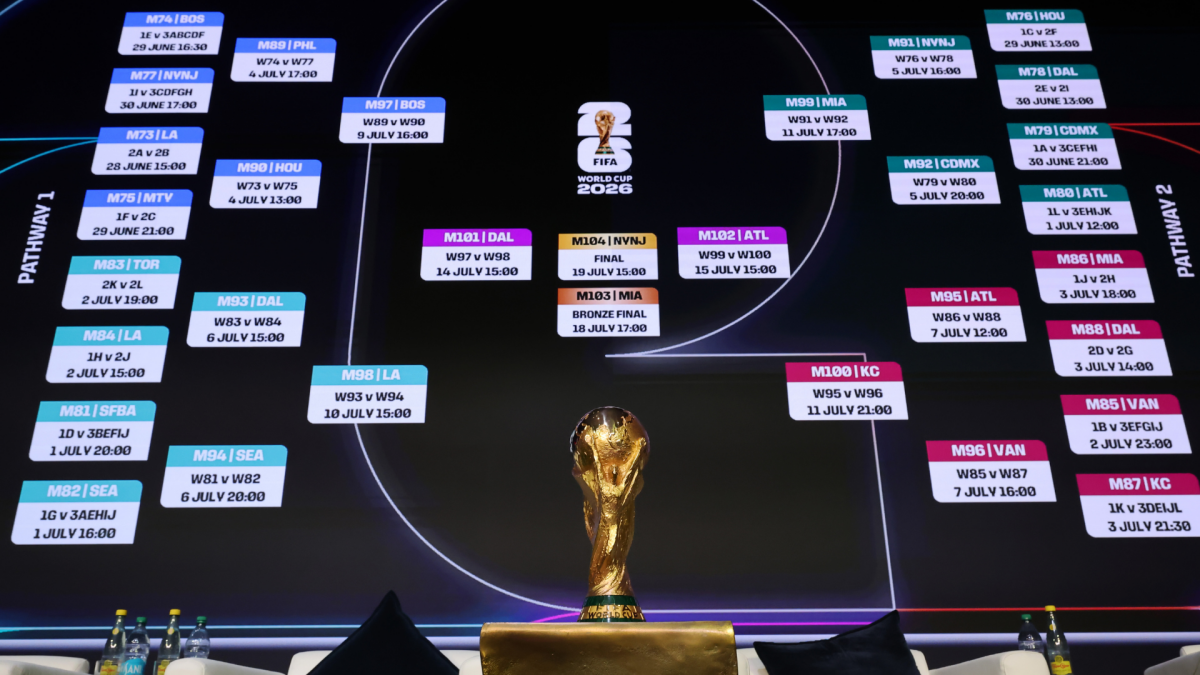
The 2026 FIFA World Cup will feature an expanded field of 48 teams, fundamentally altering the group stage standings and the qualification path for the knockout rounds. According to the official FIFA tournament regulations, the expanded format replaces the traditional four-team group structure with 12 groups of four nations each. This change increases the total number of matches to 104, making the group stage standings the most critical factor in determining which teams advance to an expanded 32-team knockout phase.
As the qualification process continues globally, football federations are navigating a complex landscape to secure their place in the tournament hosted by the United States, Canada, and Mexico. For the United States Men’s National Team (USMNT), qualification is guaranteed as a co-host, while traditional powerhouses like Brazil and Argentina must navigate the rigorous South American CONMEBOL qualifying cycle to earn their spots in the final 48-team field.
Understanding the 48-Team Group Stage Format
The transition from a 32-team to a 48-team tournament marks the largest structural shift in the history of the competition. Under the format approved by the FIFA Council, the top two finishers in each of the 12 groups will automatically qualify for the Round of 32. To complete the bracket, the eight best third-placed teams will also advance, a significant departure from previous editions where only the top two teams in each group were guaranteed progression.

This format increases the stakes for every match, as goal difference and points totals among third-placed teams will become decisive metrics. Analysts note that this structure is designed to minimize the number of “dead rubber” matches—games where both teams have already secured or lost their chance to advance—by keeping more nations in contention until the final day of group play.
Status of Major Contenders and Qualifying Paths
While the USMNT prepares through international friendlies and regional competition as a host nation, the competitive landscape for CONMEBOL heavyweights remains intense. Argentina, the defending champions, and Brazil are currently competing in a single, round-robin league table. According to current CONMEBOL standings, these teams are fighting for one of the six direct qualification slots allocated to South America.

The expansion has also opened doors for nations from other confederations. For instance, the Confederation of North, Central America and Caribbean Association Football (CONCACAF) will see three of its members—the United States, Mexico, and Canada—qualify automatically as hosts. These spots are deducted from the total allocation for the region, leaving the remaining teams to compete for the remaining berths through the qualification rounds. The final distribution of the 48 slots is as follows:
- AFC (Asia): 8 direct slots, 1 inter-confederation playoff
- CAF (Africa): 9 direct slots, 1 inter-confederation playoff
- CONCACAF (North/Central America): 6 direct slots (including 3 hosts), 2 inter-confederation playoffs
- CONMEBOL (South America): 6 direct slots, 1 inter-confederation playoff
- OFC (Oceania): 1 direct slot, 1 inter-confederation playoff
- UEFA (Europe): 16 direct slots
This breakdown, verified by FIFA’s official qualification portal, represents a significant increase in representation for non-European and non-South American confederations compared to the 2022 tournament in Qatar.
Why the Expanded Field Matters for Global Football
The decision to expand the tournament has drawn mixed reactions from the footballing community. Proponents argue that the move democratizes the sport by providing emerging football nations with their first opportunity to participate on the global stage. Critics, however, have expressed concerns regarding the potential dilution of quality in the group stage, where the disparity between top-tier nations and smaller teams could lead to lopsided results.
The financial impact of this expansion is substantial, as the increase in matches provides more broadcast inventory and ticket revenue for FIFA and the host nations. According to reports from Reuters, FIFA has projected record-breaking revenues for the 2026 cycle, driven by the increased volume of high-profile fixtures. For the fans, the expanded field means a longer tournament and a more complex bracket, where the path to the final requires navigating an additional round of knockout games.
Tracking the Road to the Final
As the qualification process nears its conclusion, the focus will shift toward the official draw, which determines the group compositions. While the USMNT, Argentina, and Brazil are widely expected to be among the seeded teams, the increased number of participants ensures that the knockout stage will feature several nations making their debut or returning after long absences.

The next major checkpoint in the tournament timeline is the conclusion of the continental qualifying cycles, which are scheduled to wrap up in late 2025. Following the completion of these matches, FIFA will hold the final tournament draw to place teams into their respective groups. Readers are encouraged to keep track of the evolving standings on official confederation websites and the FIFA match center for real-time updates as the tournament approaches.
Have you been following your national team’s qualifying journey? Share your thoughts on the expanded 48-team format in the comments below, and stay tuned for further updates as the 2026 FIFA World Cup field is finalized.
- Tour de France Femmes: Heatwave Chaos and Sigrid Haugset’s Secret to Victory
- Colo Colo vs. Olimpia: Could a 1991 Libertadores Rematch Featuring Vozinha and Tim Payne Happen?
- AEW Announces Continental Cup Tournament Field, Rules, and First-Round Matches (world-today-news.com)
- Mariano Navone Faces Valentin Vacherot in 2026 Canadian Open Second Round (time.news)