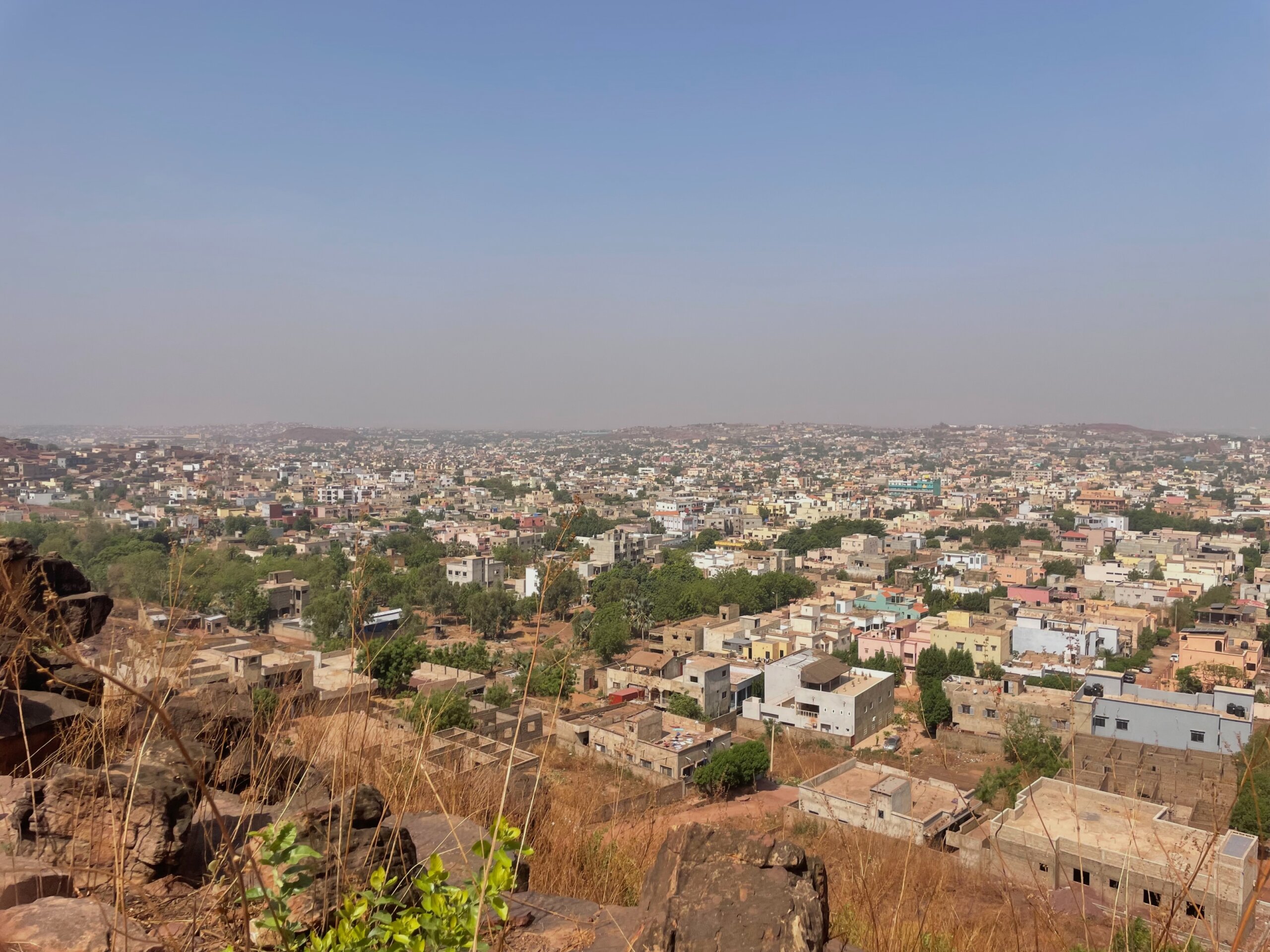
Gunfire was heard near Mali’s international airport in the capital Bamako early Saturday, according to an Associated Press reporter and local residents. The incident occurred around dawn, with sustained automatic weapons fire reported coming from the vicinity of Modibo Keïta International Airport, located approximately 15 kilometers south of the city center. No group has claimed responsibility for the shooting, and authorities have not yet provided an official explanation for the incident.
The airport, which serves as Mali’s only international gateway, is situated adjacent to Air Base 101, a facility used by the Malian Air Force. An AP journalist in Bamako reported hearing heavy weapons and automatic rifle fire emanating from the airport area and observed a helicopter flying over nearby residential neighborhoods. A resident living close to the airport confirmed hearing gunfire and described seeing three helicopters patrolling overhead, speaking on condition of anonymity due to security concerns.
This latest incident follows a pattern of increasing instability in Mali and the broader Sahel region, where armed groups affiliated with al-Qaeda and the Islamic State have intensified their operations over the past decade. In September 2024, Jama’at Nusrat al-Islam wal Muslimin (JNIM), an al-Qaeda-linked alliance, claimed responsibility for a coordinated attack on Bamako’s airport and a military training camp, resulting in significant casualties and damage to aircraft, including one used by the World Food Programme for humanitarian missions.
Since a series of military coups beginning in 2020, Mali’s ruling junta has severed ties with traditional Western partners and increasingly turned to Russia for military and security support, including the deployment of Wagner Group personnel. However, analysts and international observers have noted that despite this shift, violence across Mali, Niger, and Burkina Faso has continued to escalate, with record numbers of attacks reported in recent months. Human rights organizations have also documented allegations of civilian casualties resulting from operations by both state forces and armed groups.
Context of Regional Insecurity
Mali has been at the forefront of a deepening security crisis in the Sahel since 2012, when a Tuareg rebellion in the north was hijacked by Islamist militants who seized control of key northern cities. Although French-led intervention initially pushed back the militants, the vacuum left by their retreat allowed jihadist groups to regroup and expand their influence into central and southern regions. Over time, the conflict has evolved into a complex web of intercommunal violence, banditry, and insurgency, with civilians frequently caught in the crossfire.
The Malian government’s struggle to assert control beyond the capital has been compounded by political instability. Following the overthrow of President Ibrahim Boubacar Keïta in August 2020, a second coup in May 2021 brought Assimi Goïta to power as head of the transitional government. Subsequent delays in restoring civilian rule led to regional sanctions by the Economic Community of West African States (ECOWAS), which were lifted in 2022 after the junta agreed to a transition timeline — though elections have since been repeatedly postponed.
In response to perceived abandonment by France and its former colonial partners, Mali, along with Burkina Faso and Niger, withdrew from the G5 Sahel joint security framework and formally requested the departure of French forces. The junta has since pursued closer defense cooperation with Russia, signing agreements for military training and equipment, including the alleged use of Wagner Group contractors — a claim Moscow and Bamako deny characterizing as mercenary activity.
Patterns of Violence and Targeting
Attacks on military installations and infrastructure have become increasingly common in Mali. The September 2024 airport assault marked one of the most direct strikes on state assets in the capital, demonstrating the reach and coordination of insurgent groups. JNIM claimed that operation destroyed multiple aircraft and targeted facilities used by both the military and humanitarian organizations. The group has consistently used asymmetric tactics, including improvised explosive devices, ambushes, and raids on convoys, to challenge state authority.
Beyond high-profile targets, militants frequently attack patrols, raid villages for supplies and recruitment, and impose informal taxation on local populations. In central Mali, where intercommunal tensions between Fulani, Dogon, and Bambara communities have been exploited by insurgents, violence has taken on ethnic dimensions, further complicating peace efforts. Meanwhile, state security forces have faced criticism from UN investigators and human rights groups for alleged extrajudicial killings and abuses during counterterrorism operations, claims the government denies.
The presence of foreign military actors adds another layer of complexity. While French troops completed their withdrawal in 2022, Russian instructors and equipment have arrived under bilateral agreements. The exact nature and scope of this cooperation remain unclear due to limited transparency from both governments, though satellite imagery and eyewitness accounts have confirmed the presence of Mil Mi-24/35 helicopters and Pantsir-S1 air defense systems at Malian air bases.
Impact on Civilians and Humanitarian Access
The deteriorating security situation has had severe consequences for civilians across Mali. According to the United Nations Office for the Coordination of Humanitarian Affairs (OCHA), over 400,000 people were internally displaced in Mali as of late 2024 due to conflict and insecurity, with many seeking refuge in urban centers like Bamako or fleeing to neighboring countries. Displacement camps often lack adequate sanitation, food, and medical care, increasing vulnerability to disease, and exploitation.
Agricultural livelihoods have been disrupted in rural areas where farmers avoid fields due to fear of attack, contributing to food insecurity. The Famine Early Warning Systems Network (FEWS NET) has warned that parts of central and northern Mali face crisis-level hunger, particularly during the lean season before harvests. Markets in conflict-affected zones frequently close due to threats, and traders report paying illegal checkpoints to move goods, increasing costs and reducing availability.
Humanitarian organizations continue to operate in Mali despite significant risks. The World Food Programme, which had an aircraft damaged in the 2024 airport attack, maintains air corridors to deliver aid to inaccessible regions. However, frequent flight suspensions and the need for military escorts hinder consistent access. UNICEF and Médecins Sans Frontières have also reported challenges in vaccinating children and treating malnutrition in areas where insecurity limits movement.
Official Response and Information Gaps
As of Saturday morning, Malian authorities had not issued a public statement clarifying the cause of the gunfire near the airport or confirming whether any casualties occurred. The airport remains operational for civilian and military flights, though access roads may have been temporarily restricted during the incident. No flight cancellations or diversions were reported by major airlines serving Bamako, including Air France, Turkish Airlines, and Royal Air Maroc, based on real-time flight tracking data.
The lack of immediate official communication has led to speculation among residents and analysts, particularly given the recent history of jihadist incursions and coup-related tensions. Security experts note that unexplained weapons fire near sensitive installations often precedes or follows attempted infiltrations, though false alarms or training exercises cannot be ruled out without verification. Independent confirmation from military sources or verified video evidence has not yet emerged.
Journalists and human rights advocates continue to call for greater transparency from the transitional government regarding security incidents, especially those involving potential civilian risk. In the absence of official briefings, local radio stations and social media platforms serve as primary sources of information, though they are also vulnerable to misinformation and propaganda from competing factions.
Regional Implications and Response
The incident underscores the ongoing challenges faced by the Alliance of Sahel States — a mutual defense pact formed in September 2023 by Mali, Burkina Faso, and Niger following their withdrawal from ECOWAS and the G5 Sahel. The alliance has framed its cooperation as a sovereign response to terrorism, emphasizing non-Western partnerships and rejecting foreign military presence unless invited. However, the bloc’s ability to coordinate cross-border operations remains untested, and internal disagreements over strategy and resource allocation have surfaced.
International partners, including the United States and the European Union, have expressed concern over Mali’s democratic backsliding and human rights record, conditioning future engagement on progress toward elections and accountability for abuses. Meanwhile, Russia has deepened its diplomatic engagement with the junta, offering diplomatic support at the United Nations and exploring economic opportunities in mining and energy sectors, though large-scale investment remains limited by sanctions and reputational risk.
For now, the focus remains on restoring calm and determining the origin of Saturday’s gunfire. Residents near the airport reported hearing the fire subside by mid-morning, with normal activity gradually resuming in surrounding neighborhoods. Whether this was an isolated event, a failed attack, or part of a broader pattern will depend on forthcoming information from Malian security forces — information that, as of this report, has not been made publicly available.
As developments unfold, those seeking updates are advised to consult official channels such as the Malian Ministry of Security and Civil Protection, though historical delays in information release suggest reliance on verified international reporting may be necessary for timely and accurate updates.
We encourage readers to share their thoughts and experiences in the comments below and to help spread awareness by sharing this article with others who may be concerned about developments in the Sahel region.
Worth a look