
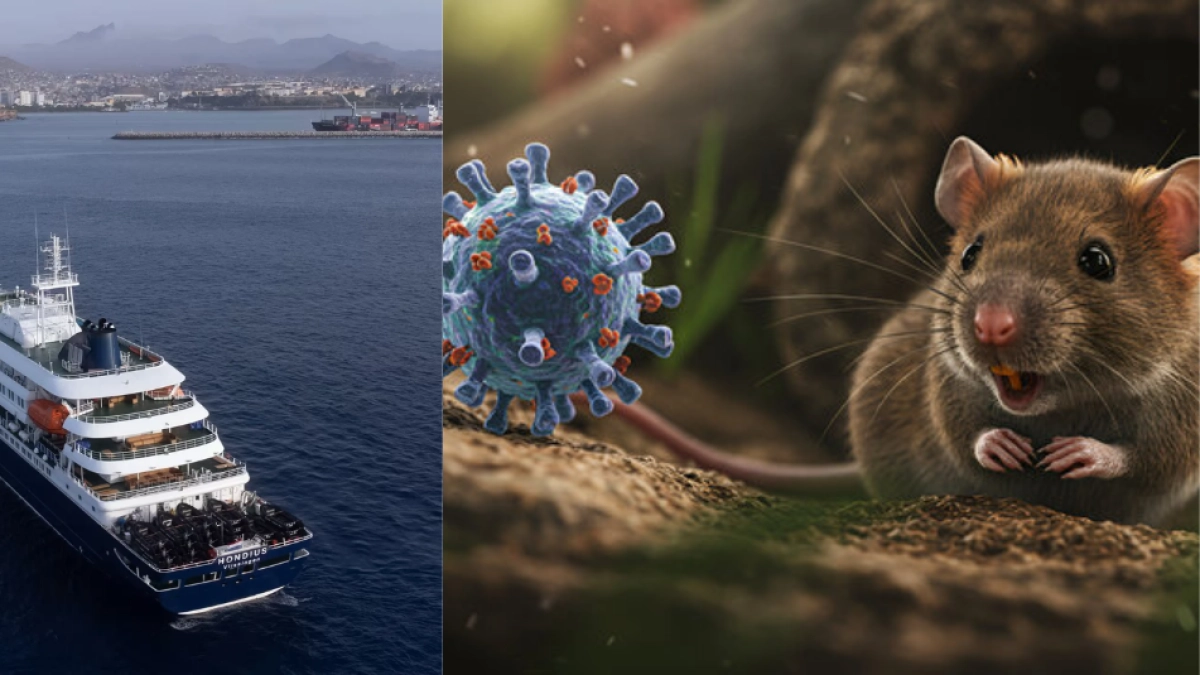
The medical emergency aboard the MS Hondius has entered a new phase as evacuations of passengers and crew have concluded and the vessel has begun its journey toward the Netherlands. The cruise, which traveled from Argentina to Cape Verde, became the center of a rare and concerning health crisis after a hantavirus outbreak was identified among those on board.
Health authorities are now monitoring new cases linked to the voyage, including a French national and a United States citizen who have returned to their respective home countries. The situation has drawn international attention not only due to the severity of the illness but because of the specific strain of the virus involved, which has raised questions about how the disease spread within the confined environment of a cruise ship.
While the World Health Organization (WHO) has indicated that the risk to the general public remains low, the outbreak serves as a stark reminder of the dangers posed by zoonotic diseases—illnesses that jump from animals to humans—and the complexities of managing them in international transit.
The Status of the MS Hondius and New Infections
Following a period of intense medical screening and the emergency removal of affected individuals, the MS Hondius is now sailing toward the Netherlands. The completion of the evacuations marks the end of the immediate crisis phase on the ship, though the medical investigation into the source and spread of the virus continues.
Recent reports have confirmed that the number of infections has grown. A French citizen and an American citizen, both of whom were passengers on the affected cruise, have tested positive for the virus after returning home. These new cases underscore the challenge of tracking the virus across borders, as passengers dispersed from the ship to various global destinations before symptoms became apparent.
The outbreak has already resulted in significant tragedy. According to reports, the outbreak is suspected in the deaths of three people, with several other cases confirmed or remaining under investigation. The transition of the ship toward the Netherlands is expected to facilitate a comprehensive deep-cleaning and a final forensic health assessment of the vessel’s interior.
Understanding the Andes Virus and Transmission
The specific variant identified in this outbreak is the Andes virus, a strain of hantavirus native to South America. Most hantaviruses are transmitted to humans through contact with infected rodents—specifically through the inhalation of aerosolized particles from rodent urine, droppings, or saliva. This typically occurs when contaminated nesting materials or waste are disturbed, such as during cleaning or sweeping.

However, the Andes virus is uniquely concerning to epidemiologists because it is the only known strain of hantavirus capable of person-to-person transmission. While such transmission is generally rare and typically limited to close contact with an ill person, the WHO has noted that some human-to-human transmission is suspected in this particular cruise ship outbreak.
For those unfamiliar with the disease, hantavirus pulmonary syndrome (HPS) is a severe respiratory illness. Initial symptoms often mimic the flu, including fatigue, fever, and muscle aches—particularly in the thighs, hips, and back. As the illness progresses, it can lead to severe shortness of breath, coughing, and potential organ failure as the virus damages the lungs, heart, or kidneys. According to the Centers for Disease Control and Prevention (CDC), HPS is a potentially deadly disease that requires immediate medical intervention.
Investigation Into the Shipboard Spread
Experts are currently working to determine how the virus gained a foothold on the MS Hondius. Given that the ship sailed from Argentina—a region where the Andes virus is endemic—it is suspected that the initial exposure occurred via infected rodents on land or through contaminated materials brought on board.
The primary mystery remains the extent of the person-to-person spread. Because hantavirus typically requires direct contact with rodent excrement to infect a human, the occurrence of multiple cases on a modern cruise ship is unusual. Genetic analysis of the virus has been conducted to determine if the strain had mutated to become more contagious; however, early genetic analysis has confirmed that the virus is the Andes variant and has ruled out significant mutations.
The investigation is focusing on several key areas:
- Environmental Sampling: Testing for the presence of rodents or rodent droppings in passenger cabins, crew quarters, and storage areas.
- Contact Tracing: Mapping the interactions between the first identified patient and subsequent cases to confirm the pathways of transmission.
- Ventilation Analysis: Determining if the ship’s HVAC systems played a role in dispersing aerosolized particles, although this is less common for the Andes strain than for traditional rodent-borne exposure.
Global Health Implications and Public Safety
Despite the alarming nature of a viral outbreak at sea, global health bodies are urging the public to remain calm. The WHO has stated that there is no need for widespread alarm, as the risk to the general population remains low. The Andes virus does not possess the characteristics of a pandemic-capable pathogen, and the current cases are linked to a specific exposure event.

For travelers and the general public, the best defense against hantaviruses remains prevention, and awareness. The Stony Brook Medicine guidelines emphasize the importance of avoiding contact with rodent-infested areas and using proper safety protocols—such as wetting down droppings with disinfectant rather than sweeping them—when cleaning potentially contaminated spaces.
The case of the MS Hondius highlights the necessity of rigorous health screenings for cruises operating in regions where endemic zoonotic diseases are present. It also emphasizes the importance of rapid reporting by cruise lines to international health authorities to prevent the silent spread of illness as passengers disembark in different countries.
Key Takeaways of the MS Hondius Incident
- Current Status: Evacuations are complete, and the ship is returning to the Netherlands for final assessment.
- New Cases: A French national and a U.S. Citizen have tested positive after returning home.
- The Pathogen: The outbreak involves the Andes virus, a South American hantavirus known for rare person-to-person transmission.
- Risk Level: The WHO maintains that the risk to the wider public is low.
- Cause: While typically spread by rodents, human-to-human transmission is suspected in this instance.
The next confirmed checkpoint in this unfolding story will be the arrival of the MS Hondius in the Netherlands, where health officials are expected to conduct a final inspection of the vessel and release a comprehensive report on the environmental conditions that led to the outbreak.
World Today Journal encourages readers to share this report and leave comments below regarding your experiences with travel health safety or questions about zoonotic disease prevention.