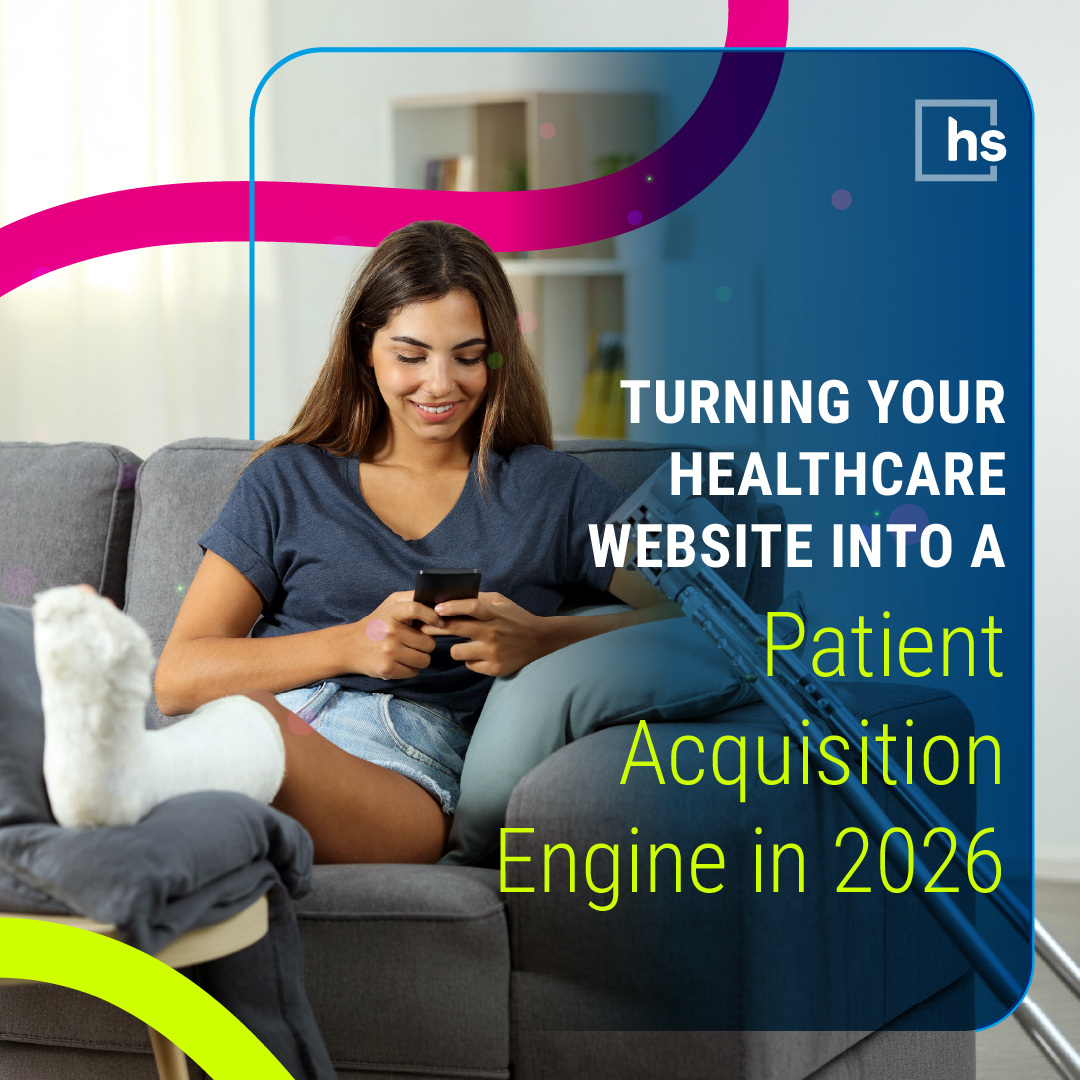
For decades, the healthcare website served a singular, static purpose: it was a digital brochure. Its primary job was to exist—to provide an address, list a few services, and offer a basic “About Us” page that signaled credibility to a motivated visitor. In the traditional patient journey, a person felt a symptom, searched for a general term, landed on a page, and manually navigated a maze of menus to find a phone number.
That model is now obsolete. We have entered the era of AI-driven discovery, where the “front door” to a clinic or hospital is no longer a search results page, but a conversational interface. Patients are no longer just typing “cardiologist Berlin”. they are asking Large Language Models (LLMs) like ChatGPT, Claude, or Google Gemini, “What are the best options for managing Stage 2 hypertension for a 60-year-old with diabetes in my area?”
As a physician and journalist, I have seen how this shift fundamentally alters the power dynamic between health providers and patients. When AI tools summarize your services for a user, the traditional “click” to your website is no longer guaranteed. This phenomenon, often referred to as “zero-click search,” means that if your website is merely a brochure, it becomes invisible. To survive, healthcare organizations must transition their digital presence into an AI-ready healthcare website—a growth engine designed not just to be seen by humans, but to be understood and recommended by machines.
The risk for health systems, private practices, and medical device companies is a “quiet gap” in performance. While many executives point to a recent visual redesign as proof of modernization, a fresh coat of paint on a static site does nothing to address the underlying architecture. In a landscape where AI judges a site’s structure, depth, and trustworthiness, the “brochure” approach is a drag on patient acquisition, clinician referrals, and overall institutional reputation.
The AI Front Door: Why E-E-A-T is Now a Clinical Requirement
In the world of search engine optimization (SEO), healthcare falls under the strictest possible category: “Your Money or Your Life” (YMYL). Because health information can directly impact a person’s well-being, search engines and AI models apply an incredibly high bar for quality. This is where the framework of E-E-A-T—Experience, Expertise, Authoritativeness, and Trustworthiness—becomes critical.
For years, “expertise” was signaled by a list of certifications. Today, the “Experience” element is just as vital. AI systems now look for evidence of first-hand clinical experience and patient-centric outcomes. A generic page on “Knee Replacement” will be outperformed by a site that connects the procedure to a specific surgeon’s success rates, patient testimonials, and a detailed recovery roadmap. Google has explicitly stated that its systems are designed to surface content that is helpful, reliable, and created by people with actual experience in the field, as detailed in the Google Search Essentials.
To be AI-ready, a website must move away from “thin content”—short, generic descriptions of services—and toward “topic hubs.” Instead of a single page for Cardiology, a growth-oriented site builds a cluster of interconnected content: one page on symptoms, another on diagnostic tools, a third on specific treatment protocols, and a fourth on recovery. This architecture tells an AI model that the organization is an authority on the entire patient journey, making it far more likely to be cited in an AI-generated summary.
Patient-First UX: Designing for the Heightened Emotional State
From my time in internal medicine at Charité, I remember that patients rarely visit a doctor’s office—or a doctor’s website—when they are feeling calm. They arrive in a state of heightened anxiety, often overwhelmed by a new diagnosis or the stress of caring for an aging parent. In this emotional state, cognitive load is a barrier to care.
A “brochure” site increases this anxiety with corporate jargon, cluttered navigation, and “hidden” contact information. A patient-first user experience (UX) does the opposite; it provides visual calm and immediate answers to three fundamental questions: “Am I in the right place?”, “Do I trust this provider?”, and “What is the exact next step I require to take?”
Conversion in healthcare is not about a “hard sell”; it is about reducing friction. In other words replacing vague buttons like “Learn More” with clear, action-oriented paths such as “Schedule a Virtual Consultation” or “Find a Specialist Near Me.” When the UX is designed around the patient’s mental model—organizing the site by condition and symptom rather than by internal hospital departments—the website stops being a map and starts being a guide.
From Information Repository to Acquisition Engine
The most significant shift for healthcare leaders is the conceptual move from “having a presence” to “driving acquisition.” A website becomes an acquisition engine when it treats every service page as a mini-funnel. The goal is to move a user from a state of concern to a state of action without them ever feeling lost.
- The Symptom Stage: Educational content that addresses the user’s fear in plain language, validating their concern and offering a path toward a solution.
- The Evaluation Stage: Detailed clinician bios that function as “trust hubs,” featuring credentials, clinical interests, and human narratives that make the provider approachable.
- The Decision Stage: Transparent information on insurance, location accessibility, and clear evidence of quality (such as accreditations or patient outcomes).
- The Action Stage: A seamless, one-click path to booking, referring, or requesting a demo.
For multi-location health systems, this complexity often leads to “digital chaos”—overlapping microsites and inconsistent branding that confuse both the patient and the AI. The solution is a scalable backbone: a master site that uses structured data to link providers, locations, and services. This ensures that a patient in a rural community sees the same level of authority and ease of access as one in a metropolitan hub.
The Technical Stack: Enabling AI Discovery
Behind the visual interface, the technical “stack” determines whether a site is an enabler or a bottleneck. Many healthcare organizations are trapped in legacy Content Management Systems (CMS) that make updates slow and rigid. In the AI era, the “best” CMS is not the one with the most features, but the one that supports structured content.
Structured data—specifically Schema.org markup—is the language that AI models use to understand the relationship between entities. For example, properly implemented schema tells a search engine, “This person is a Board-Certified Cardiologist who works at this specific clinic and specializes in this specific procedure.” Without this underlying data, the AI is forced to guess, which increases the risk of the organization being omitted from results or, worse, misrepresented.
The transition to an AI-ready stack does not require a total rebuild overnight. Instead, it requires a pragmatic roadmap. In the immediate term, organizations should focus on standardizing calls-to-action (CTAs) and fixing mobile performance issues on high-traffic pages. Over the following year, the focus should shift to re-architecting service hubs and implementing robust E-E-A-T signals across all clinical content.
The Window of Opportunity
The current shift in AI is a great equalizer. Many of the largest health systems are slowed down by bureaucracy and legacy tech, leaving them with websites that are effectively digital fossils. This creates a strategic window for smaller, more agile organizations—or forward-thinking leaders within large systems—to leapfrog their competitors.

An AI-ready healthcare website does more than just attract new patients; it improves the efficiency of the entire organization. It reduces the burden on call centers by answering FAQs through AI-optimized content, streamlines the referral process for other clinicians, and boosts investor and partner confidence by projecting a modern, competent image.
The “reset window” is now. Those who continue to treat their website as a static brochure will find themselves increasingly invisible in a world where the patient’s journey begins with a prompt. Those who build a growth engine will find themselves at the center of the new healthcare ecosystem.
Key Takeaways for Healthcare Executives
| Feature | The “Brochure” Model (Obsolete) | The “Growth Engine” Model (AI-Ready) |
|---|---|---|
| Primary Goal | Establishing a digital presence | Measurable patient and lead acquisition |
| Content Strategy | Generic service descriptions | Interconnected topic hubs and E-E-A-T signals |
| User Experience | Corporate-centric navigation | Patient-first, anxiety-reducing journeys |
| Search Approach | Keyword-based SEO | AI-driven discovery and structured data |
| Conversion Path | “Contact Us” forms | Direct scheduling and clear action paths |
The next critical milestone for the industry will be the continued integration of generative AI directly into healthcare portals and patient interfaces, potentially moving the “acquisition” process entirely into a conversational flow. Organizations that have already structured their data and refined their E-E-A-T signals will be the only ones capable of integrating these tools effectively.
Do you believe your current digital presence is helping or hindering your patient growth? We invite you to share your experiences with AI integration in the comments below or share this analysis with your leadership team.
Worth a look