U.S.-Iran Deal Eases Tensions Over Strait of Hormuz, Offering Hope for Global Economy
In a dramatic diplomatic breakthrough, the United States and Iran have reached a preliminary agreement to de-escalate tensions over the Strait of Hormuz, a critical chokepoint for global oil supplies. The deal, announced late Sunday, marks a potential turning point in a standoff that had sent energy prices soaring and raised fears of a 1930s-style economic depression. While details remain sparse, the agreement signals a rare moment of cooperation between two nations whose rivalry has long destabilized the Middle East—and, by extension, the world economy.

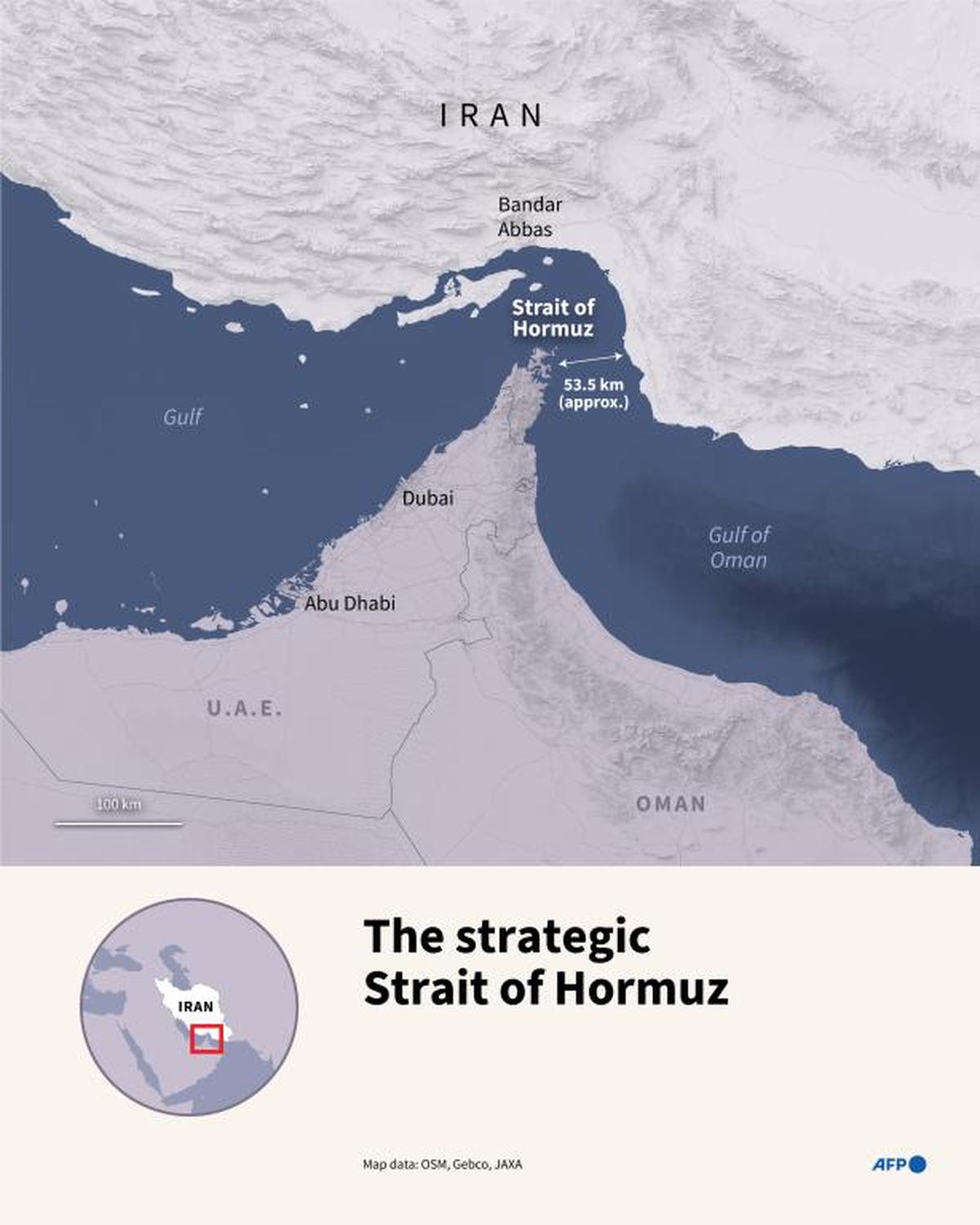
The Strait of Hormuz, a 21-mile-wide waterway between Iran and Oman, carries roughly one-fifth of the world’s oil supply, according to the U.S. Energy Information Administration. For months, the strait had become a flashpoint after former U.S. President Donald Trump suggested in an April 2026 interview with ABC News that the U.S. Might impose “transit fees” on ships passing through the strait—a move that legal experts warned would violate the United Nations Convention on the Law of the Sea (UNCLOS), which guarantees free passage in international waters. Iran, which has historically threatened to close the strait in response to U.S. Sanctions, had responded with military drills and heightened patrols, further rattling markets.
The economic stakes could not be higher. Since Trump’s remarks, global oil prices had surged by nearly 25%, pushing inflation to levels not seen since the 1970s. The U.S. Dollar had also strengthened sharply, with the won-dollar exchange rate briefly breaching 1,500 won—a psychological threshold that had triggered panic among investors in South Korea and other emerging markets. Economists warned that if the standoff persisted, the resulting energy shock could tip the world into a recession deeper than the 2008 financial crisis, with supply chain disruptions and soaring food prices hitting the poorest nations hardest.
The Deal: What We Know So Far
The agreement, brokered through backchannel negotiations in Oman, was announced in coordinated statements from the U.S. State Department and Iran’s Foreign Ministry. While the full text has not been released, officials from both countries outlined three key provisions:
- Guaranteed Free Passage: The U.S. Has agreed to drop its transit fee proposal, while Iran has pledged to halt military exercises in the strait and allow all commercial vessels to pass without interference. This restores the “innocent passage” rights enshrined in UNCLOS, which Iran had previously threatened to curtail.
- Joint Security Mechanism: A multinational naval task force, including vessels from the U.S., Iran, and Gulf Cooperation Council (GCC) states, will patrol the strait to prevent piracy and sabotage. This marks the first time Iran and the U.S. Have collaborated on maritime security since the 1979 Islamic Revolution.
- Economic Confidence-Building Measures: The U.S. Will ease some sanctions on Iran’s oil exports in exchange for Tehran’s commitment to stabilize regional energy markets. While the specifics are still being negotiated, analysts say this could unlock up to 500,000 barrels per day of Iranian crude, helping to cool global prices.
“This is a win for diplomacy and a win for the global economy,” said U.S. Secretary of State Antony Blinken in a press briefing. “The alternative—a prolonged standoff—would have been catastrophic for families, businesses, and governments around the world.” Iranian Foreign Minister Hossein Amir-Abdollahian echoed the sentiment, calling the deal “a step toward regional stability and mutual respect.”
Why the Strait of Hormuz Matters
To understand the significance of this agreement, it’s worth examining why the Strait of Hormuz is often called the “jugular vein” of the global economy. The waterway connects the Persian Gulf to the Gulf of Oman and the Arabian Sea, serving as the only sea route for oil exports from Saudi Arabia, Iraq, Kuwait, and the United Arab Emirates. In 2025, an average of 21 million barrels of oil passed through the strait daily—equivalent to about 21% of global petroleum consumption.
Historically, the strait has been a geopolitical tinderbox. In 1988, the U.S. And Iran engaged in a brief naval conflict during the “Tanker War,” part of the broader Iran-Iraq War. More recently, Iran has seized or harassed foreign-flagged vessels in response to U.S. Sanctions, including the 2019 detention of a British oil tanker. The current crisis was sparked when Trump, in an April 18 interview with ABC News, suggested that the U.S. Could “charge a small fee” for ships transiting the strait—a proposal that legal scholars immediately condemned as a violation of international law.
“The idea of a transit fee is not just economically disruptive; it’s legally indefensible,” said Dr. Natalie Klein, a professor of international law at Macquarie University in Sydney. “UNCLOS is clear: all ships have the right of innocent passage through international straits, and coastal states cannot impede that right unless there’s a direct threat to their security. A fee would set a dangerous precedent, opening the door for other nations to impose similar tolls on critical waterways like the Malacca Strait or the Suez Canal.”
Economic Fallout: Averted or Delayed?
The standoff over the Strait of Hormuz had already begun to ripple through the global economy. Here’s how the crisis had unfolded—and how the deal might reverse some of the damage:
- Oil Prices: Brent crude, the international benchmark, had surged from $85 per barrel in early April to $106 per barrel by April 25, a 25% increase. Gasoline prices in the U.S. Had risen by 18 cents per gallon, while European diesel prices had jumped by 12%. The deal is expected to bring prices back down to around $90 per barrel, though analysts warn that any further escalation could send them soaring again.
- Inflation: The energy shock had reignited inflation fears, with the U.S. Consumer Price Index (CPI) rising at an annualized rate of 4.7% in April, up from 3.5% in March. Central banks, which had been preparing to cut interest rates, were forced to reconsider. The European Central Bank (ECB) had already signaled it might delay rate cuts, while the U.S. Federal Reserve was under pressure to hold rates steady. The deal could ease these pressures, though economists caution that inflation remains sticky in other sectors, such as housing and services.
- Currency Markets: The U.S. Dollar had strengthened sharply as investors sought safe havens, with the DXY index (a measure of the dollar’s value against a basket of currencies) rising by 3.2% since mid-April. Emerging market currencies, particularly in Asia, had taken a hit. The South Korean won, for example, had fallen to 1,500 per dollar, its lowest level since the 1997 Asian financial crisis. The deal has already led to a modest rebound, with the won recovering to 1,450 per dollar.
- Stock Markets: Global equities had been volatile, with energy stocks surging while sectors like airlines and manufacturing suffered. The S&P 500 had fallen by 4.1% since Trump’s remarks, while the MSCI Emerging Markets Index had dropped by 6.3%. European markets, particularly in Germany and Italy, had been hit hard by rising energy costs. Early trading on Monday saw a relief rally, with futures pointing to a 1.5% gain in the S&P 500 and a 2% rise in European indices.
“The economic impact of this crisis was already being felt in real ways,” said Dr. Eswar Prasad, a professor of trade policy at Cornell University and former head of the IMF’s China division. “A prolonged standoff would have led to higher energy costs for businesses and consumers, reduced consumer spending, and slower economic growth. The deal is a step in the right direction, but it’s not a panacea. The underlying geopolitical tensions between the U.S. And Iran remain, and markets will be watching closely to see if this agreement holds.”
Regional Reactions: Skepticism and Relief
The deal has been met with a mix of relief and skepticism across the Middle East and beyond. Here’s how key stakeholders are reacting:
- Gulf States: Saudi Arabia and the United Arab Emirates, which had been quietly lobbying for a diplomatic solution, welcomed the agreement. Both nations rely on the Strait of Hormuz for their oil exports and had been preparing for the worst by accelerating plans to diversify their export routes, including the expansion of the East-West Pipeline (which bypasses the strait) and investments in rail and port infrastructure. “This is a positive development, but we cannot let our guard down,” said a senior Saudi official, speaking on condition of anonymity. “Iran’s track record on honoring agreements is mixed, and we will continue to invest in alternative routes.”
- Israel: Israel, which has long viewed Iran as an existential threat, reacted cautiously. Prime Minister Benjamin Netanyahu’s office released a statement saying, “Israel will continue to defend its interests and those of its allies. We urge the international community to remain vigilant against Iranian aggression in other areas, including its nuclear program and support for proxy groups.”
- China: China, the world’s largest importer of oil, had been caught in the crossfire. Beijing had called for calm but also used the crisis to accelerate its shift away from dollar-denominated oil trades, signing long-term supply deals with Russia and Iran denominated in yuan. “China welcomes any de-escalation that stabilizes global energy markets,” said a spokesperson for the Chinese Foreign Ministry. “We hope all parties will act responsibly and avoid actions that could disrupt supply chains.”
- Europe: European leaders, who had been grappling with rising energy costs and slowing economic growth, hailed the deal. European Commission President Ursula von der Leyen called it “a victory for diplomacy and a relief for European households and businesses.” However, some analysts warned that Europe’s energy security remains fragile, with the continent still heavily reliant on Russian gas and Middle Eastern oil.
What Happens Next?
While the deal has eased immediate tensions, several challenges remain:
- Implementation: The agreement’s success hinges on both sides honoring their commitments. Iran has a history of violating international agreements, including the 2015 nuclear deal (JCPOA), which the U.S. Withdrew from in 2018. The U.S., for its part, has a track record of imposing new sanctions even after reaching agreements. “Trust is in short supply,” said Dr. Sanam Vakil, deputy director of the Middle East and North Africa program at Chatham House. “Both sides will need to demonstrate excellent faith if this deal is to hold.”
- Congressional Approval: In the U.S., the deal will face scrutiny from Congress, where Republicans have already criticized it as a “capitulation to Iran.” Some lawmakers have vowed to introduce legislation blocking the easing of sanctions. President Joe Biden, who has faced pressure to take a tougher stance on Iran, will need to navigate these political headwinds carefully.
- Regional Dynamics: The deal does not address other flashpoints in the U.S.-Iran rivalry, including Iran’s nuclear program, its support for proxy groups like Hezbollah and the Houthis, and its cyberattacks on U.S. And Israeli targets. “This is a tactical de-escalation, not a strategic shift,” said Dr. Vakil. “The broader tensions between the U.S. And Iran remain unresolved.”
- Market Volatility: While oil prices have fallen in response to the deal, analysts warn that any sign of backsliding could send them soaring again. “Markets are still on edge,” said Giovanni Staunovo, a commodities analyst at UBS. “Investors will be watching for any signs of renewed tensions, and even a minor incident in the strait could trigger another spike in prices.”
The next major checkpoint will be the first meeting of the joint naval task force, scheduled for May 10 in Muscat, Oman. If the patrols proceed smoothly, it could pave the way for further confidence-building measures, including the easing of sanctions and the resumption of indirect talks on Iran’s nuclear program. However, if either side violates the agreement, the crisis could reignite quickly.
Key Takeaways for Readers
For those trying to make sense of this fast-moving story, here are the key points to keep in mind:
- The Strait of Hormuz is critical to the global economy: Roughly 21% of the world’s oil passes through this narrow waterway, making it a vital chokepoint. Any disruption could send energy prices soaring and trigger a global recession.
- The U.S.-Iran deal is a rare moment of cooperation: After months of escalating tensions, the two nations have agreed to guarantee free passage in the strait, ease some sanctions, and collaborate on maritime security. This is a significant shift from their long-standing rivalry.
- The economic impact was already being felt: Oil prices had surged by 25%, inflation had risen, and emerging market currencies had weakened. The deal has already led to a modest rebound in markets, but the long-term effects remain uncertain.
- Skepticism remains: Both sides have a history of violating agreements, and the deal does not address other flashpoints in their rivalry, such as Iran’s nuclear program and support for proxy groups.
- Markets are still on edge: While the deal has eased immediate tensions, any sign of backsliding could trigger another spike in oil prices and market volatility.
What This Means for You
For ordinary citizens, the stakes of this deal are high. Here’s how it could affect your life:
- Gas Prices: If the deal holds, gasoline prices could stabilize or even fall slightly in the coming weeks. However, any renewed tensions could send them soaring again.
- Inflation: Lower energy prices could ease inflationary pressures, making it cheaper to heat your home, fill up your car, and buy groceries. This could also lead to lower interest rates, making it cheaper to borrow for a home or car.
- Investments: If you’re invested in stocks, the deal could lead to a relief rally, particularly in sectors like airlines, manufacturing, and consumer goods. However, energy stocks could see a pullback as oil prices fall.
- Travel: Airlines, which had been grappling with rising fuel costs, could see some relief, potentially leading to lower airfares. However, any renewed tensions could reverse this trend.
- Global Stability: The deal reduces the risk of a broader conflict in the Middle East, which could have had far-reaching consequences for global security and economic stability.
As the situation develops, it’s significant to stay informed and avoid making hasty financial decisions based on short-term market movements. For the latest updates, follow official sources like the U.S. State Department, the U.S. Energy Information Administration, and reputable news outlets like World Today Journal.
The Road Ahead
The U.S.-Iran deal over the Strait of Hormuz is a fragile but welcome development in a region—and a world—grappling with economic uncertainty. While the agreement has eased immediate tensions, its long-term success will depend on the willingness of both sides to honor their commitments and address the deeper geopolitical issues that divide them.
For now, the global economy can breathe a sigh of relief. But with so much at stake, the world will be watching closely to see if this deal marks the beginning of a new era of cooperation—or just a temporary pause in a long-standing rivalry.
The next major checkpoint is the first meeting of the joint naval task force on May 10 in Muscat, Oman. We will continue to cover this story as it develops. In the meantime, we invite you to share your thoughts in the comments below: Do you consider this deal will hold, or is it just a temporary truce? How are rising energy costs affecting your life? Let us know.
Related reading
- Accepted Payment Methods
- Wings Of Desire slam music industry after traveling with baby to festival stage that didn’t exist
- US and Qatar Report Progress on Iran Ceasefire and Hormuz Strait Reopening (time.news)
- Rockwell Automation (ROK) Beats Quarterly Estimates Amid Strong Industrial Demand (newsdirectory3.com)