
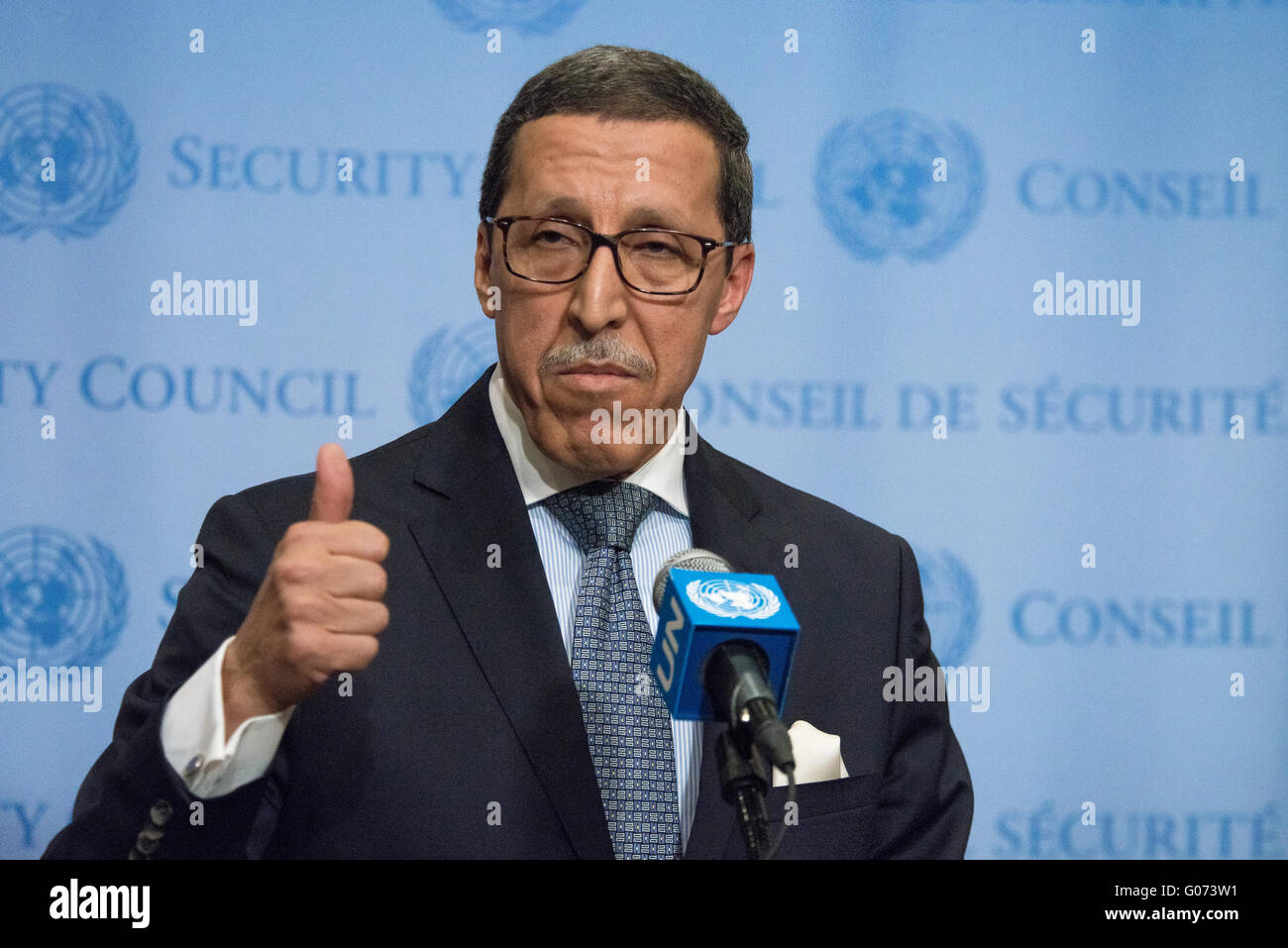
Morocco Condemns Weaponization of Maritime Routes at UN Security Council
In a sharply worded address to the United Nations Security Council on Monday, Morocco’s Permanent Representative to the UN, Omar Hilale, denounced the growing trend of nations and non-state actors using international maritime routes as tools of political pressure and coercion. Speaking during a session on global security challenges, Hilale warned that the “instrumentalization of maritime pathways” threatens not only regional stability but also the foundational principles of free navigation and international trade.
The Moroccan diplomat’s remarks reach amid rising tensions in key shipping lanes, including the Red Sea and the Strait of Hormuz, where recent disruptions have highlighted the vulnerability of global supply chains to geopolitical maneuvering. While Hilale did not name specific countries or incidents, his statement aligns with concerns raised by the international community over attacks on commercial vessels and the use of naval blockades as leverage in diplomatic disputes.
“Maritime routes are the arteries of the global economy,” Hilale said, according to a transcript of his speech published by the Moroccan Ministry of Foreign Affairs. “When these routes are weaponized—whether through blockades, piracy, or the threat of military action—the entire world pays the price. What we have is not just a regional issue; This proves a challenge to the rule-based international order.”
Morocco’s Growing Role in UN Diplomacy
Hilale’s address underscores Morocco’s increasingly prominent position within the United Nations, particularly on issues of peace and security. In January 2026, he was elected president of the UN Peacebuilding Commission for the year, a role that has amplified Morocco’s voice on matters ranging from conflict resolution in Africa to the protection of critical infrastructure. His leadership in the commission has been marked by a focus on preventive diplomacy and the demand for multilateral cooperation to address emerging threats.
The Moroccan delegation has also been vocal about the security challenges facing the Sahel region, where instability has spilled over into neighboring countries and disrupted trade routes. In a separate briefing to the Security Council earlier this month, Hilale presented an update on the situation in the Central African Republic, emphasizing the need for sustained international support to prevent further deterioration. Morocco’s engagement in the Sahel is part of its broader strategy to position itself as a stabilizing force in Africa, leveraging its geographic and diplomatic influence to foster regional cooperation.
The Global Impact of Maritime Insecurity
Hilale’s warning about the weaponization of maritime routes reflects broader concerns among UN member states about the fragility of global trade networks. According to the United Nations Conference on Trade and Development (UNCTAD), over 80% of global trade by volume is transported by sea, making maritime security a critical component of economic stability. Disruptions in key chokepoints, such as the Suez Canal or the Strait of Malacca, can have cascading effects on energy markets, food supplies, and industrial production worldwide.

Recent incidents in the Red Sea have brought these risks into sharp focus. Since late 2023, attacks on commercial shipping by Houthi rebels in Yemen have forced many vessels to reroute around the Cape of Great Hope, adding significant time and cost to journeys between Asia and Europe. The International Monetary Fund (IMF) estimates that these disruptions have increased shipping costs by up to 60% for some routes, with potential long-term consequences for inflation and economic growth. While Hilale did not directly reference the Houthi attacks, his remarks appeared to allude to the broader pattern of maritime insecurity in the region.
Similarly, tensions in the Strait of Hormuz—where Iran has periodically seized or harassed commercial vessels—have raised alarms about the potential for wider conflict. The strait, which connects the Persian Gulf to the Indian Ocean, is a vital conduit for global oil supplies, with approximately 20% of the world’s petroleum passing through it daily. Any prolonged disruption could send shockwaves through energy markets, particularly in Europe and Asia, which remain heavily dependent on Middle Eastern oil and gas.
A Call for Multilateral Action
Hilale’s address did not merely highlight the problem; it also outlined a path forward. He called on the Security Council to adopt a more proactive stance in safeguarding maritime security, including through the enforcement of existing international laws and the development of modern mechanisms to deter coercive actions. Specifically, he urged member states to uphold the United Nations Convention on the Law of the Sea (UNCLOS), which guarantees the right of innocent passage and prohibits the use of force against commercial vessels.
“The Security Council must send a clear message that the weaponization of maritime routes will not be tolerated,” Hilale said. “This requires not only political will but also practical measures, such as enhanced naval patrols, intelligence-sharing, and sanctions against those who seek to undermine global stability.”
His proposal aligns with ongoing efforts by the International Maritime Organization (IMO) and regional coalitions, such as the European Union’s Operation Aspides, to protect commercial shipping in high-risk areas. However, Hilale emphasized that such initiatives must be complemented by diplomatic efforts to address the root causes of maritime insecurity, including unresolved conflicts and the proliferation of non-state armed groups.
Morocco’s Strategic Vision for the Atlantic
Beyond its diplomatic efforts at the UN, Morocco has been positioning itself as a key player in securing Atlantic maritime routes, particularly for landlocked Sahelian countries. In recent years, Rabat has promoted the idea of an “Atlantic interface,” offering its ports as gateways for trade and connectivity between Africa and the rest of the world. This initiative, which has gained traction among countries like Mali, Niger, and Burkina Faso, aims to reduce dependence on traditional trade routes that have been disrupted by conflict and instability.

Morocco’s King Mohammed VI has framed the Atlantic strategy as part of a broader vision for African integration, emphasizing the need for infrastructure development and economic cooperation. The country’s ports, including the Tanger Med complex, are among the most advanced in Africa, handling millions of containers annually and serving as hubs for transshipment between Europe, Africa, and the Americas. By offering these facilities to Sahelian nations, Morocco seeks to strengthen its economic and political ties with the region while contributing to its stability.
Hilale’s address to the Security Council can be seen as an extension of this strategy, reinforcing Morocco’s commitment to maritime security as a cornerstone of its foreign policy. His call for multilateral action reflects a recognition that no single country can address the challenges of maritime insecurity alone—and that collective solutions are essential to protecting the global commons.
What Happens Next?
The Security Council is expected to take up the issue of maritime security in the coming weeks, with a potential resolution or presidential statement on the horizon. Hilale’s remarks have already sparked discussions among member states about the need for a coordinated response to the weaponization of maritime routes. Meanwhile, the Moroccan delegation will continue to play a leading role in the Peacebuilding Commission, where it is expected to push for greater international support for conflict prevention and post-conflict reconstruction in Africa.
For global businesses and policymakers, the stakes could not be higher. The disruptions in the Red Sea and the Strait of Hormuz serve as a stark reminder of the interconnectedness of the modern economy—and the vulnerability of its supply chains to geopolitical tensions. As Hilale warned, the international community must act decisively to ensure that maritime routes remain open, secure, and free from coercion.
Key Takeaways
- Maritime routes as leverage: Morocco’s UN Ambassador Omar Hilale condemned the use of international shipping lanes as tools of political pressure, warning that such actions threaten global trade and security.
- Global economic impact: Over 80% of global trade by volume relies on maritime transport, making disruptions in key chokepoints like the Red Sea and Strait of Hormuz a major concern for economies worldwide.
- Call for multilateral action: Hilale urged the UN Security Council to enforce international laws, such as UNCLOS, and adopt measures to deter the weaponization of maritime routes.
- Morocco’s diplomatic leadership: As president of the UN Peacebuilding Commission, Hilale has positioned Morocco as a key voice on global security, particularly in Africa and the Sahel.
- Atlantic strategy: Morocco is promoting its ports as gateways for Sahelian countries, aiming to enhance regional trade and stability through infrastructure development.
As the situation develops, World Today Journal will continue to provide updates on the Security Council’s response and the broader implications for global trade and security. Have thoughts on Morocco’s stance or the challenges facing maritime security? Share your views in the comments below and join the conversation on social media.