
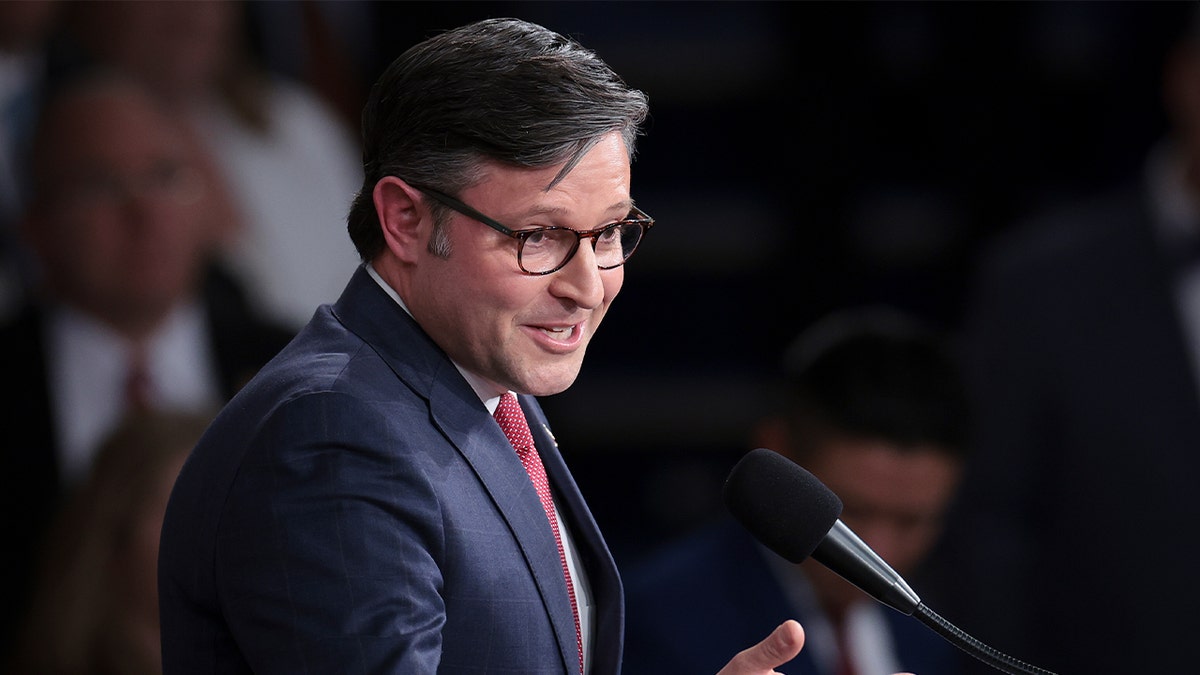
House Speaker Johnson Navigates Narrow Votes, Secures Key Funding Bills
Washington D.C. – House Speaker Mike Johnson on Wednesday successfully navigated a series of challenging votes, securing passage of a continuing resolution to fund several key government agencies and renewing a controversial foreign intelligence surveillance authority. The votes, which came after days of internal Republican division and threats to his leadership, represent a significant, though potentially temporary, victory for the Speaker as he attempts to manage a deeply fractured GOP conference. The outcome averts a partial government shutdown and allows critical national security programs to continue, but the path forward remains fraught with difficulty as lawmakers grapple with broader spending priorities and ideological clashes.
The votes unfolded amidst a backdrop of increasing frustration within the Republican party, fueled by disagreements over government spending levels and the scope of surveillance powers. Hardline conservatives had initially opposed the funding bills, arguing they did not go far enough in cutting spending and reining in government overreach. These objections prompted a dramatic series of procedural votes, testing Johnson’s ability to maintain control and deliver on promises to his constituents. The Speaker ultimately secured the necessary support by appealing to moderate Republicans and Democrats, highlighting the precarious balance he must strike to govern effectively.
FISA Reauthorization and Intelligence Gathering
Perhaps the most contentious vote centered on the reauthorization of Section 702 of the Foreign Intelligence Surveillance Act (FISA). This provision allows the U.S. Government to collect communications of foreign targets located outside the country, even if those communications incidentally touch on the data of American citizens. NBC News reported that the House passed the FISA reauthorization bill with a vote of 273-147.

The debate over FISA has intensified in recent years, with privacy advocates raising concerns about potential abuses of power and the lack of adequate safeguards to protect civil liberties. Critics argue that the law allows for warrantless surveillance of Americans and that the process for obtaining warrants is overly secretive. Supporters, however, maintain that Section 702 is a vital tool for national security, enabling intelligence agencies to gather critical information about terrorist threats, cyberattacks and other foreign adversaries. The reauthorization includes some reforms aimed at addressing privacy concerns, such as requiring a warrant for searches of U.S. Person data, but these changes were not enough to satisfy some lawmakers on both sides of the aisle.
Funding for ICE and Homeland Security
Alongside the FISA vote, the House also approved a funding package that includes $1.2 billion for Immigration and Customs Enforcement (ICE) and other Department of Homeland Security (DHS) programs. Politico detailed how this funding was a key sticking point for many Republicans, who have been pushing for increased resources to secure the border and enforce immigration laws. The bill provides funding for border security technology, detention facilities, and personnel, but it also includes provisions related to asylum processing and humanitarian aid.
The funding package faced opposition from some Democrats, who argued that it prioritizes enforcement over addressing the root causes of migration and providing support for asylum seekers. The final vote on the DHS funding bill was 285-134, demonstrating a bipartisan compromise despite lingering disagreements. The passage of this bill comes as the Biden administration faces mounting pressure to address the situation at the southern border, particularly in the lead-up to the 2024 presidential election.
Internal Republican Divisions and Johnson’s Leadership
The votes this week underscored the deep divisions within the Republican party and the challenges facing Speaker Johnson as he attempts to unite his caucus. A faction of hardline conservatives, led by Representatives Marjorie Taylor Greene of Georgia and Thomas Massie of Kentucky, had threatened to oust Johnson if he did not adhere to their demands for stricter spending cuts and policy concessions. These members filed motions to vacate the speakership, triggering a procedural hurdle that Johnson had to overcome to maintain his position.
While Johnson ultimately prevailed, the experience highlighted his tenuous grip on power and the potential for future challenges. Some analysts suggest that the Speaker may have to rely increasingly on Democratic support to pass legislation, further alienating his conservative base. The situation is complicated by the upcoming deadline for funding the remaining government agencies, as well as the ongoing debate over broader spending priorities. The House is now facing a looming deadline to pass a full budget resolution, a task that is likely to prove even more tricky than the recent votes on the continuing resolution and FISA reauthorization.
Looking Ahead: DHS Funding and Potential Shutdowns
The House now faces a significant challenge in securing funding for the Department of Homeland Security (DHS), which remains the only major agency without a finalized appropriations bill. CNN reported that disagreements over border security policies and funding levels have stalled negotiations, raising the specter of a partial government shutdown if a deal cannot be reached.
Hardline conservatives are demanding deeper cuts to DHS funding and stricter enforcement measures, while Democrats are pushing for increased resources for humanitarian aid and asylum processing. Speaker Johnson will need to navigate these competing demands and forge a compromise that can secure the support of both parties. The outcome of the DHS funding debate will have significant implications for border security, immigration policy, and the overall stability of the federal government. The current continuing resolution expires on May 10th, creating a tight timeline for lawmakers to reach an agreement.
The recent votes represent a temporary reprieve for Speaker Johnson, but the underlying challenges facing the Republican party remain. The party is grappling with deep ideological divisions, a lack of clear leadership, and the looming prospect of a difficult election year. As Johnson moves forward, he will need to demonstrate his ability to unite his caucus, negotiate effectively with Democrats, and deliver on his promises to the American people. The coming weeks will be a critical test of his leadership and the future of the Republican party.
Key Takeaways
- The House passed a bill reauthorizing Section 702 of the FISA, renewing the controversial surveillance program.
- Funding for ICE and other DHS programs was approved, providing $1.2 billion for border security and immigration enforcement.
- Speaker Johnson faced a significant challenge from hardline conservatives who threatened to oust him over spending disagreements.
- The House now faces a looming deadline to fund the Department of Homeland Security, with the potential for a partial government shutdown.
- The votes highlight the deep divisions within the Republican party and the challenges facing Speaker Johnson as he attempts to govern.
The next key date to watch is May 10th, when the current continuing resolution expires, potentially triggering a partial government shutdown if Congress fails to reach an agreement on funding the remaining agencies. Stay informed on the latest developments by following World Today Journal for ongoing coverage of this evolving situation. We encourage readers to share their thoughts and perspectives in the comments section below.