
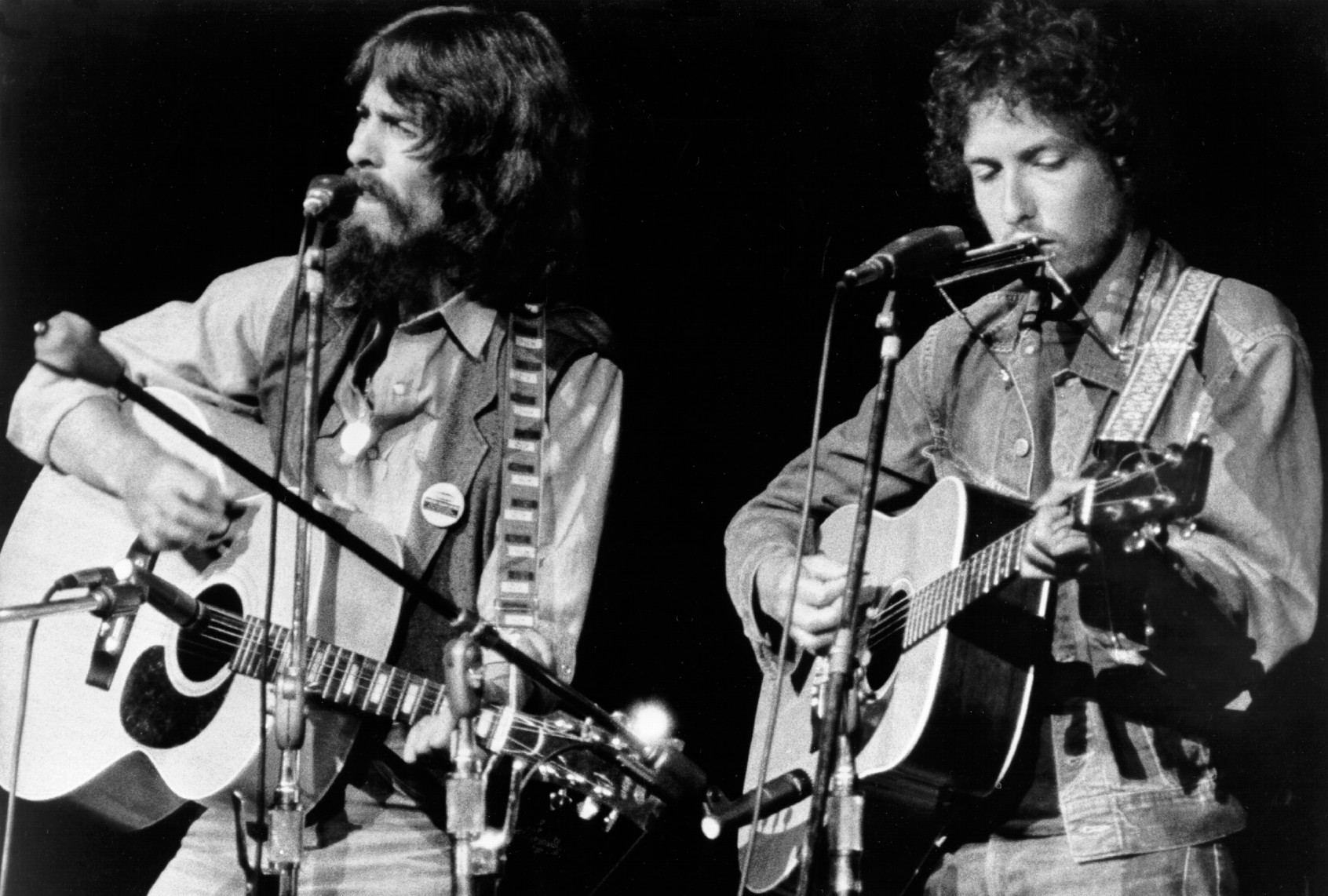
How Bob Dylan and The Beatles pushed each other to evolve
The relationship between Bob Dylan and The Beatles represents one of the most significant artistic dialogues in 20th-century popular music. Their mutual influence reshaped songwriting, performance, and cultural expectations during a transformative era. This dynamic unfolded not through formal collaboration but through artistic challenge, admiration, and occasional rivalry that pushed both parties beyond their established styles.
Their first documented meeting occurred in August 1964 at the Delmonico Hotel in New York City, a moment often cited as a turning point in popular music history. By that time, Dylan had already established himself as a leading voice in folk music, whereas The Beatles were riding the wave of global Beatlemania. Accounts from the encounter suggest an immediate exchange of ideas, with each artist recognizing the other’s significance.
Early in their relationship, Dylan’s influence on The Beatles was particularly evident in their songwriting. John Lennon has been cited in multiple sources as acknowledging Dylan’s impact on his lyrical approach, especially evident in tracks like “I’m a Loser” and “You’ve Got to Hide Your Love Away” from the 1964 album Beatles for Sale. These songs demonstrated a shift toward more introspective and folk-influenced lyricism, moving beyond the simpler love songs that characterized their earlier work.
As the mid-1960s progressed, the influence began to flow in the opposite direction. Dylan, who had initially dismissed The Beatles’ music as suitable only for “teenyboppers,” gradually came to appreciate their musical sophistication. This shift coincided with his own artistic evolution, culminating in his controversial decision to perform with an electric guitar at the 1965 Newport Folk Festival—a moment widely regarded as a pivotal point in folk-rock history.
Mutual Influence and Artistic Evolution
The reciprocal nature of their relationship became increasingly apparent through the mid-to-late 1960s. Dylan’s 1966 album Blonde on Blonde featured the track “4th Time Around,” which many critics and biographers have interpreted as a response to The Beatles’ “Norwegian Wood (This Bird Has Flown)” from the Rubber Soul album. The lyrical and melodic similarities suggest a direct artistic dialogue, with Dylan engaging in a creative exchange rather than mere imitation.

Conversely, The Beatles continued to absorb Dylan’s lyrical depth and experimental spirit. Albums like Revolver (1966) and Sgt. Pepper’s Lonely Hearts Club Band (1967) showcased increasingly complex songwriting, innovative studio techniques, and themes that moved beyond conventional pop subjects. George Harrison, in particular, cited Dylan as an influence on his songwriting development during this period.
By the end of the decade, both artists had pursued distinct yet equally innovative paths. Dylan explored country-rock with John Wesley Harding (1967), embraced Nashville aesthetics with Nashville Skyline (1969), and later delivered the emotionally raw Blood on the Tracks (1973). The Beatles, meanwhile, released a series of landmark albums—Revolver, Sgt. Pepper, The White Album (1968), and Abbey Road (1969)—each representing a significant evolution in their sound and artistic ambition.
Context and Cultural Impact
The Dylan-Beatles interaction occurred against a backdrop of rapid social and cultural change in the 1960s. Both artists were deeply engaged with the era’s transformative energy, though they channeled it differently. Dylan’s roots in the folk revival and protest music tradition contrasted with The Beatles’ origins in Liverpool’s rock and roll scene, yet both demonstrated an ability to absorb and reinterpret diverse influences.
Their mutual challenge helped elevate popular music from mere entertainment to a form of artistic expression worthy of serious critical attention. By pushing each other to take risks—whether Dylan’s embrace of electric instrumentation or The Beatles’ experimentation with studio techniques and unconventional song structures—they expanded the possibilities of what popular music could achieve.
The legacy of this relationship continues to influence musicians today. Artists across genres cite both Dylan and The Beatles as foundational influences, not just for their individual achievements but for the example they set of artistic growth through dialogue, challenge, and willingness to evolve.
Recent Scholarship and Public Interest
Interest in the Dylan-Beatles relationship has seen renewed attention in recent years, driven by new biographical works and archival discoveries. Jim Windolf’s 2026 book Where the Music Had to Go: How Bob Dylan and the Beatles Changed Each Other—and the World offers a contemporary examination of this dynamic, drawing on extensive research and including what is described as an exclusive interview with Sir Paul McCartney.

The book’s release coincided with ongoing discussions about artistic influence and collaboration in music history. While specific claims within the work require individual verification, the broader narrative it presents—that of two towering figures shaping each other’s development through mutual respect and creative tension—aligns with established historical accounts of their relationship.
As of April 2026, no major anniversary events or commemorative projects specifically dedicated to the Dylan-Beatles relationship have been officially announced. However, both artists continue to be subjects of ongoing scholarly research, documentary projects, and retrospective exhibitions that frequently reference their mutual influence.
For readers interested in exploring this topic further, primary sources include the artists’ respective discographies, contemporary interviews from the 1960s, and reputable biographies. Academic journals focusing on music history and cultural studies also regularly publish research examining specific aspects of their interaction and its broader impact on popular music.
What aspects of this artistic relationship resonate most with your own understanding of creative influence and evolution? Share your thoughts in the comments below, and consider sharing this article with others interested in music history and cultural development.