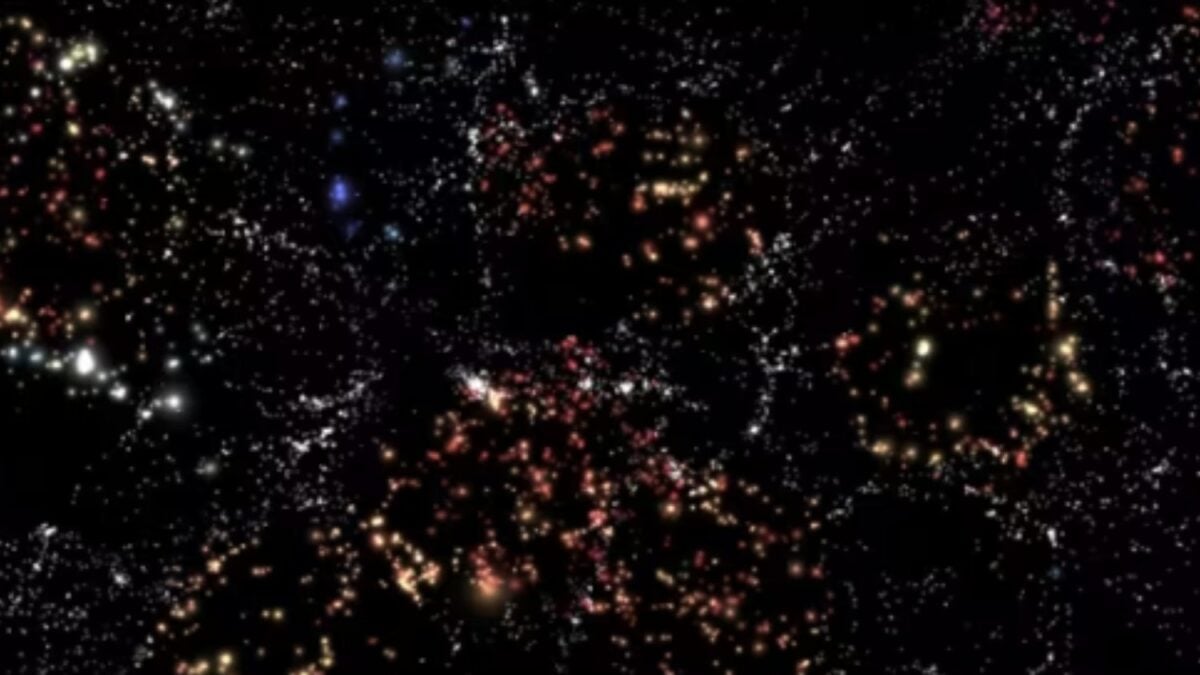
The vast, seemingly empty regions of our universe, known as cosmic voids, are far from being the desolate “nothingness” they were once assumed to be. Recent astrophysical research is shedding light on how these expansive, low-density areas act as a unique laboratory for understanding galactic evolution. By studying the most isolated galaxies located within these voids, researchers are uncovering insights into why these structures appear to age more slowly than their counterparts in densely populated regions of the cosmos.
As we examine the life cycle of galaxies, we find that the environment plays a pivotal role in their development. While galaxies in crowded clusters frequently interact, collide, and exhaust their resources, those in the quiet isolation of cosmic voids seem to follow a different evolutionary timeline. This phenomenon, which has drawn the attention of researchers at institutions like the University of Granada and the Calar Alto Observatory, suggests that the “social” life of a galaxy—or lack thereof—is a primary driver of its long-term health and star-forming capacity.
The Role of Cosmic Voids in Galactic Longevity
Cosmic voids are immense regions of space containing remarkably few galaxies, representing some of the most empty expanses in the observable universe. According to findings published by researchers utilizing data from the Calar Alto Observatory, galaxies situated within these voids exhibit distinct characteristics that set them apart from galaxies found in typical cosmic filaments or dense clusters. Specifically, these isolated galaxies appear to retain their gas reserves for significantly longer periods.
In the standard model of galaxy formation, the presence of neighboring galaxies often leads to gravitational interactions that can strip gas away or trigger rapid bursts of star formation that deplete fuel supplies prematurely. In contrast, the isolation provided by a cosmic void acts as a protective buffer. Because these galaxies are not subjected to the same intense external pressures or frequent galactic collisions, they maintain a more stable environment, allowing for a slower, more sustained process of star formation over billions of years.
Gas Retention and Star Formation Efficiency
The ability of a galaxy to form stars is fundamentally tied to its supply of cold gas. When a galaxy loses this gas, its star-forming potential diminishes, leading to what astronomers describe as “quenching” or the aging of the galaxy. The research highlights that galaxies in voids are particularly effective at conserving this essential raw material.

By analyzing the spectroscopic data of these isolated systems, the research team observed that these galaxies demonstrate higher levels of star formation activity compared to those of similar mass located in more crowded environments. This “slower aging” process is not merely a result of isolation, but a complex interaction between the galaxy’s internal dynamics and its lack of external interference. Essentially, without the disruptive forces of nearby gravitational fields, these galaxies can sustain the star-birth process well beyond the point where their clustered counterparts would have already become dormant.
Why This Matters for Cosmic Evolution
Understanding the evolution of isolated galaxies is essential for refining our broader models of the universe. If the environment significantly alters the lifecycle of a galaxy, then our current maps of the cosmos—which often rely on assumptions about average galaxy behavior—may need to be adjusted to account for these “slow-aging” outliers. These findings provide a critical piece of the puzzle in explaining the diversity of galactic structures we observe today.
these studies help astronomers better understand the nature of dark matter and dark energy, which dictate the large-scale structure of the universe. Because voids are dominated by dark energy, the behavior of the matter within them serves as a probe for how this mysterious force influences the growth of cosmic structures over time. As we continue to refine our observation techniques, these isolated galaxies remain our best window into the early conditions of the universe and the fundamental processes that govern its expansion.
Key Takeaways
- Isolation as a Shield: Galaxies in cosmic voids avoid the gravitational interactions that typically strip gas from galaxies in dense clusters.
- Extended Star Formation: By retaining their gas, these galaxies remain active and continue to form stars long after similar galaxies in crowded regions have ceased.
- Refining Models: The study of these isolated systems helps physicists improve their understanding of how environmental factors influence the long-term evolution of the universe.
- Scientific Collaboration: Research facilitated by facilities like the Calar Alto Observatory continues to provide the high-resolution data necessary to challenge and update existing cosmological theories.
As research progresses, the next major checkpoint for the astrophysical community will be the integration of data from next-generation space telescopes, which are expected to provide even deeper insights into the chemical composition and star-formation histories of these void-dwelling galaxies. These future observations will be crucial in determining whether the trends identified in local voids hold true across the more distant, early universe.
What are your thoughts on how environmental factors shape the development of our universe? Join the conversation in the comments below and share this update with fellow astronomy enthusiasts.