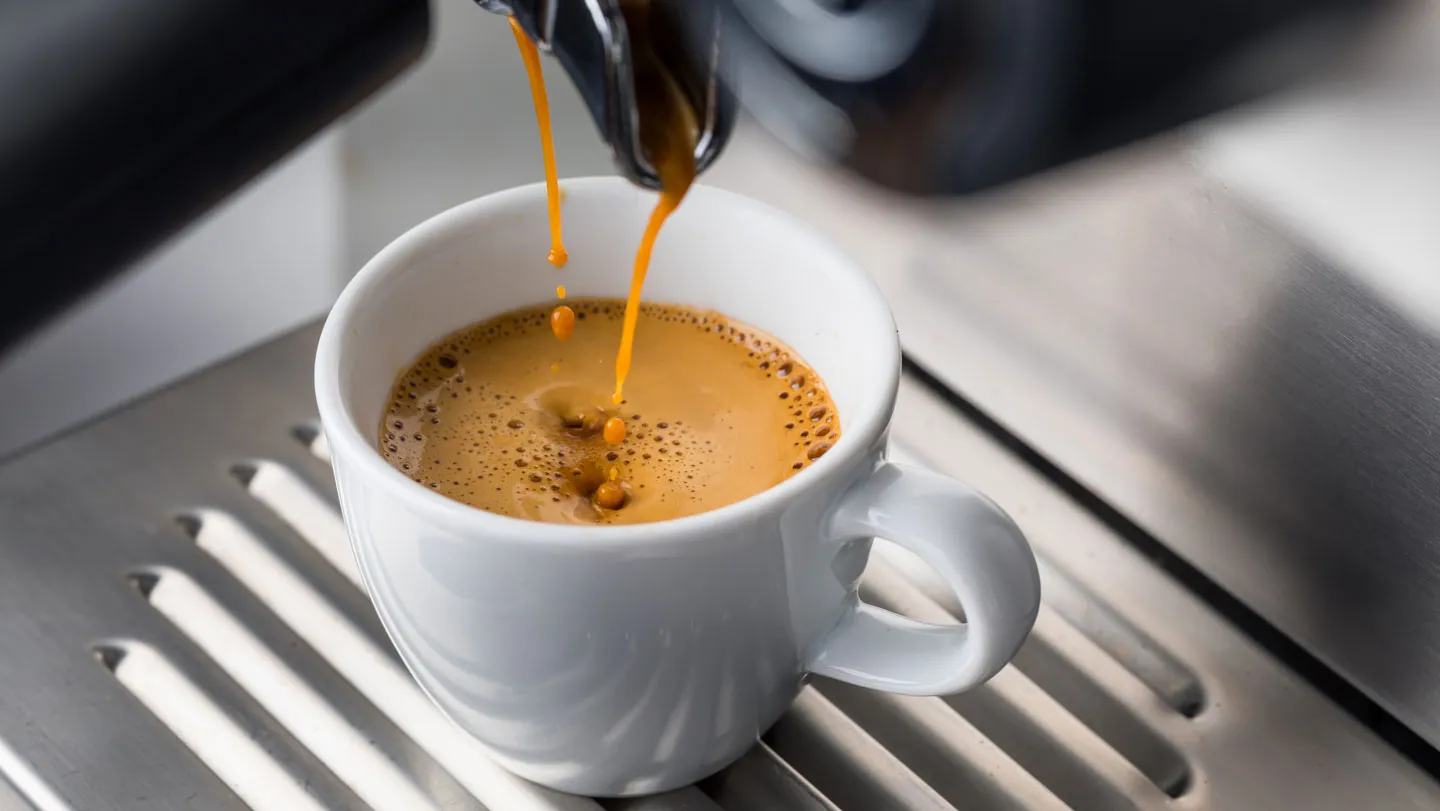
April 27, 2026 — For many, the morning ritual of pulling a shot of espresso feels like an art form — a blend of intuition, timing, and sensory judgment. But behind the crema and aroma lies a precise physical process now being decoded through equations inspired by earth science. Researchers have developed a physics-based model to calculate the speed of water percolation through ground coffee, offering baristas and enthusiasts a scientific pathway to optimize extraction and flavor balance.
The breakthrough, reported in the April 1 issue of Royal Society Open Science, draws from principles governing how gases move through volcanic systems and how water flows through subsurface rock formations. Fabian Wadsworth, an earth scientist at Ludwig-Maximilians-Universität München in Germany, led the study after recognizing that coffee brewing provides an accessible analog for teaching fundamental concepts of percolation. His team’s equation allows users to predict how quickly water moves through a coffee puck based on variables like grind size, tamping pressure, and bed porosity — key factors that influence contact time and extraction yield.
According to Wadsworth, crafting a quality espresso hinges on two controllable factors: achieving uniform distribution and compaction of the coffee grounds, and managing the duration of water–coffee interaction. An uneven puck can create preferential flow paths, or “channeling,” where water bypasses densely packed zones, leading to under-extraction in some areas and over-extraction in others. By contrast, a homogeneous bed promotes even saturation, maximizing the extraction of soluble compounds responsible for flavor, aroma, and caffeine content.
The model builds on Darcy’s law, a foundational equation in hydrogeology that describes fluid flow through porous media. By adapting this framework to the microstructured landscape of a tamped coffee puck, researchers can simulate how changes in particle size distribution or applied pressure alter permeability and flow velocity. This approach transforms what was once a largely empirical craft into a process amenable to prediction and refinement.
Beyond the laboratory, the findings have practical implications for both professional and home settings. Baristas can use insights from the model to fine-tune grind settings and tamping techniques, potentially reducing waste and improving shot consistency. For home users, understanding the role of permeability and contact time may demystify variables like brew ratio and extraction yield, empowering more informed experimentation.
Wadsworth emphasizes that while the equation provides a valuable tool, it does not replace sensory evaluation. “Physics helps us control what we can measure,” he notes, “but the final judgment still rests on taste.” The model works best when paired with traditional methods such as timing the shot, observing flow characteristics, and conducting cup tests.
The research also highlights the interdisciplinary nature of everyday phenomena. By connecting geophysical processes to a ubiquitous cultural practice, the study illustrates how fundamental physics manifests in familiar contexts. Similar principles apply to filtration systems, groundwater remediation, and even pharmaceutical tablet disintegration — domains where controlling fluid flow through granular materials is essential.
Looking ahead, the team suggests potential extensions of the model to incorporate temperature gradients, CO₂ degassing from freshly roasted beans, and the dynamic changes in puck structure during brewing. Such refinements could further bridge the gap between simulation and sensory outcome, especially in high-precision applications like competitive barista events or specialty coffee development.
As of this writing, no follow-up studies have been published updating the original model, and the researchers have not announced plans for commercial tools or apps based on the equation. Those interested in the underlying methodology can access the peer-reviewed article via the Royal Society Open Science website, where We see available under open access terms.
For now, the message is clear: the pursuit of the perfect espresso is not just about skill or equipment — it is also about understanding the hidden physics that governs every drop. By recognizing coffee brewing as a percolation process, we gain a deeper appreciation for the science in our daily rituals.
Want to dive deeper into the science behind everyday phenomena? Share your thoughts in the comments below or pass this along to fellow curious minds. For more explainers at the intersection of science and daily life, explore our Science section.