
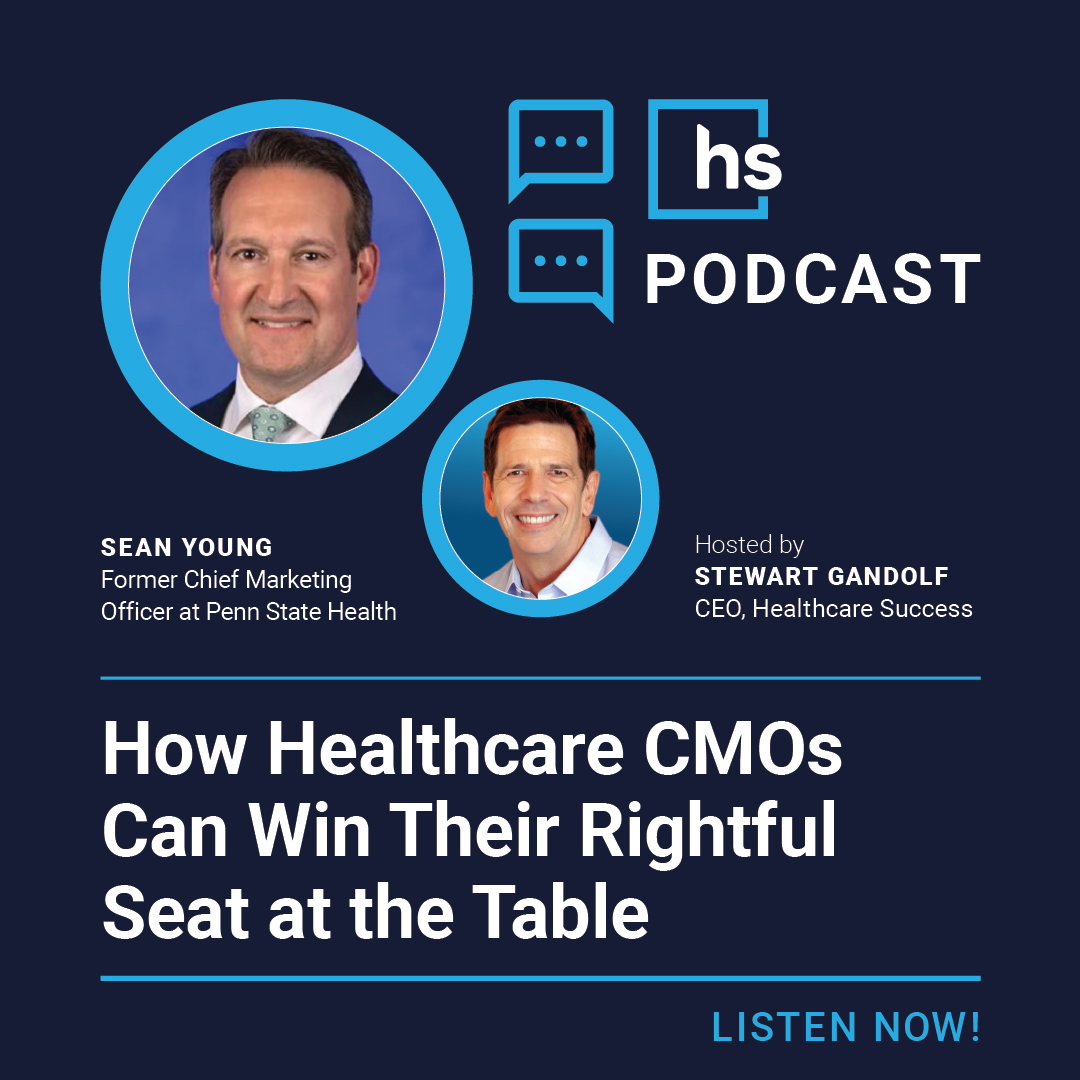
Healthcare marketing leaders often find themselves on the periphery of strategic decision-making, despite their potential to influence growth, patient access, and brand reputation. This disconnect persists even as healthcare organizations face mounting pressure to differentiate in competitive markets and improve patient experience. The challenge is not merely about visibility but about establishing credibility in environments where marketing is frequently misunderstood as a tactical function rather than a strategic one.
Industry veterans like Sean Wright, former Chief Marketing Officer at Penn State Health, emphasize that marketing leaders must actively earn their place at the executive table through deliberate efforts in education, data-driven accountability, and cross-functional collaboration. Rather than waiting for invitation, successful CMOs build trust by demonstrating how marketing contributes to measurable outcomes such as market share, patient acquisition, and operational efficiency.
Recent trends display that healthcare organizations investing in integrated marketing strategies—particularly those linking campaigns to electronic medical records and call tracking—are seeing improved alignment between marketing efforts and clinical outcomes. For example, health systems using call analytics to monitor patient access points have identified bottlenecks in scheduling and follow-up that directly affect both patient satisfaction and revenue cycle performance.
To understand how marketing leaders can transition from support roles to strategic partners, it is essential to examine the structural and perceptual barriers they face, as well as the proven tactics that have enabled some to gain influence in the C-suite.
Why Marketing Is Often Misunderstood in Healthcare Leadership
One of the core challenges healthcare marketing leaders encounter is the perception that their perform is limited to advertising, branding, or communications. Unlike finance, legal, or IT—departments that are often seen as essential to operational integrity—marketing is frequently viewed as a discretionary function focused on awareness rather than strategy.
This perception is reinforced by the historical evolution of healthcare marketing. In the past, patient referral patterns were largely geography-based, with individuals seeking care from the nearest hospital. There was less perceived need for strategic market positioning or competitive differentiation. Today, however, patients increasingly consider factors beyond proximity, including reputation, digital presence, and ease of access—areas where marketing plays a direct role.
Despite this shift, many healthcare executives still lack formal training in marketing principles. Even as MBA and MHA programs cover basic marketing concepts, the curriculum is often generalized and not tailored to the complexities of healthcare systems. Executives may rely on outdated assumptions when evaluating marketing’s value, such as equating success with billboard visibility or social media engagement rather than patient acquisition cost or service-line growth.
clinical leaders—particularly physicians—often drive service-line decisions based on clinical interest, humanitarian concerns, or vendor relationships, rather than market demand. This can create tension when marketing teams advocate for data-informed prioritization, such as launching a service only after confirming sufficient patient need and sustainable reimbursement pathways.
To bridge this gap, marketing leaders must move beyond defending their role and instead educate stakeholders on how modern marketing functions as a strategic lever for growth, patient experience, and organizational alignment.
Building Credibility Through Governance and Data
Establishing a formal marketing governance structure has proven effective in aligning marketing initiatives with organizational goals. At Penn State Health, Wright implemented a monthly marketing and communications governance committee that included the chief strategy officer, chief financial officer, chief counsel, hospital presidents, and medical group leaders. This forum provided a regular opportunity to present marketing priorities, review campaign performance, and gather feedback from key decision-makers.
Critically, the committee operated under clear rules of engagement: no materials were shared outside the meeting without consensus, and agendas were co-developed to ensure relevance to participants’ needs. By excluding the CEO from the regular rotation, the group avoided becoming a forum for override and instead positioned the CEO as an appeals process for unresolved disagreements—thereby reinforcing the group’s authority.

Quarterly extended sessions allowed for deeper dives into market share reports, brand metrics, and service-line performance. These discussions were grounded in actionable data—not just activity metrics like impressions or click-through rates, but outcomes tied to patient behavior and revenue. For instance, tracking call volume from specific campaigns enabled the team to measure not only interest but also conversion to appointments and procedures.
Wright emphasized that data must serve as a conversation starter, not a conclusion. When presenting findings, he made it a priority to anticipate objections, explain methodology, and invite interpretation. This approach fostered trust by demonstrating transparency and a willingness to engage in dialogue, even when the data challenged prevailing assumptions.
One particularly impactful example involved using call tracking technology to reveal discrepancies between what frontline staff reported and what patients actually experienced. When a patient called a newly acquired practice and was told it was not part of the health system—despite the organization’s public announcement of the acquisition—the call recording was played at a governance meeting. The audio provided undeniable evidence of a breakdown in patient experience, prompting immediate operational review and staff retraining.
The Strategic Value of Patient Experience as Brand Experience
A central insight from healthcare marketing leaders is that brand perception is shaped not by advertising alone, but by every interaction a patient has with the organization. As Wright stated, “If a patient can’t acquire through on the phone, gets poor service when they do, or encounters frustrating access barriers, the brand has failed—regardless of how good the campaign was.”
This perspective shifts the focus of marketing from promotion to end-to-end experience management. Tools like call tracking, CRM integration, and patient journey mapping allow marketing teams to identify operational failures that undermine brand promises. For example, if a campaign drives high volumes of calls to a clinic but few result in appointments due to long hold times or scheduling delays, the marketing team can use that data to advocate for process improvements in access or staffing.
In this way, marketing becomes a diagnostic function—highlighting where the organization fails to deliver on its brand commitments. When framed this way, marketing’s contributions are no longer seen as soft or subjective, but as directly tied to patient satisfaction, retention, and revenue integrity.
This alignment is increasingly supported by industry research. Studies have shown that patients who report positive experiences are more likely to return for care, recommend the provider to others, and adhere to treatment plans—all of which impact long-term value. Conversely, negative experiences, particularly around access and communication, are strongly correlated with patient leakage to competitors.
Critical C-Suite Partnerships for Marketing Leaders
To sustain influence, marketing leaders must cultivate strategic relationships with key members of the executive team. Based on insights from former healthcare CMOs, three partnerships are consistently cited as foundational:
- Chief Information Officer (IT): Marketing technology stacks rely on data feeds from electronic medical records, customer relationship management systems, and analytics platforms. Without a strong working relationship with IT, marketing initiatives often face delays, integration failures, or data silos. Proactive collaboration ensures that marketing tools are compatible with enterprise architecture and that data flows are secure and reliable.
- Chief Human Resources Officer (HR): As talent acquisition becomes a strategic priority, recruitment marketing overlaps significantly with employer branding. HR and marketing must align on messaging, channel strategy, and candidate experience to ensure consistency between what is promised externally and what employees experience internally. Joint efforts in recruitment campaigns have been shown to improve both quality of hire and employer brand perception.
- Chief Financial Officer (CFO): Perhaps the most impactful partnership is with finance, particularly around attribution modeling. By agreeing on what percentage of new patient volume can be reasonably attributed to marketing efforts—based on campaign type, service line, and patient journey—marketing can demonstrate its contribution to revenue and justify budget allocations. This shifts the conversation from cost center to investment.
These relationships are not built through occasional meetings but through consistent engagement, shared goals, and mutual accountability. Marketing leaders who invest in understanding the priorities and constraints of their peers are better positioned to propose solutions that align with broader organizational objectives.
Communications as a Risk Management Function
Beyond promotional activities, marketing leaders must also recognize the strategic importance of communications during periods of reputational risk. Wright noted that when situations arise that involve legal or human resources—such as patient safety concerns, workforce issues, or public controversies—the communications function should be included in the decision-making process from the outset.
Excluding communications from crisis response increases the risk of missteps that can amplify damage. For example, delayed or inconsistent messaging during a data breach or adverse event can erode trust, even if the underlying issue is resolved effectively. By contrast, organizations that integrate communications early are better able to control narratives, demonstrate transparency, and protect long-term brand equity.
This principle extends to proactive reputation management. Monitoring online sentiment, managing responses to patient reviews, and ensuring consistent messaging across channels are all functions that benefit from close collaboration between marketing, communications, and leadership.
Practical Steps for Marketing Leaders Seeking Greater Influence
For healthcare marketing professionals aiming to strengthen their role in strategic conversations, several actionable steps have proven effective:

- Initiate regular education sessions for executives and clinical leaders on what modern marketing entails—emphasizing strategy, analytics, and accountability over tactics.
- Establish a formal governance structure that includes cross-functional leaders and operates with clear protocols for review, feedback, and decision-making.
- Focus on actionable outcomes: track metrics that connect marketing activities to patient behavior, such as appointment conversion, service-line growth, and cost per acquisition.
- Use data not to dictate, but to facilitate dialogue—presenting findings with context, inviting interpretation, and being open to challenge.
- Invest in technology that enables closed-loop tracking, such as call analytics, CRM integration, and campaign attribution tools, to demonstrate real-world impact.
- Frame patient experience as a shared responsibility, using marketing insights to highlight gaps in access, communication, and service delivery that affect both satisfaction and revenue.
- Build trust with IT, HR, and finance through joint planning, shared metrics, and mutual accountability for outcomes.
- Ensure that communications is included in discussions involving reputational risk, recognizing that crisis response is a shared leadership function.
These steps require persistence and political savvy, but they offer a pathway for marketing leaders to transition from being perceived as support staff to being recognized as strategic contributors to organizational success.
Conclusion
The role of the healthcare marketing officer has evolved significantly over the past two decades, driven by digital transformation, rising patient expectations, and increased competition for market share. Yet despite this evolution, many marketing leaders continue to face skepticism about their strategic value.
Overcoming this perception requires more than talent or effort—it demands intentional action. By establishing governance structures, leveraging data to drive conversations, building alliances with key executives, and reframing marketing as a function that influences both patient experience and business outcomes, CMOs can earn their place at the table.
The most successful marketing leaders in healthcare do not wait to be invited into strategic conversations. They create the conditions in which their expertise is not only welcomed but essential.
For those seeking to deepen their understanding of healthcare marketing strategy, resources are available through professional associations such as the American Marketing Association’s Healthcare Special Interest Group and the Society for Healthcare Strategy & Market Development. These organizations offer benchmarks, best practices, and networking opportunities tailored to the unique challenges of healthcare marketing.
As healthcare continues to shift toward consumer-driven models, the ability of marketing leaders to demonstrate measurable impact will become not just advantageous, but essential to organizational resilience and growth.