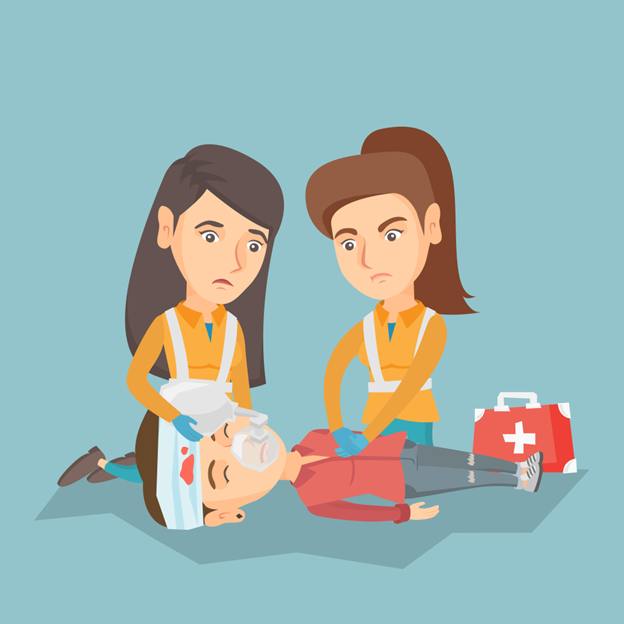
In medical emergencies, the window for effective intervention is often measured in minutes, not hours. Whether it’s a sudden cardiac arrest, a severe traumatic injury, or a life-threatening allergic reaction, the speed and quality of the initial response can dramatically influence whether a person survives and recovers with minimal long-term damage. This reality underscores a fundamental principle in emergency medicine: timely, appropriate action saves lives.
Research consistently shows that immediate medical intervention significantly improves survival rates across a range of critical conditions. For example, in cases of out-of-hospital cardiac arrest, each minute without cardiopulmonary resuscitation (CPR) reduces the chance of survival by 7–10%. Conversely, when bystander CPR is initiated promptly, survival rates can double or even triple. These statistics highlight not only the urgency of rapid response but also the profound impact that trained individuals can have in those crucial first moments before professional help arrives.
Understanding why prompt medical action matters begins with recognizing how quickly the body deteriorates during emergencies. During cardiac arrest, the heart stops pumping blood, cutting off oxygen to the brain and vital organs. Irreversible brain damage can start within 4–6 minutes, and survival becomes increasingly unlikely after 10 minutes without intervention. Similarly, in severe bleeding, a person can lose a life-threatening amount of blood in as little as 3–5 minutes. In anaphylaxis, airway obstruction can progress rapidly, leading to respiratory arrest if not treated immediately with epinephrine.
Core Skills That Save Lives in Emergencies
Certain medical skills are particularly effective when applied quickly in emergency situations. Cardiopulmonary resuscitation (CPR) remains one of the most vital. By manually compressing the chest, CPR helps maintain blood flow to the heart and brain when the heart has stopped beating. Properly performed CPR can keep a person alive until defibrillation or advanced care restores normal heart rhythm.
Equally critical is the use of automated external defibrillators (AEDs). These portable devices analyze the heart’s rhythm and, if needed, deliver an electric shock to restore a normal heartbeat in cases of ventricular fibrillation or pulseless ventricular tachycardia — two life-threatening arrhythmias that cause sudden cardiac arrest. Modern AEDs are designed for use by laypeople, with clear voice prompts and visual instructions guiding users through each step. Studies show that when an AED is used within the first 3–5 minutes of cardiac arrest, survival rates can reach as high as 50–70%, compared to less than 10% without defibrillation.
Basic first aid skills also play a critical role. Knowing how to control severe bleeding with direct pressure or a tourniquet, how to position someone having a seizure to prevent injury, or how to recognize the signs of stroke or heart attack can prevent complications and improve outcomes. For instance, rapid administration of aspirin during a suspected heart attack can reduce clot formation, while timely use of an epinephrine auto-injector (like an EpiPen) can reverse the progression of anaphylaxis.
The Vital Role of Training and Preparedness
While willingness to act is important, effective emergency response requires proper training. Organizations such as the American Red Cross, the American Heart Association (AHA), and national equivalents like the German Red Cross (DRK) offer certified courses in CPR, AED use, and first aid. These programs combine theoretical knowledge with hands-on practice, allowing participants to build confidence in performing life-saving techniques under simulated pressure.
According to the American Heart Association, over 350,000 out-of-hospital cardiac arrests occur annually in the United States alone, and nearly 90% of them are fatal. Although, when bystanders intervene with CPR and use an AED before emergency medical services arrive, survival rates increase significantly. A 2020 study published in Circulation found that patients who received both bystander CPR and early defibrillation had a survival rate of over 40%, compared to just 8% for those who received no immediate intervention.

Training is not a one-time event. Guidelines for CPR and emergency cardiovascular care are updated regularly — typically every five years — by international bodies like the International Liaison Committee on Resuscitation (ILCOR), based on the latest scientific evidence. For example, recent updates have emphasized chest compression-only CPR for untrained bystanders in certain scenarios, while reinforcing the importance of high-quality compressions (at least 100–120 per minute, to a depth of 5–6 cm) for trained responders. Regular refresher courses help ensure that skills remain sharp and aligned with current best practices.
Real-World Impact: When Prompt Action Makes the Difference
The life-saving potential of prompt medical action is not theoretical — it plays out in real communities every day. In 2021, a soccer player in Denmark collapsed during a match due to sudden cardiac arrest. Immediate CPR by teammates and rapid use of an AED by stadium medical staff were credited with saving his life. He later made a full recovery and returned to professional play. This incident, widely reported by international media including BBC and Reuters, sparked renewed global calls for wider AED availability and public training in life-saving skills.
Similar outcomes have been documented in schools, workplaces, and public spaces where trained individuals were present. In Japan, a national initiative to train schoolchildren in CPR and place AEDs in public buildings has been associated with improved survival rates from out-of-hospital cardiac arrest over the past decade. A 2019 study in The Lancet noted that regions with higher rates of bystander CPR and public AED access consistently reported better outcomes, reinforcing the value of community-wide preparedness.
These examples illustrate a broader truth: when more people are equipped with the knowledge and tools to act, the entire community becomes safer. Public access defibrillation programs, which place AEDs in airports, gyms, schools, and office buildings, have been shown to improve survival when combined with public awareness campaigns. In some cities, such as Seattle and Vienna, integrated emergency response systems that emphasize early bystander intervention have achieved among the highest cardiac arrest survival rates in the world.
How to Get Trained and Stay Prepared
For individuals looking to gain or refresh emergency response skills, multiple accessible options exist. In-person courses offered by the Red Cross, AHA, or local health authorities typically last a few hours and include certification valid for two years. Many employers, schools, and community organizations also sponsor or subsidize such training for their members.
Online platforms now offer blended learning formats, where participants complete theoretical modules remotely before attending a short in-person skills session. Reputable providers like the American Heart Association’s eLearning platform or the Red Cross’s online course catalog ensure that digital training meets the same standards as traditional classes. We see important, however, to verify that any online course includes a live skills assessment component, as purely online certifications without hands-on practice may not be recognized by employers or regulatory bodies.
Beyond formal training, staying informed about emergency response guidelines is valuable. Public health agencies such as the World Health Organization (WHO) and national ministries of health regularly publish advisories on recognizing emergencies and responding appropriately. For example, the WHO’s “Basic Emergency Care” framework provides guidance tailored to low-resource settings but applicable globally, emphasizing simple, effective interventions that can be performed with minimal equipment.
Building a Culture of Readiness
Improving survival outcomes through prompt medical action is not just about individual preparedness — it requires systemic support. Governments and municipalities can help by mandating AED placement in high-traffic public areas, offering free or low-cost CPR training in schools, and integrating emergency response education into public health campaigns. Some countries, such as Norway and South Korea, have implemented nationwide programs that train citizens in life-saving skills as part of school curricula, resulting in higher bystander intervention rates.
Workplaces also play a role. Employers who provide CPR and first aid training to staff not only enhance workplace safety but also contribute to a broader network of trained responders in the community. In Germany, for instance, occupational health regulations require certain workplaces to have trained first aiders on site, depending on the number of employees and risk level.
Technology is increasingly supporting rapid response. Smartphone apps that alert nearby trained volunteers when someone nearby is experiencing cardiac arrest — such as PulsePoint in the U.S. Or Herzensretter in Germany — have been shown to reduce the time to first CPR and defibrillation. These systems rely on geolocation and volunteer networks to bridge the gap between collapse and professional arrival.
the goal is to create an environment where hesitation is replaced by action, and where every second counts toward saving a life. By combining individual training with community investment and smart use of technology, societies can significantly improve the odds that someone experiencing a medical emergency will receive the help they need — when it matters most.
Keep reading