
How the International Community Secured a Nuclear Weapons-Free Agreement with Iran—and Why It Collapsed
In the spring of 2026, as tensions between Iran and the United States escalate into open conflict, the world is once again grappling with a question that has defined Middle Eastern geopolitics for decades: How can Iran’s nuclear ambitions be contained without resorting to war? The answer, it turns out, was already found—more than a decade ago. Through diplomacy, sanctions, and international cooperation, the global community achieved what many considered impossible: a verifiable agreement that kept Iran’s nuclear program peaceful. Yet today, that agreement lies in tatters, its collapse a cautionary tale of shifting priorities, political brinkmanship, and the fragility of trust in international relations.
For years, the specter of a nuclear-armed Iran loomed over the Middle East, threatening to destabilize an already volatile region. The solution emerged not through military strikes or unilateral demands, but through a painstaking, multilateral negotiation process that culminated in the Joint Comprehensive Plan of Action (JCPOA), signed in July 2015. The deal, brokered by the United States, Iran, and five other world powers, imposed strict limits on Iran’s nuclear activities in exchange for the lifting of crippling economic sanctions. For a time, it worked—until it didn’t.
Now, as the Trump administration pursues a military campaign against Iran, the JCPOA’s legacy serves as a stark reminder of what was lost: a framework that, despite its flaws, kept Iran’s nuclear program in check without a single shot fired. To understand how the international community reached this agreement—and why it unraveled—is to grapple with the high stakes of diplomacy in an era where war often seems the easier option.
The Road to the JCPOA: Diplomacy Over Brinkmanship
The origins of the JCPOA trace back to Iran’s long-standing nuclear program, which began in the 1950s under the U.S.-backed Atoms for Peace initiative. While Iran’s nuclear activities were initially peaceful, suspicions grew in the early 2000s that the country was pursuing weapons capabilities. By 2006, the United Nations Security Council had imposed its first round of sanctions on Iran, targeting its nuclear and ballistic missile programs. These measures, however, did little to unhurried Iran’s progress.
The breakthrough came in 2013, when Hassan Rouhani, a moderate cleric and former nuclear negotiator, was elected president of Iran. Rouhani’s victory signaled a shift in Iran’s approach, as he campaigned on a promise to improve the country’s economy by resolving the nuclear standoff. His election set the stage for secret negotiations between Iran and the United States, facilitated by Oman, which eventually expanded into formal talks involving the so-called P5+1—the five permanent members of the UN Security Council (the U.S., Russia, China, France, and the UK) plus Germany.
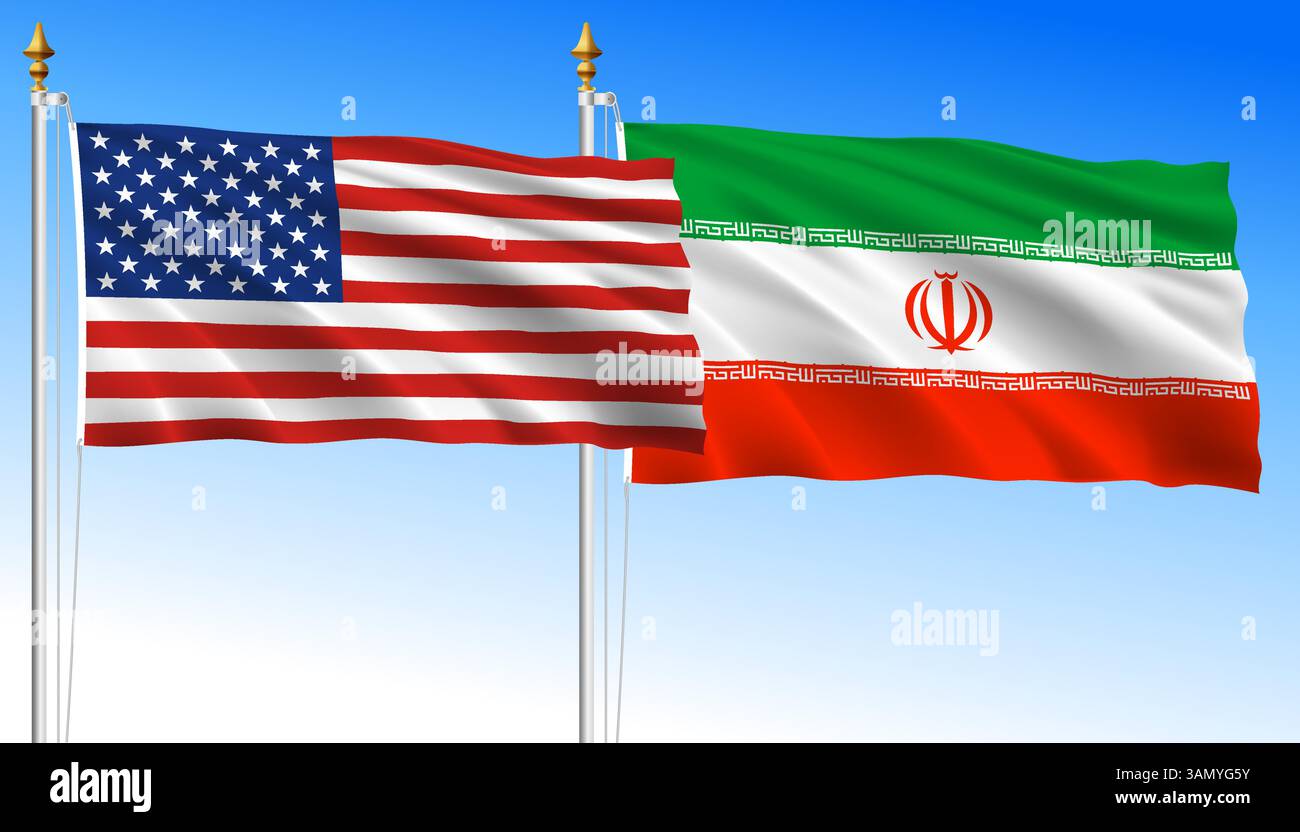
After nearly two years of intense negotiations, the JCPOA was finalized in Vienna on July 14, 2015. Under the agreement, Iran agreed to:
- Reduce its stockpile of low-enriched uranium by 98%, to just 300 kilograms, for 15 years.
- Limit uranium enrichment to 3.67%, far below the 90% needed for weapons-grade material.
- Dismantle two-thirds of its centrifuges, leaving only 5,060 operational for 10 years.
- Allow unprecedented inspections by the International Atomic Energy Agency (IAEA), including access to suspected undeclared nuclear sites.
- Redesign its heavy-water reactor at Arak to prevent it from producing weapons-grade plutonium.
In return, the international community agreed to lift nuclear-related economic sanctions, unfreezing billions of dollars in Iranian assets and allowing Iran to re-enter the global oil market. The deal was hailed as a triumph of diplomacy, with then-U.S. President Barack Obama calling it a “historic understanding” that would “cut off every pathway” Iran could take to develop a nuclear weapon.
Verification and Compliance: A Rare Success in Nuclear Nonproliferation
One of the JCPOA’s most significant achievements was its robust verification mechanism. The International Atomic Energy Agency (IAEA), the UN’s nuclear watchdog, was granted unprecedented access to Iran’s nuclear facilities, including the ability to conduct snap inspections of suspected undeclared sites. Between 2016 and 2018, the IAEA issued 11 consecutive reports confirming that Iran was in full compliance with its obligations under the deal.
For Iran, the benefits of compliance were tangible. By early 2016, the European Union and the United States had lifted nuclear-related sanctions, allowing Iran to resume oil exports and access frozen assets worth an estimated $100 billion. The Iranian economy, which had contracted by 9% between 2012 and 2014, grew by 12.5% in 2016, according to the International Monetary Fund. Foreign investment began to flow into the country, and Iran’s currency, the rial, stabilized after years of hyperinflation.
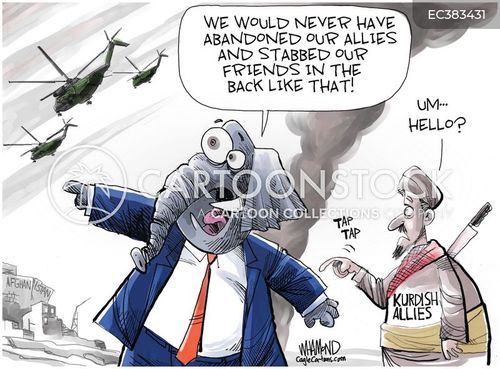
Yet despite these successes, the JCPOA was never universally popular. In the United States, critics argued that the deal did not go far enough in addressing Iran’s ballistic missile program or its support for proxy groups like Hezbollah. Israeli Prime Minister Benjamin Netanyahu, a vocal opponent of the agreement, famously delivered a dramatic presentation to the UN General Assembly in 2018, holding up what he claimed were secret Iranian nuclear documents to argue that Iran had deceived the world about its nuclear intentions. While the IAEA later confirmed that the documents did not contradict Iran’s compliance with the JCPOA, the episode underscored the deep skepticism that many in the U.S. And Israel harbored toward the deal.
The Collapse: Politics, Withdrawal, and the Return of Escalation
The JCPOA’s unraveling began in May 2018, when then-U.S. President Donald Trump announced that the United States would withdraw from the agreement, calling it “the worst deal ever negotiated”. Trump’s decision, which came despite Iran’s continued compliance with the deal, was driven by a combination of domestic political pressure, opposition from U.S. Allies like Israel and Saudi Arabia, and a broader strategy to exert “maximum pressure” on Iran.
Almost immediately, the U.S. Reimposed sanctions on Iran, targeting its oil exports, banking sector, and access to international financial systems. The European signatories to the JCPOA—France, Germany, and the UK—attempted to salvage the deal by creating a special financial mechanism, INSTEX, to facilitate trade with Iran. However, the mechanism proved ineffective, as most European companies, fearing U.S. Secondary sanctions, chose to cut ties with Iran rather than risk losing access to the American market.
By 2019, Iran began to respond to the U.S. Withdrawal by gradually scaling back its compliance with the JCPOA. In May of that year, Iran announced that it would no longer abide by the deal’s limits on uranium enrichment and stockpiles. Over the next two years, Iran increased its enrichment levels to 60%, a significant step toward weapons-grade material, and began installing advanced centrifuges at its nuclear facilities. The IAEA reported in 2021 that Iran’s stockpile of enriched uranium had grown to 10 times the limit set by the JCPOA.
The final blow to the JCPOA came in 2022, when indirect negotiations between Iran and the United States to revive the deal collapsed. Iran’s demands, including guarantees that the U.S. Would not withdraw from the agreement again and the removal of the Islamic Revolutionary Guard Corps (IRGC) from the U.S. List of terrorist organizations, proved unacceptable to the Biden administration. With diplomacy at an impasse, Iran continued to expand its nuclear program, and by 2023, the IAEA warned that Iran had accumulated enough enriched uranium to produce several nuclear weapons if it chose to do so.
The Cost of Failure: From Diplomacy to War
The collapse of the JCPOA has had far-reaching consequences, not only for Iran’s nuclear program but for the broader Middle East. With diplomacy off the table, the Trump administration shifted to a strategy of “maximum pressure,” imposing ever-tighter sanctions on Iran and its proxies. In 2024, tensions reached a boiling point when Iran-backed militias in Iraq and Syria launched a series of attacks on U.S. Military bases, killing several American service members. The U.S. Responded with airstrikes, escalating the cycle of violence.
By early 2026, the situation had deteriorated into open conflict. In April, following a series of failed negotiations in Islamabad, Pakistan, the U.S. Launched a military campaign against Iran, aiming to degrade its nuclear and military capabilities. The war, which has since spread to include strikes on Iranian soil and a U.S. Naval blockade of the Strait of Hormuz, has raised fears of a wider regional conflagration. Iran, for its part, has vowed to retaliate against U.S. Allies in the Middle East, further destabilizing an already fragile region.
Amid the chaos, the JCPOA’s legacy looms large. The agreement, though imperfect, had succeeded in its core objective: preventing Iran from developing a nuclear weapon without resorting to war. Its collapse serves as a stark reminder of the costs of abandoning diplomacy in favor of confrontation. As the international community grapples with the fallout of the current conflict, the question remains: Could the JCPOA have been saved, or was its failure inevitable in a world where trust between adversaries is increasingly scarce?
Key Takeaways: What the JCPOA Achieved—and Why It Matters Today
For those seeking to understand the significance of the JCPOA, here are the key points to remember:
- Diplomacy worked—temporarily. The JCPOA was the first verifiable agreement to limit Iran’s nuclear program, and for several years, it succeeded in keeping Iran’s enrichment activities well below weapons-grade levels.
- Sanctions relief had real economic benefits. The lifting of sanctions allowed Iran to re-enter the global economy, leading to a brief period of growth and stability before the U.S. Withdrawal.
- Verification was unprecedented. The IAEA’s access to Iran’s nuclear facilities was the most intrusive inspection regime ever implemented, providing a model for future nonproliferation efforts.
- Politics undermined the deal. Domestic opposition in the U.S., particularly from critics who argued the JCPOA did not address Iran’s regional behavior, ultimately led to the U.S. Withdrawal and the deal’s collapse.
- The cost of failure is high. With the JCPOA dead, Iran has resumed uranium enrichment at levels that bring it closer to nuclear weapons capability, and the region is now embroiled in a costly and dangerous conflict.
- Diplomacy remains the only sustainable solution. While the JCPOA is no longer in effect, its framework demonstrates that even the most intractable conflicts can be resolved through negotiation—if the political will exists.
What Happens Next?
As of April 2026, the conflict between Iran and the United States shows no signs of abating. The U.S. Has signaled its intention to continue military operations until Iran agrees to a new nuclear deal, though the terms of such an agreement remain unclear. Meanwhile, Iran has indicated that it will not negotiate under duress, raising the specter of a prolonged and increasingly destructive war.
For the international community, the stakes could not be higher. The collapse of the JCPOA has not only brought the world closer to a nuclear-armed Iran but has too demonstrated the dangers of abandoning diplomacy in favor of military solutions. As the conflict unfolds, one thing is certain: the lessons of the JCPOA—both its successes and its failures—will shape the future of nuclear nonproliferation for years to come.
We invite our readers to share their thoughts on this critical issue. How can the international community prevent the spread of nuclear weapons in an era of rising tensions? What role should diplomacy play in resolving conflicts like the one between Iran and the United States? Join the conversation in the comments below, and share this article to keep the discussion alive.
Worth a look