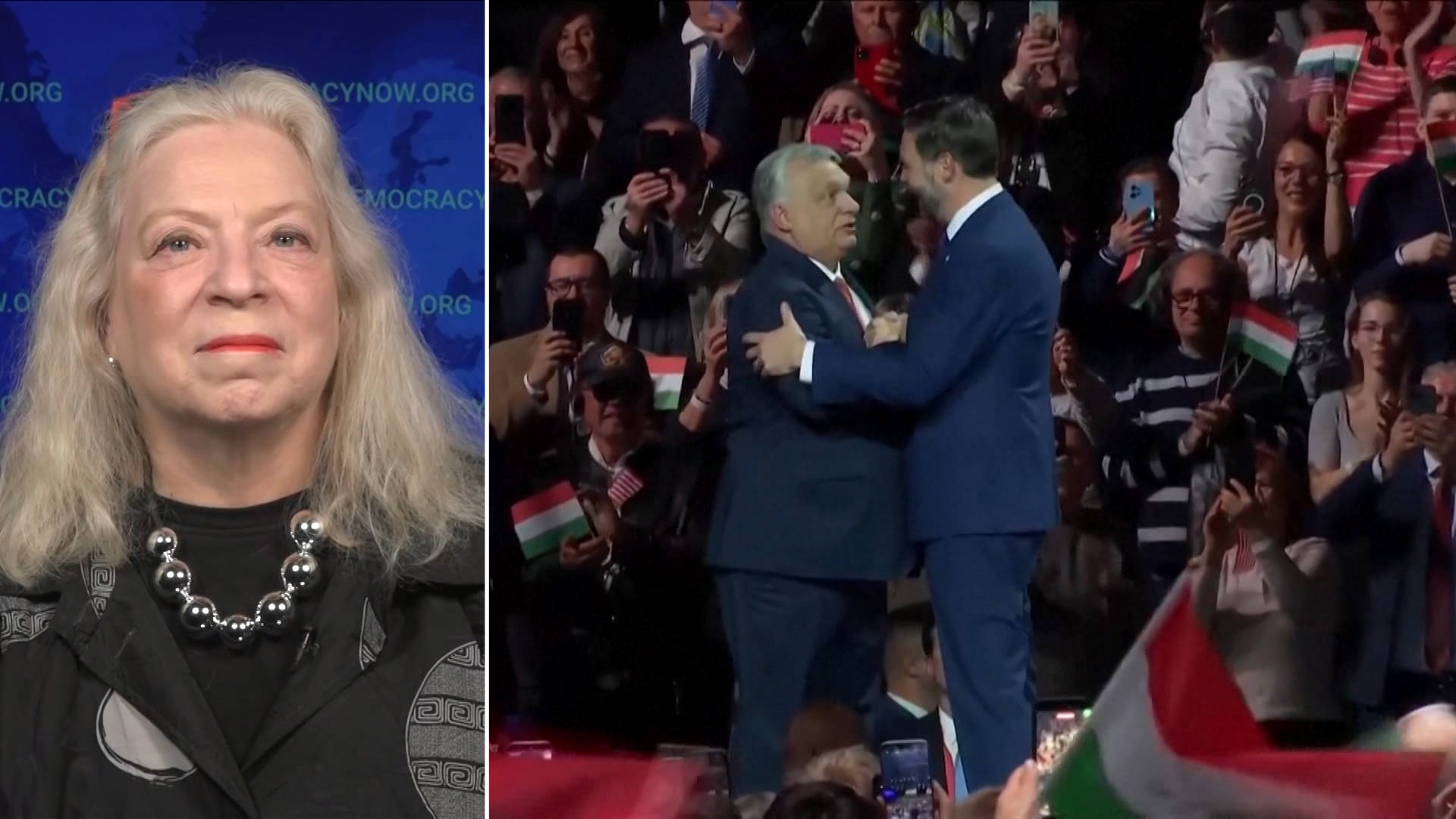
In a political shift that has sent shockwaves through the European continent, Viktor Orbán has been defeated after 16 years in power. The results of the recent Hungary election mark the end of a long-standing era for the Fidesz party, as voters opted for a change in leadership, effectively ousting the Prime Minister who had become a central figure for the global far right.
The defeat comes despite a high-profile effort by the Trump administration to bolster Orbán’s standing. In the final days leading up to the vote, U.S. Vice President JD Vance traveled to Budapest to openly campaign for Orbán’s reelection, appearing alongside the Prime Minister in a calculated show of support for far-right movements across Europe.
This strategic alignment was part of a broader push by the U.S. Administration to strengthen ties with Hungary, even as relations between the United States and other European partners faced significant strain. Yet, the intervention of U.S. Officials appeared unable to sway the domestic tide in Hungary, where Orbán’s Fidesz party trailed the center-right, pro-EU Tisza party led by Péter Magyar.
A Political Earthquake in Budapest
The scale of the shift is being described as an “earthquake” in Hungarian politics. After more than a decade and a half of dominance, Viktor Orbán has been defeated after 16 years in power, according to reports from Axios.
The transition is not merely a local change in government but a significant blow to the ideological network Orbán had cultivated. As an ally of both Donald Trump and Vladimir Putin, Orbán’s position provided a blueprint for nationalist-populist governance that many in the international right wing sought to emulate. Following the tallying of the votes, Viktor Orban has conceded his election defeat, as reported by The Washington Post.
The Role of the Trump Administration and JD Vance
The involvement of U.S. Vice President JD Vance in the campaign was a notable escalation of American influence in the Hungarian electoral process. By traveling to Budapest to campaign for Orbán, Vance signaled that the Trump administration viewed Orbán’s survival as crucial for the broader international right-wing movement.
Kim Lane Scheppele, a professor of sociology and international affairs at Princeton University, noted that the election was pivotal not just for the citizens of Hungary, but for right-wing movements globally. Scheppele observed that while there was significant “American signaling” indicating a desire for Orbán to be reelected, the Hungarian electorate did not share that sentiment.
Further strengthening these ties was Sebastian Gorka, a top counterterrorism official in the Trump administration. Gorka, who maintains longstanding connections to the Hungarian far right, has been instrumental in forging the close relationship between the two governments. Reports have also indicated that Gorka has been involved in efforts to target left-wing groups, both within the United States and internationally, designating them as “terrorist organizations.”
The Rise of the Tisza Party
The catalyst for Orbán’s exit was the surge of the Tisza party, a center-right, pro-EU entity led by Péter Magyar. The party managed to capture the momentum of a dissatisfied electorate, presenting a viable alternative to the Fidesz party’s long-term grip on power. The shift toward a pro-EU stance suggests a potential realignment of Hungary’s relationship with the European Union, which had been fraught with tension under Orbán’s leadership.
The outcome signifies a rejection of the nationalist policies that defined the last 16 years. Viktor Orbán was ousted by voters in a result that fundamentally alters the geopolitical landscape of Central Europe, as highlighted by Time Magazine.
Key Takeaways from the Hungary Election
- End of an Era: Viktor Orbán has lost power after 16 years of leadership.
- U.S. Intervention: Vice President JD Vance actively campaigned in Budapest to support Orbán, reflecting the Trump administration’s ties to the Hungarian far right.
- Shift in Power: The pro-EU Tisza party, led by Péter Magyar, emerged as the primary challenger, and victor.
- Global Impact: The defeat is seen as a setback for the international right-wing alliance tied to Orbán, Trump, and Putin.
- Strategic Ties: Sebastian Gorka played a key role in bridging the gap between the U.S. Administration and Orbán’s government.
What Happens Next?
The immediate focus now shifts to the transition of power in Budapest. The recent leadership under the Tisza party will likely face the challenge of repairing relationships with the European Union and navigating the complex economic landscape that Orbán left behind.
For the Trump administration, the loss of a key European ally like Orbán may necessitate a recalibration of its strategy regarding the far right in Europe. The failure of high-level U.S. Campaigning to influence the Hungarian outcome suggests a limit to the effectiveness of external political signaling in the face of domestic voter dissatisfaction.
The next confirmed checkpoint will be the official certification of the election results and the subsequent inauguration of the new government leadership.
We invite our readers to share their perspectives on this geopolitical shift in the comments below. How do you believe this change in Hungarian leadership will affect U.S.-European relations?