
In a significant move for the European sustainable transit market, Hungarian manufacturer Ikarus has secured its largest-ever contract for electric buses. The company has been awarded a major tender by the North Macedonian Ministry of Transport, marking a pivotal milestone in its strategic shift toward zero-emission urban mobility.
The contract involves the supply of 150 battery-electric urban solo buses, alongside an extensive supporting infrastructure of 75 charging stations. This procurement represents not only a record-breaking volume for the Ikarus Group but also a substantial step forward in the electrification of public transport networks across North Macedonia.
The deal was finalized following a tender process launched by the North Macedonian Ministry of Transport at the end of February 2026. The winning bid was submitted by Electrobus Europe Ltd., a subsidiary of the Ikarus Group that operates through a strategic partnership with the Chinese manufacturer CRRC. This partnership has positioned the entity to compete effectively in the rapidly evolving electric vehicle (EV) sector in Central and South-Eastern Europe.
Technical Specifications and Infrastructure Deployment
The scale of the North Macedonian project is defined by both the volume of vehicles and the rigorous technical standards required for the fleet. According to details released regarding the Ministry of Transport’s tender requirements, the battery-electric solo buses must meet specific performance benchmarks to ensure reliability in urban environments. These include a minimum driving range of 325 kilometres and a battery capacity of at least 360 kWh.
Beyond the vehicles themselves, the contract encompasses the delivery of 75 charging stations to support the new fleet. Each station is required to provide a minimum output of 120 kW, ensuring that the urban networks can maintain efficient turnaround times for the buses. The deployment of these assets will be distributed geographically across the country: 100 vehicles are designated for the capital city of Skopje, while the remaining 50 units will be deployed to serve other urban centers in North Macedonia.
To ensure long-term operational stability, the contract includes comprehensive support terms. The agreement mandates a four-year warranty covering both the buses and their batteries, as well as a commitment to provide a ten-year supply of spare parts. This level of long-term service agreement is critical for municipal operators transitioning from traditional internal combustion engines to complex electric drivetrains.
Strategic Validation for the Ikarus Group
For the Ikarus Group, this order serves as a major validation of its technical capabilities and its ability to compete on an international scale. The company has spent the last several years diversifying its portfolio, specifically focusing on the development and deployment of the Ikarus 120e electric bus model.
János Hunor Kelemen, Sales Director of the Ikarus Group, emphasized the importance of the contract in a press note released on April 30, 2026. “The opportunity for this outstanding new order by volume demonstrates a strong validation of Ikarus’s technical preparedness and international competitiveness,” Kelemen stated. He further noted that the order is a “key milestone” in the company’s market strategy to reinforce its presence in the electric vehicle markets of Central and South-Eastern Europe.
Kelemen also highlighted the collaborative nature of the project, noting that the implementation relies on the expertise of local North Macedonian companies, underscoring a model of regional partnership in large-scale infrastructure projects.
The Ikarus Turnaround: From GDR Legacy to Electric Innovation
The success in North Macedonia is a notable chapter in the complex history of the Ikarus brand. The manufacturer holds a significant place in European industrial history, particularly due to its historical relationship with the German Democratic Republic (GDR). During that era, Ikarus exported over 30,000 buses to the GDR, providing a wide range of city buses and coaches that became staples of Eastern Bloc transit.
However, the company faced severe challenges following the political upheavals in the Eastern Bloc, which led to a period of decline and eventually culminated in insolvency in 2007. The brand’s revival began in earnest in 2010, and over the last five years, it has successfully pivoted toward the green energy transition. The company’s recent focus on electric mobility, exemplified by the Ikarus 120e, has allowed it to reclaim its position as a significant player in the global bus manufacturing industry.
Currently, the Ikarus 120e is already seeing practical applications in Europe, including operations in Meiningen, Thuringia, and ongoing testing by Chemnitzer Verkehrs-AG, which has been conducting a 30-month trial of the technology.
Key Takeaways: The North Macedonia Electric Bus Deal
- Total Order Volume: 150 battery-electric urban solo buses and 75 charging stations.
- Primary Recipient: North Macedonian Ministry of Transport.
- Fleet Distribution: 100 buses for Skopje; 50 buses for other cities.
- Technical Minimums: 325 km range, 360 kWh battery capacity, and 120 kW charging output.
- Service Commitments: 4-year warranty on vehicles/batteries and a 10-year spare parts supply.
- Strategic Significance: The largest single electric bus contract in Ikarus’s corporate history.
As the implementation phase begins, industry analysts will be watching closely to see how the integration of these 150 vehicles and 75 charging stations affects the carbon footprint and operational efficiency of North Macedonia’s urban transit networks. The success of this rollout could serve as a blueprint for other nations in the region looking to modernize their public transport through large-scale electrification.
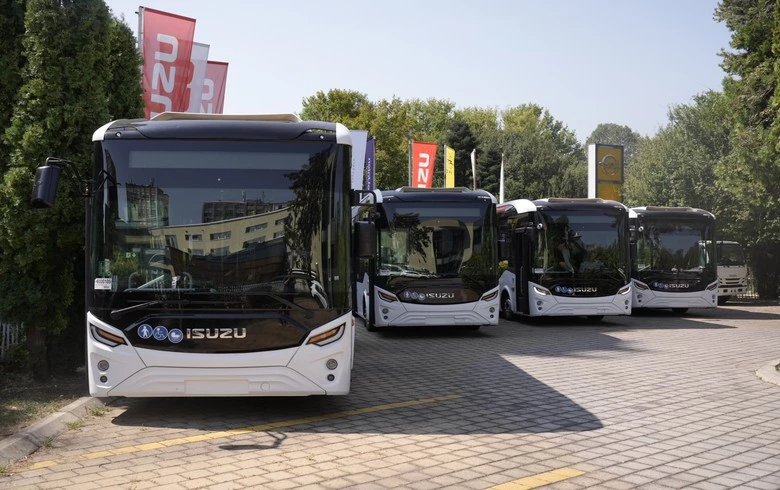
Further updates regarding the delivery schedule and the commencement of bus operations in Skopje are expected as the contract moves into the execution phase.
We welcome your insights on the transition to electric public transit. Please share your thoughts in the comments below or share this article with your professional network.
Worth a look