The skyline of Chicago’s South Side is undergoing a permanent transformation. Rising from the historic landscape of Jackson Park, the Obama Presidential Center represents one of the most ambitious cultural and civic undertakings in modern American history. As the project nears completion, the structure has become a focal point for architectural discourse, urban development discussions, and public curiosity regarding the legacy of the 44th President of the United States.
The Obama Presidential Center, a massive $850 million project, is not a traditional presidential library in the archival sense. Instead, the Barack Obama Foundation has positioned the complex as a community-centered campus designed to serve as a hub for civic engagement, leadership training, and local economic revitalization. With its sprawling grounds and distinctive stone-clad tower, the site is intended to bridge the gap between historical reflection and future-oriented activism, marking a departure from the sequestered, document-heavy libraries of the past.
According to official project disclosures, the development is funded entirely through private donations, circumventing the federal funding models typically associated with National Archives-managed presidential libraries. This fiscal autonomy has allowed the Obama Foundation to prioritize public-facing amenities, including a public library branch, a plaza, and extensive parkland, over the traditional storage of classified government records. For the latest updates on the construction timeline, the public can visit the official Obama Foundation portal.
Architectural Ambition and Community Integration
Designed by the architectural firm Tod Williams Billie Tsien Architects, the main tower—often referred to as the museum building—features a design aesthetic that has invited varied critical responses. The structure, which stands as the centerpiece of the 19-acre campus, is finished in hand-laid stone, a choice intended to evoke a sense of permanence and groundedness. The design team has emphasized that the building is intended to be a “beacon” for the community, though its lack of traditional, expansive glass facades has been a point of debate among urban critics who contrast it with the transparency often associated with modern civic architecture.
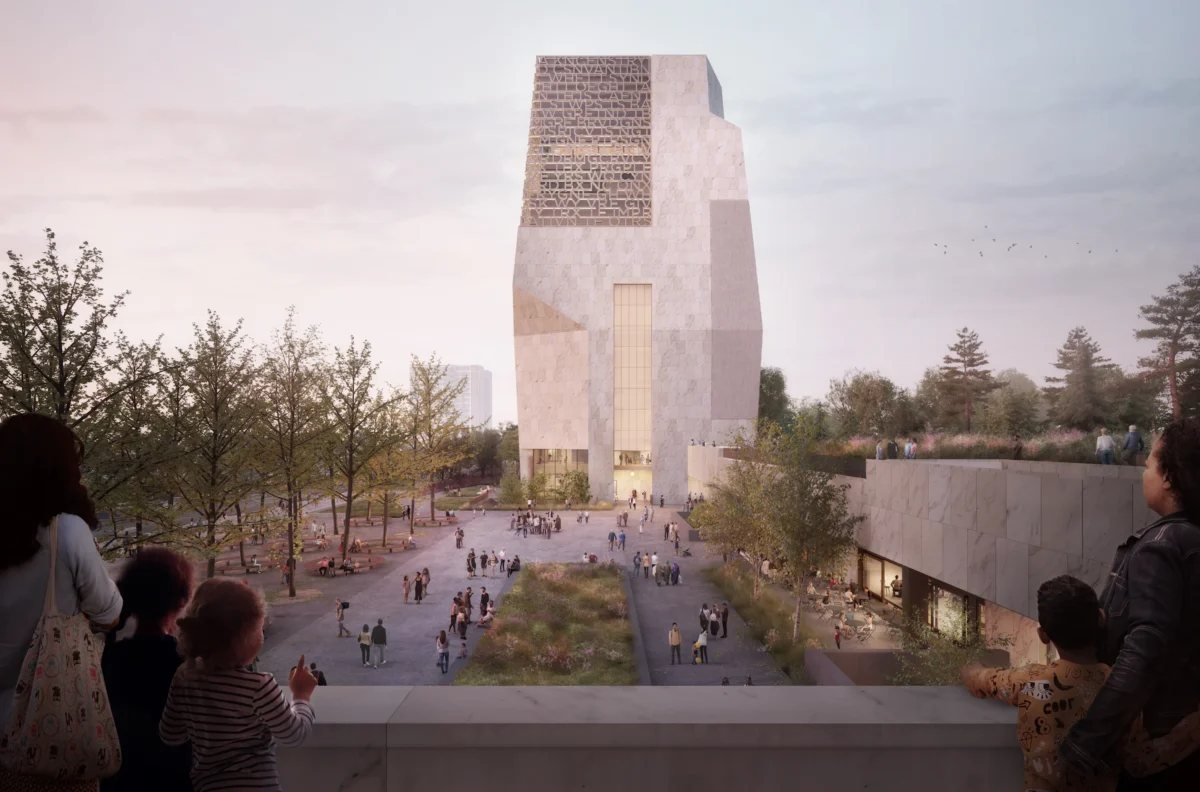
The campus is situated in Jackson Park, a space originally designed by Frederick Law Olmsted and Calvert Vaux. The integration of the center into this historic parkland was the subject of years of litigation and public debate. In 2019, a federal court ruled in favor of the project, dismissing legal challenges that argued the development violated environmental and historical preservation standards. The U.S. Department of Justice and local authorities have maintained throughout the process that the center complies with all federal oversight requirements, including those regarding the use of public park land.
Beyond the primary museum tower, the site incorporates a range of facilities aimed at long-term community utility. These include:
- A multi-purpose athletic center for the local community.
- A branch of the Chicago Public Library, which will provide modern resources for South Side residents.
- A state-of-the-art auditorium designed for public forums and international summits.
- Extensive outdoor spaces, including a children’s play area and a garden dedicated to Michelle Obama.
A New Model for Presidential Legacies
What differentiates this project from its predecessors is its explicit focus on “parallel” civic life. Rather than focusing solely on the eight years of the Obama presidency, the museum is designed to tell a broader story of grassroots organizing and the evolution of American democracy. The Foundation has emphasized that the center is intended to be a “living” institution—a place where current and future leaders can gather to solve pressing global challenges.
This mission aligns with the broader goals of the Obama Foundation, which seeks to foster leadership development across various sectors. By locating the center on the South Side of Chicago—the area where Barack Obama began his career as a community organizer—the project aims to provide a tangible economic stimulus. The City of Chicago has projected that the center will generate hundreds of permanent jobs and drive tourism to the neighborhood, potentially serving as a catalyst for broader urban renewal in the surrounding districts.
Addressing the Criticism and Future Outlook
No project of this scale proceeds without scrutiny. Critics have pointed to the potential for gentrification in the surrounding neighborhoods, as well as the aesthetic impact of the massive stone structure on the historic park landscape. In response, the Obama Foundation has initiated several community benefit agreements, pledging to invest in local workforce training and affordable housing initiatives. These efforts are designed to ensure that the economic benefits of the center are felt by long-term residents rather than solely by outside developers.
The construction remains a complex, multi-phase endeavor. As of the latest project reports, the structural completion of the main museum building is a key milestone, with interior fit-outs and landscape development continuing throughout the 2024 and 2025 calendar years. The project remains on track for its anticipated opening, which is currently scheduled for 2026. For those tracking the economic impact, the City of Chicago provides periodic updates on local development initiatives linked to the project via the Department of Planning and Development website.
As the Obama Presidential Center nears its final phase, it stands as a testament to the changing nature of how we commemorate political leaders. It is not merely a monument to the past, but an active,, functioning space for the future. Whether the center succeeds in its goal of revitalizing the South Side and fostering a new generation of leaders remains to be seen, but its physical footprint is already a permanent fixture of the Chicago landscape.
The next major milestone for the project is the completion of the exterior landscaping and the commencement of the final interior exhibition installations. Updates regarding the grand opening schedule and public access registration are expected to be released by the Obama Foundation as the 2026 target date approaches. I invite you to share your thoughts on the evolving role of presidential centers in the comments section below; how do you believe these institutions should balance historical preservation with community utility?
Worth a look