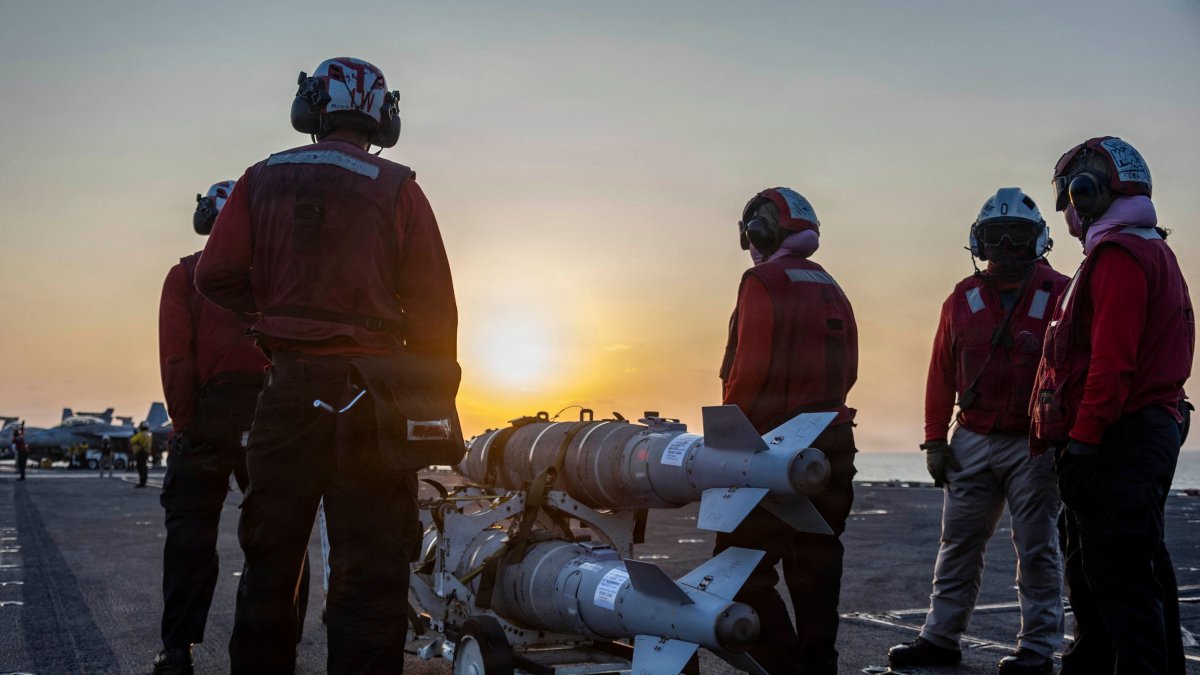
Initial Week of Military Operations Against Iran Estimated at $6 Billion Cost
The first week of military operations involving the United States against targets in Iran has incurred an estimated cost of $6 billion, according to defense officials. A significant portion of this expenditure, roughly $4 billion, was allocated to munitions and advanced missile defense interceptors, raising concerns about the sustainability of such spending and potential strains on the U.S. Defense industrial base. The escalating conflict, which began with joint U.S. And Israeli strikes, has broadened across the Middle East, prompting retaliatory actions from Iran and necessitating costly defensive measures.
The financial strain comes as lawmakers prepare for a supplemental budget request from the Biden administration to cover ongoing and future costs associated with the military campaign. This rapid expenditure has drawn scrutiny from both sides of the political aisle, with critics questioning the rate at which expensive interceptors are being consumed and the potential impact on other strategic defense priorities. The situation highlights the complex financial implications of prolonged military engagement in the region and the demand for careful consideration of long-term national defense strategies.
Escalating Costs and Depleted Stockpiles
Discussions in Congress revealed the substantial financial burden of the initial phase of military operations. The $6 billion figure, disclosed during briefings with defense officials, underscores the intensity of the conflict and the resources required to counter Iranian capabilities. Approximately 4,000 targets within Iran have been struck, encompassing missile launchers, naval vessels, and air defense systems, reportedly diminishing Tehran’s immediate capacity for retaliation. However, officials caution that Iran retains a significant portion of its missile arsenal, estimated at around 50% of its total program.
Admiral Brad Cooper, head of U.S. Central Command (CENTCOM), reported a notable decrease in Iranian ballistic missile launches – a 90% reduction since the commencement of hostilities – and a 83% drop in drone attacks. As reported by the Wall Street Journal, this reduction in attacks is attributed to the effectiveness of U.S. And allied defensive systems.
However, the high consumption rate of interceptors, some costing millions of dollars per unit, is raising concerns about the capacity of the U.S. Defense industrial base to maintain production levels and replenish depleted stockpiles. This issue is particularly acute given the potential for prolonged conflict and the need to maintain a robust defense posture in other strategic regions. The Pentagon is actively working to secure additional funding to address these challenges and ensure the continued availability of critical defense resources.
Congressional Scrutiny and Budgetary Concerns
Lawmakers are bracing for a supplemental budget request from the administration in the coming weeks, anticipating a substantial financial commitment to sustain military operations and replenish depleted resources. The rapid expenditure has sparked debate on Capitol Hill, with members of both parties expressing concerns about the long-term financial implications of the conflict. The need to balance immediate operational requirements with broader national defense priorities is a central theme in these discussions.
Critics argue that the reliance on costly interceptors, while effective in neutralizing Iranian attacks, is not a sustainable long-term strategy. They point to the potential for these interceptors to be consumed at a rate that could strain the defense industrial base and create vulnerabilities in other areas. The cost of replenishing these stockpiles could divert resources from other critical defense programs.
The conflict’s origins lie in joint U.S. And Israeli strikes against Iranian military targets, which triggered a wider escalation across the Middle East. Iran responded with ballistic missile and drone barrages targeting U.S. Bases, diplomatic facilities, and Israeli cities. This retaliatory cycle has further intensified the conflict and increased the demand for defensive resources.
Impact on Global Energy Markets
The ongoing conflict has similarly raised concerns about global energy supplies, particularly due to disruptions in maritime traffic through the Strait of Hormuz. This critical waterway, responsible for carrying approximately 20 million barrels of oil daily, has experienced a significant reduction in traffic as a result of the heightened tensions. As reported by the Wall Street Journal, this disruption poses a threat to global energy security and could lead to price increases.
The situation remains fluid and unpredictable, with the potential for further escalation. Pentagon officials are emphasizing the need to maintain momentum against Iranian capabilities while simultaneously addressing the long-term financial and logistical challenges posed by the conflict. The coming weeks are likely to see intense debate in Washington over the allocation of resources and the development of a sustainable strategy for addressing the evolving security landscape in the Middle East.
Recent Developments and International Response
In a related development, the United States recently bypassed congressional review to approve a munitions sale to Israel. According to Reuters, this move has drawn criticism from some lawmakers who argue that it undermines the role of Congress in overseeing foreign arms sales. The decision underscores the Biden administration’s commitment to supporting Israel’s security, even as it navigates the complexities of the broader regional conflict.
Meanwhile, diplomatic efforts to de-escalate the situation are ongoing, with various international actors engaging in mediation efforts. However, progress has been limited, and the prospects for a swift resolution remain uncertain. The conflict’s impact extends beyond the immediate region, with potential implications for global security and economic stability.
The United States continues to monitor the situation closely and is prepared to take further action to protect its interests and those of its allies. The administration has repeatedly stated its commitment to ensuring that Iran does not acquire nuclear weapons and to deterring further aggression in the region.
Key Takeaways:
- The first week of military operations against Iran has cost the U.S. An estimated $6 billion.
- Approximately $4 billion of that total was spent on munitions and missile defense interceptors.
- Lawmakers are bracing for a supplemental budget request to cover ongoing costs.
- The conflict has raised concerns about global energy supplies due to disruptions in the Strait of Hormuz.
- The U.S. Recently bypassed congressional review to approve a munitions sale to Israel.
As the situation continues to evolve, further developments are expected in the coming days and weeks. The U.S. Congress is scheduled to hold additional hearings on the conflict and the associated budgetary implications. Stay tuned to World Today Journal for ongoing coverage and analysis of this critical situation.
What are your thoughts on the escalating costs of the conflict? Share your comments below and join the conversation.