London, United Kingdom – February 19, 2026 – As tensions escalate between the United States and Iran, the specter of military conflict looms large. Amidst stalled nuclear negotiations in Geneva and a recent earthquake in southern Iran, former U.S. President Donald Trump has publicly suggested the potential use of both the Diego Garcia base and the Royal Air Force (RAF) base at Fairford, Gloucestershire, in a potential strike against Iran. Simultaneously, Poland is urging its citizens to evacuate Iran immediately, citing the rapidly deteriorating security situation. This confluence of events has sparked international concern and raised fears of a wider regional conflict. The situation is further complicated by reports of a significant U.S. Military build-up in the Middle East, potentially preparing for action as early as this weekend.
The current crisis stems from a breakdown in talks aimed at reviving the 2015 nuclear deal, formally known as the Joint Comprehensive Plan of Action (JCPOA). The U.S. And Israel accuse Iran of continuing to pursue nuclear weapons development, allegations Iran vehemently denies. Last year, attacks on Iranian nuclear facilities at Natanz, Isfahan and Fordow – carried out first by Israel and later joined by the U.S. – set back the program, according to U.S. Intelligence assessments, but only by a matter of months. Trump’s administration withdrew from the JCPOA in 2018, and the current administration has struggled to re-establish a viable agreement. The recent crackdown on anti-government protests within Iran has further inflamed tensions, prompting renewed threats of military intervention from the United States.
Earthquake Adds to Iran’s Challenges
Adding to the already fraught situation, a 5.5 magnitude earthquake struck southern Iran on Thursday, February 19, 2026, according to the German Research Centre for Geosciences (GFZ). The quake occurred at a depth of 10 kilometers (6.21 miles). While the immediate impact and extent of damage are still being assessed, the natural disaster adds another layer of complexity to an already volatile environment. The timing of the earthquake, coinciding with heightened geopolitical tensions, presents additional challenges for Iranian authorities already grappling with internal unrest and the threat of external conflict.
Poland Urges Citizen Evacuation
In a stark warning, Polish Prime Minister Donald Tusk urged all Polish citizens in Iran to leave the country immediately. Speaking on Thursday, Tusk stated that evacuation may turn into impossible within hours due to the potential for armed conflict. “Please leave Iran immediately… and do not go to this country under any circumstances,” he said. This directive underscores the seriousness with which Poland views the escalating threat and reflects a growing concern among European nations about the safety of their citizens in the region. The Polish government has not yet announced specific evacuation plans, but the urgency of the message suggests a rapidly closing window for safe departure.
Trump Suggests UK Military Bases for Potential Strikes
Former U.S. President Donald Trump ignited further controversy with a post on his Truth Social platform on Wednesday, February 18, 2026, suggesting that the U.S. Could utilize both the Diego Garcia base and RAF Fairford in Gloucestershire, England, for potential strikes against Iran. Trump justified the potential use of RAF Fairford by arguing that Iran could potentially launch attacks against the United Kingdom.
RAF Fairford is owned by the British Ministry of Defence but is routinely used by the U.S. Air Force as a forward operating base for bomber aircraft. The suggestion has raised concerns in the UK about potential entanglement in a conflict and prompted questions about the extent of prior consultation between the U.S. And the UK regarding the potential use of British territory for military operations.
Diplomatic Efforts and Military Posturing
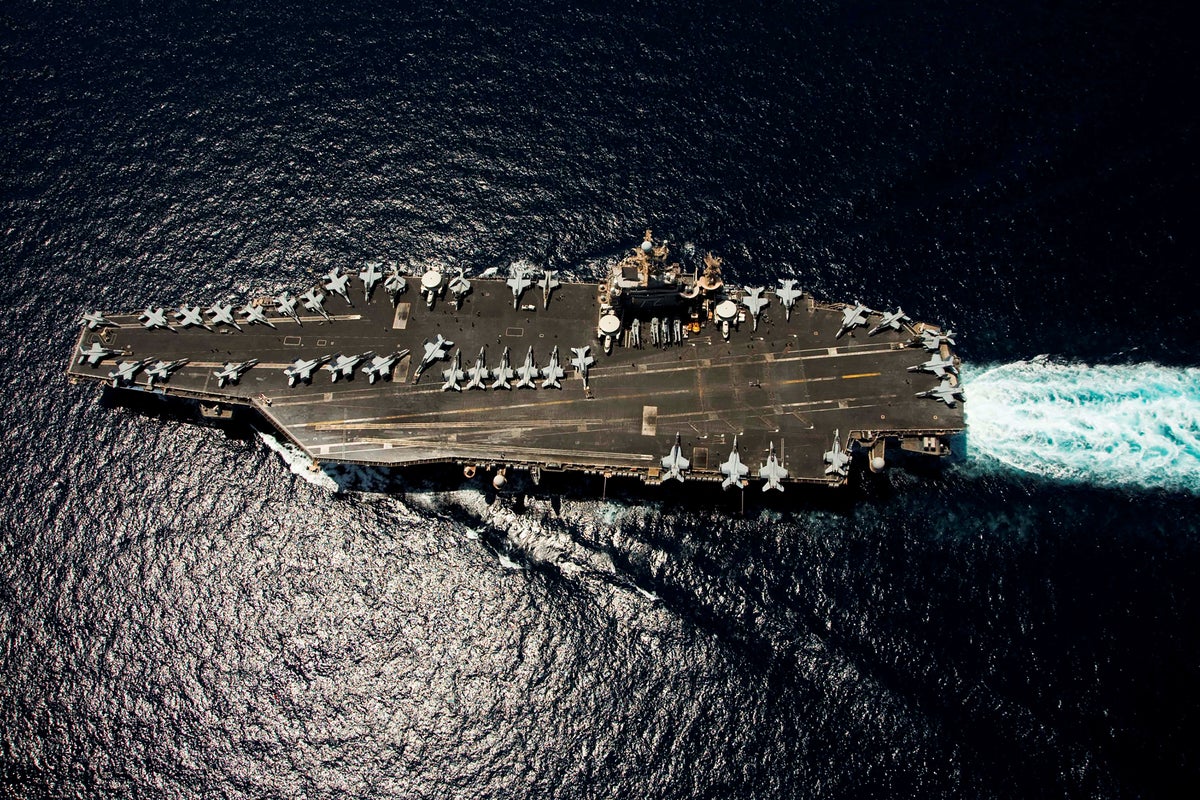
Despite the escalating rhetoric and military preparations, diplomatic efforts continue, albeit with limited success. Indirect nuclear talks between the U.S. And Iran were held in Geneva earlier this week, but a senior U.S. Official indicated that the two sides remain “far apart” on key issues. Simultaneously, reports suggest a massive U.S. Military build-up in the Middle East, with forces reportedly poised for potential strikes as soon as Saturday. Sources speaking to CBS News indicated that the build-up is intended to be completed by mid-March. This dual track – continued diplomacy alongside overt military posturing – reflects a complex and precarious situation, where the possibility of both a negotiated settlement and armed conflict remains on the table.
Historical Context: Iran’s Nuclear Program and International Relations
The current crisis is rooted in a long history of mistrust and tension surrounding Iran’s nuclear program. Western powers have long suspected Iran of seeking to develop nuclear weapons, a claim Iran consistently denies. The 2015 JCPOA, negotiated between Iran and the P5+1 (the United States, United Kingdom, France, China, Russia, and Germany), aimed to curb Iran’s nuclear ambitions in exchange for sanctions relief. However, the Trump administration’s withdrawal from the agreement in 2018 and the subsequent reimposition of sanctions led to a gradual erosion of the deal’s constraints. Following the U.S. Withdrawal, Iran began to exceed the limits imposed by the JCPOA, leading to increased international concern. The attacks on Iranian nuclear facilities last year, first by Israel and then by the U.S., further escalated tensions and complicated efforts to revive the agreement.
The Role of Israel and Regional Dynamics
Israel has consistently been a vocal critic of Iran’s nuclear program and has repeatedly warned against the dangers of a nuclear-armed Iran. Israeli Prime Minister Benjamin Netanyahu has recently warned that Tehran is reconstituting nuclear facilities damaged in previous attacks. Israel’s concerns are amplified by its strategic rivalry with Iran and its perception of Iran as a threat to regional stability. The broader regional dynamics as well play a significant role in the current crisis. Iran’s support for proxy groups in countries such as Lebanon, Syria, and Yemen has fueled regional conflicts and heightened tensions with its adversaries, including Saudi Arabia and Israel.
Key Takeaways
- Escalating Tensions: The situation between the U.S. And Iran is rapidly deteriorating, with a heightened risk of military conflict.
- Citizen Evacuations: Poland has urged its citizens to leave Iran immediately, signaling a serious concern for their safety.
- Potential Military Action: Donald Trump has suggested the use of UK military bases for potential strikes against Iran, raising concerns about international involvement.
- Stalled Negotiations: Diplomatic efforts to revive the 2015 nuclear deal have stalled, leaving few viable alternatives.
- Regional Instability: The crisis has the potential to destabilize the wider Middle East region, with far-reaching consequences.
The coming days and weeks will be critical in determining whether a diplomatic solution can be found or whether the region will be plunged into another conflict. The U.S. Military build-up suggests that all options remain on the table, while the ongoing diplomatic efforts offer a glimmer of hope for a peaceful resolution. The international community is closely monitoring the situation, urging restraint and calling for a return to negotiations. The next key development to watch will be the completion of the U.S. Military build-up by mid-March, as well as any further statements or actions from the U.S., Iran, and key regional actors.
What we have is a developing story. Check back for updates.
Related reading