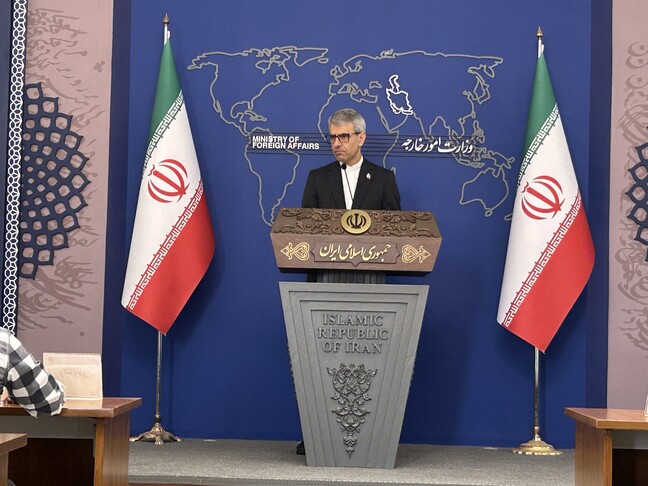
Iran has firmly rejected the transfer of its enriched uranium stockpiles abroad, reaffirming a longstanding position that such material remains sovereign property and will not be relocated under any circumstances. The stance comes amid renewed diplomatic efforts to resolve tensions over Iran’s nuclear program, with officials emphasizing that any future agreement must be based on mutual respect and strict adherence to Iran’s conditions.
Iranian Foreign Ministry spokesperson Esmaïl Baghaï reiterated the country’s position during a state television interview, stating clearly that “the enriched uranium of Iran will not be transferred anywhere. Just as Iranian soil is sacred to us, this matter holds great importance for us.” His remarks directly countered earlier claims by former U.S. President Donald Trump, who had suggested Iran had agreed to relinquish control of its uranium reserves.
The denial follows a pattern of Iranian resistance to external demands regarding its nuclear assets, particularly those involving enrichment levels beyond civilian thresholds. Iranian officials have consistently maintained that its nuclear activities are peaceful and fully compliant with international safeguards, whereas rejecting what they characterize as coercive diplomacy disguised as negotiation.
Baghaï’s statement was framed not only as a technical clarification but as a matter of national dignity, linking the inviolability of nuclear material to broader principles of sovereignty. This rhetoric underscores how Iran frames nuclear discussions not merely as technical compliance issues but as existential questions of independence and respect in international relations.
Despite Trump’s public optimism about reaching a deal—describing negotiations as “very close” and asserting that “very good things are in progress”—Iranian leadership has remained cautious, insisting that verbal assurances are insufficient without concrete, written commitments. Trump himself acknowledged this, saying he wanted any agreement “mis par écrit” before considering it final.
The disagreement over uranium transfer highlights a core obstacle in U.S.-Iran talks: differing interpretations of what constitutes meaningful progress. While Washington has framed potential concessions on enrichment as steps toward de-escalation, Tehran views any relinquishment of control over nuclear material as a red line that cannot be crossed, regardless of incentives offered.
These exchanges occur against a broader backdrop of regional instability, including renewed tensions in the Strait of Hormuz and ongoing military activity involving Israel, Lebanon, and Iranian-backed groups. Trump has urged Israel to cease bombing Lebanon, framing restraint as conducive to diplomacy, while simultaneously maintaining that U.S. Sanctions on Iranian ports would remain in place until a comprehensive agreement is reached.
Iran, for its part, has linked regional security to nuclear diplomacy, warning that continued U.S. Port blockades could provoke reciprocal actions, including the potential closure of the Strait of Hormuz—a critical artery for global oil shipments. Such statements reflect Tehran’s strategy of leveraging its geographic position to counteract economic pressure.
Analysts note that the uranium issue is symbolic as much as substantive, representing a test of whether Iran will accept limits perceived as infringing on its rights under the Nuclear Non-Proliferation Treaty. Tehran insists it has never pursued nuclear weapons and argues that demands for uranium removal exceed the scope of legitimate non-proliferation concerns.
The timing of these developments coincides with heightened scrutiny of Iran’s nuclear capabilities by the International Atomic Energy Agency (IAEA), which has repeatedly called for greater transparency regarding enrichment activities and stockpile levels. However, Iran has consistently limited IAEA access to certain sites, citing security and sovereignty concerns, further complicating verification efforts.
While diplomatic channels remain open, prospects for a near-term breakthrough appear uncertain given the fundamental disagreement over uranium disposition. Both sides acknowledge ongoing talks, but neither has conceded ground on what they consider non-negotiable principles—Washington seeking verifiable limits on enrichment capacity, Tehran insisting on retention of full control over its nuclear fuel cycle.
As of mid-April 2026, no formal agreement has been signed, and public statements from both capitals suggest a widening gap between expressed optimism and actual policy positions. Until these core disagreements are addressed through verified, documented commitments rather than rhetorical exchanges, the path to a durable resolution remains obstructed.
For ongoing updates on Iran’s nuclear diplomacy and regional security developments, readers are encouraged to consult official statements from the Iranian Foreign Ministry, the U.S. State Department, and reports from the International Atomic Energy Agency.
Share your thoughts on this evolving situation in the comments below, and help spread informed discussion by sharing this article with others interested in global affairs.
Related reading
- Latest News and Updates: Everything You Need to Know Now
- Australian Delegation: International Exchange on Housing and Urban Development
- Trump to Address 2020 Election Integrity in Prime-Time Speech (time.news)
- US Implements Naval Blockade on Iran as Trump Drops Strait of Hormuz Toll (newsdirectory3.com)