
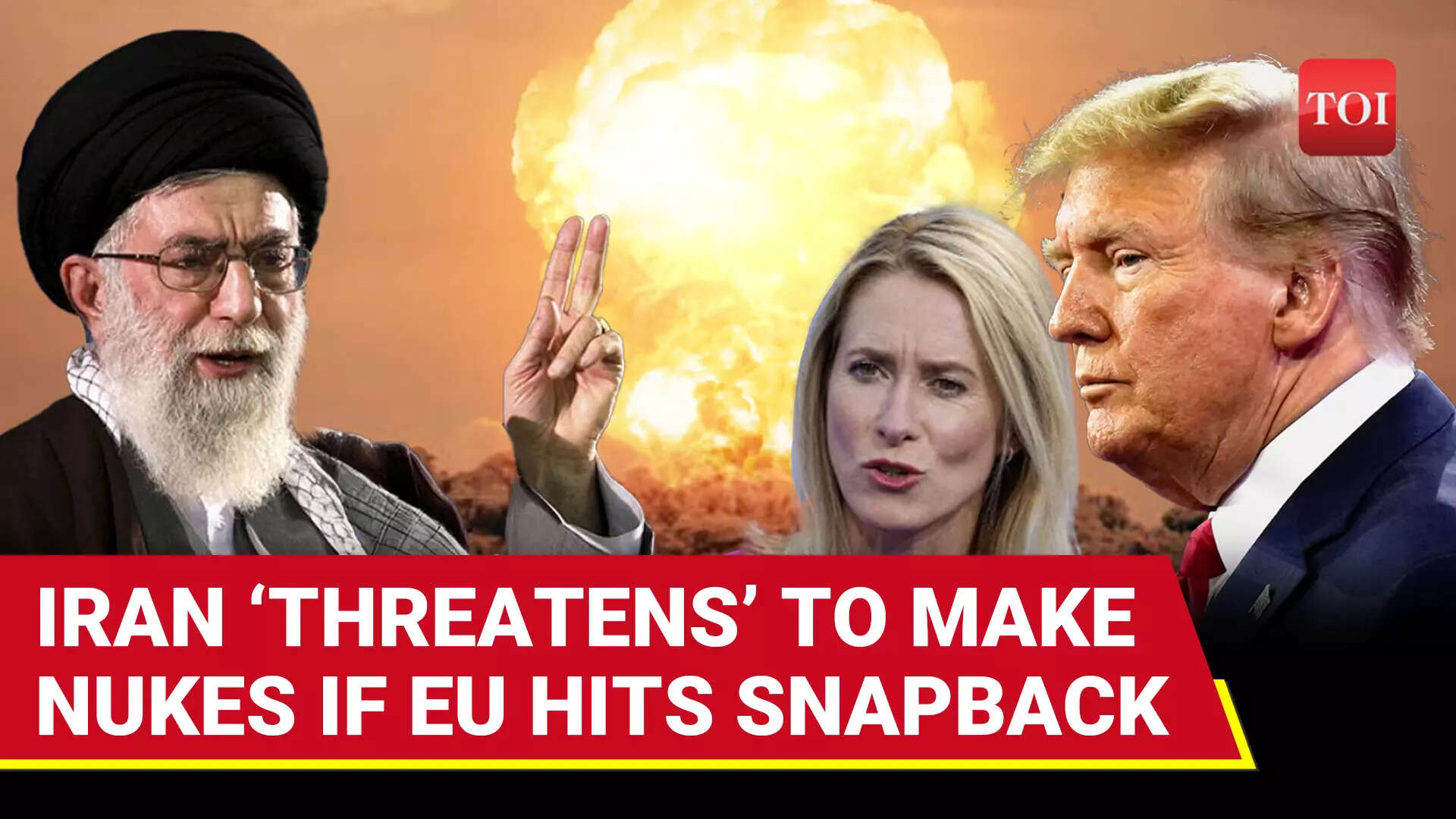
The fragile stability of the Middle East is facing a critical inflection point as Tehran threatens to cross a nuclear red line in response to potential U.S. Military action. In a move that has sent ripples through international diplomatic circles, an Iranian lawmaker has warned that the Islamic Republic is prepared to enrich uranium to 90%—the threshold for weapons-grade material—should President Donald Trump resume airstrikes against Iranian territory.
This escalation comes at a moment of profound uncertainty for the current ceasefire, which President Trump has described as being on “massive life support.” The tension follows the U.S. Administration’s rejection of a 14-point peace proposal submitted by Tehran, a move that has effectively stalled diplomatic efforts to prevent a wider regional war.
For the global community, the Iran uranium enrichment threat is not merely a political gambit but a technical alarm. Moving from 60% enrichment to 90% is a relatively short technical leap, significantly reducing the “breakout time” required to produce enough fissile material for a nuclear weapon. This development places the International Atomic Energy Agency (IAEA) and global security architectures on high alert as the window for a diplomatic resolution narrows.
The 90 Percent Red Line: Nuclear Escalation
The warning was issued by Ebrahim Rezaei, a Member of Parliament for Dashtestan and spokesperson for the Iranian parliament’s National Security and Foreign Policy Committee. Writing on X, Rezaei indicated that the option to enrich uranium to 90% would be formally discussed in parliament if the United States resumes military strikes. This threat serves as a direct counter-pressure to the U.S. Strategy of “maximum pressure” and tactical strikes.

To understand the gravity of this threat, one must look at the current stockpiles. Iran currently holds approximately 400 kilograms of enriched uranium, much of which is enriched to 60%. While 60% is technically intended for civilian purposes like medical isotopes, it is widely viewed by security experts as “near-weapons grade” because the effort required to move from 60% to 90% is far less than the effort required to get from natural uranium to 60%.
The shift to 90% would signal a definitive move toward nuclear weapons capability, likely triggering a cascade of responses from regional rivals, most notably Israel, which has long maintained that it will not allow Iran to obtain a nuclear bomb by any means necessary.
A Ceasefire on ‘Life Support’
The diplomatic atmosphere has soured rapidly. President Donald Trump recently dismissed Iran’s latest peace proposal as “completely unacceptable,” later suggesting that the current ceasefire has only a “one percent chance” of surviving. This rhetoric suggests that the White House may be pivoting back toward a more aggressive military posture after determining that Tehran’s terms are non-negotiable.

On the other side, Mohammad Bagher Ghalibaf, the Speaker of the Iranian parliament, has issued a stern ultimatum. Ghalibaf asserted that Washington has “no alternative” but to accept the rights outlined in Iran’s 14-point proposal or face the total failure of the peace process. The Iranian Foreign Ministry has echoed this sentiment, describing U.S. Demands as “unreasonable.”
This deadlock is not just about signatures on a page; it is about the fundamental nature of Iranian sovereignty and the U.S. Demand for a complete cessation of nuclear escalation and regional proxy support. With Trump meeting with his national security team to discuss the possibility of renewed strikes, the risk of a miscalculation leading to full-scale war is at its highest point in years.
The Mounting Cost of Conflict
Beyond the nuclear threat, the financial burden of the ongoing tensions is becoming a point of contention within the U.S. Government. During recent testimonies before House and Senate subcommittees, Acting Pentagon comptroller Jules Hurst revealed that the total price tag for the “Iran war” has risen to $29 billion.
This figure represents a significant increase from the $25 billion estimate provided by Secretary of Defense Pete Hegseth just last month. Some internal assessments suggest the actual cost could be even higher, potentially approaching $50 billion, reflecting the immense expense of maintaining high-readiness postures, deploying advanced missile defense systems, and conducting tactical operations across the region.
The conflict has also fostered new, unlikely defense partnerships. U.S. Ambassador to Israel Mike Huckabee confirmed that Israel has deployed anti-missile batteries and personnel to the United Arab Emirates (UAE) to bolster the Gulf nation’s defenses against potential Iranian attacks. This strategic alignment underscores a growing regional coalition aimed at containing Tehran’s influence, further isolating the Islamic Republic.
Regional Ripples: From Beirut to Kuwait
The instability is not confined to the U.S.-Iran axis; it is bleeding into neighboring states. In southern Lebanon, Israeli strikes have reportedly killed six people, prompting the leader of the Iranian-backed Hezbollah to vow to turn the battlefield “into hell for Israel.” While Israel and Lebanon are scheduled for a third round of talks in Washington later this week, the violence on the ground threatens to undermine any diplomatic progress.
Further east, Kuwait has reported a security breach involving “infiltrators” linked to Iran. Kuwaiti authorities arrested four individuals who allegedly attempted to enter the country by sea following violent clashes. These incidents suggest that Tehran may be utilizing asymmetric tactics to pressure neighboring Gulf states and signal its reach across the Persian Gulf.
Adding to the psychological warfare, Israeli media reports indicate that some citizens have received threatening text messages purportedly from Iran. The messages warned that they would “see the sun in the night skies,” a poetic but chilling reference to the possibility of massive drone or missile swarms illuminating the horizon during a night attack.
Key Takeaways: The Iran-U.S. Nuclear Standoff
- Nuclear Threat: Iran warns it may enrich uranium to 90% (weapons-grade) if the U.S. Resumes military strikes.
- Diplomatic Failure: President Trump rejected Iran’s 14-point proposal, stating the ceasefire is on “massive life support.”
- Financial Toll: The U.S. Cost of the conflict has reached an official estimate of $29 billion.
- Regional Instability: Escalations are evident in Lebanon (Hezbollah clashes) and Kuwait (border infiltrations).
- Strategic Shifts: Israel is providing direct missile defense support to the UAE to counter Iranian threats.
As the world watches, the primary question remains whether the 14-point proposal can be salvaged or if the “one percent chance” of peace will vanish entirely. The immediate focus now shifts to the upcoming talks in Washington between Israeli and Lebanese officials, which may serve as a bellwether for whether diplomacy can still prevail in the region.
World Today Journal will continue to monitor this developing story. We encourage our readers to share this report and join the conversation in the comments below regarding the implications of nuclear escalation in the Middle East.