
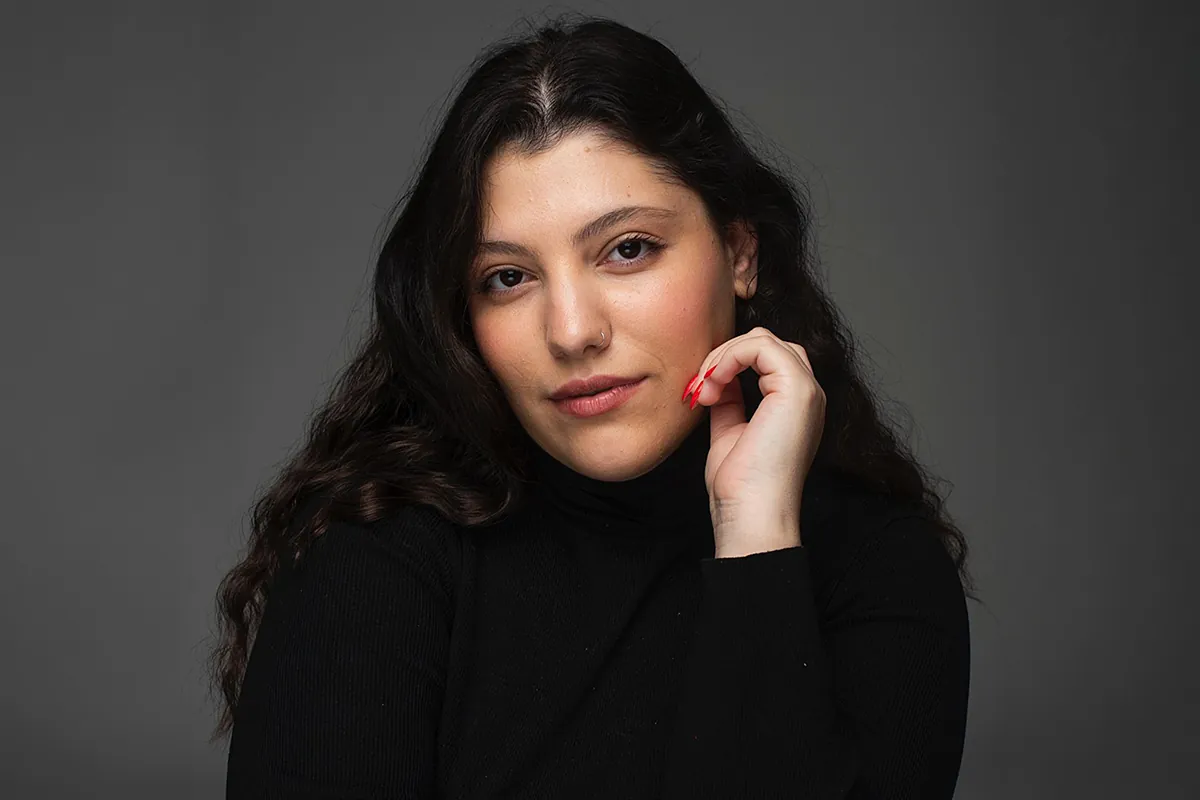
On a Friday morning in Tel Aviv, the actress Sogand Sara Fakheri spoke with quiet conviction about a dream that returns to her each night: walking the streets of Tehran, revisiting places from her childhood, and discovering new corners of a city she left as a child. Born in Iran and raised in Israel, Fakheri embodies a complex identity shaped by displacement, memory, and political tension. Her words, shared in an interview with EL MUNDO on April 24, 2026, reflect the enduring connection many Iranian-Israelis feel to their homeland, even as they advocate for change in Iran’s current government.
Fakheri is perhaps best known internationally for portraying Raziyeh, a devout Basij militia member, in the critically acclaimed television series “Tehran.” The Apple TV+ and Kan 11 co-production, which premiered in 2020, follows a Mossad operative operating undercover in Iran’s capital. In the show, Raziyeh is a fervent supporter of the Islamic Republic, unaware that the young woman visiting her family is actually an Israeli agent. In real life, Fakheri holds the opposite view: she is an outspoken critic of Iran’s clerical leadership and advocates for democratic freedoms in the country of her birth.
This duality — playing a regime loyalist on screen while opposing it in reality — has become a defining aspect of her public persona. As she told EL MUNDO, the role allows her to explore the ideological divides within Iranian society from within, even as she uses her platform to voice support for those inside Iran who resist authoritarian rule. “The offensive helped because it weakened the military regime,” she said, referring to regional conflicts that have strained Iran’s resources. “If it were that strong, they wouldn’t have called on militias from Iraq.”
Fakheri emphasizes that Iran’s vast size and decades-long military preparedness should not be mistaken for invincibility. “Iran is a huge country with a regime that has spent 47 years preparing for this war against Israel and the U.S.,” she noted. Yet she believes change is possible — not through foreign intervention alone, but through internal dissent. “The regime is trying to buy time to reorganize its forces. No negotiation will succeed with its leadership, and if there is an agreement, they will lie, as they have in the past.”
Her perspective is shared by many in Israel’s Iranian diaspora, a community that maintains deep cultural and emotional ties to Iran despite decades of separation. Since the 1979 Islamic Revolution, waves of Iranians have fled to Israel, Europe, and North America, forming transnational networks that preserve Persian language, music, and traditions while advocating for human rights and democratic reform in Iran. For Fakheri and others like her, the dream of returning to Tehran is not merely nostalgic — it is political, rooted in a hope for a future where freedom of expression, gender equality, and religious tolerance are upheld.
When asked about her personal connection to Iran, Fakheri spoke of sensory memories: the smell of saffron in her grandmother’s kitchen, the sound of call to prayer echoing over ancient bazaars, the way light falls on the tiles of historic mosques. Though she was young when her family relocated to Israel in 2007, these impressions have endured. “Every night I dream of returning to Tehran and visiting places I remember and many others I don’t know,” she said, describing how messages from friends and relatives in Iran often arrive on her phone as she sleeps.
Fakheri’s fluency in Hebrew, Farsi, and English — along with basic Spanish and Arabic — allows her to navigate multiple cultural worlds. This linguistic agility has informed her acting career, enabling her to portray complex characters with authenticity. Beyond “Tehran,” she has appeared in Israeli theater and independent films, often choosing roles that explore identity, exile, and resistance. Her background has also made her a sought-after voice in discussions about Middle Eastern diplomacy, diaspora engagement, and the role of art in political discourse.
The fifth season of “Fauda,” another prominent Israeli series, was announced to premiere on April 22, 2026 — just two days before her interview. While Fakheri is not part of that show’s cast, its timing underscores the continued global interest in Israeli-produced content that delves into security, identity, and the human cost of conflict. Like “Tehran,” “Fauda” has drawn both praise and criticism for its portrayal of Palestinians and Israelis, sparking conversations about representation and narrative responsibility in wartime storytelling.
As of April 2026, Fakheri remains active in both artistic and advocacy spaces. She continues to engage with audiences through interviews, social media, and public appearances, using her visibility to highlight the voices of Iranians calling for reform. While she does not claim to speak for all Iranian-Israelis, her testimony offers a window into the lived experience of those who carry two homelands in one heart — one remembered, one hoped for, and one still dreamed of each night.
For readers seeking updates on Iranian-Israeli cultural figures or developments in Israeli television, following reputable entertainment news outlets and official announcements from production companies like Apple TV+ and Kan 11 offers the most reliable path forward. Official sources such as studio press releases and verified artist platforms provide accurate information about upcoming projects and public statements.
What are your thoughts on the role of artists in shaping conversations about identity and conflict? Share your perspective in the comments below, and consider sharing this article if it resonated with your understanding of diaspora experiences and cultural memory.