
Iran Proposes Reopening Strait of Hormuz in High-Stakes Negotiations with U.S.
TEHRAN — In a dramatic shift amid escalating tensions, Iran has formally proposed reopening the Strait of Hormuz to global maritime traffic, a move that could ease a months-long blockade disrupting nearly one-fifth of the world’s oil supply. The offer, however, comes with a critical caveat: Tehran has explicitly excluded its nuclear program from negotiations, a key demand from the United States and its allies.
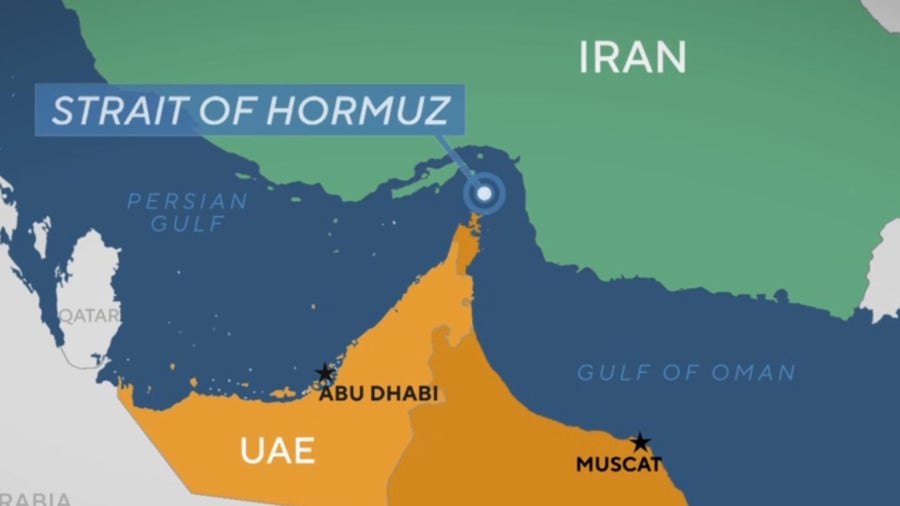
The proposal, revealed on Monday by regional officials and confirmed by multiple diplomatic sources, arrives as both nations remain locked in a fragile ceasefire following a two-month military confrontation that began on February 28. The Strait of Hormuz, a 21-mile-wide chokepoint at the mouth of the Persian Gulf, has been effectively closed since April 13, when the U.S. Imposed a naval blockade in response to Iranian military actions. The closure has triggered global energy shortages, sending oil prices soaring and sparking protests in energy-dependent nations.
White House Press Secretary Karoline Leavitt told reporters on Monday that President Donald Trump’s national security team was “reviewing the proposal” but offered no timeline for a response. “The president will address the nation on this matter in the coming days,” Leavitt said, without elaborating on whether the U.S. Would accept Iran’s terms. Meanwhile, Iranian officials have framed the offer as a “goodwill gesture” to de-escalate the crisis, though they insist that discussions about Tehran’s nuclear ambitions remain “non-negotiable.”
For global markets and geopolitical analysts, the proposal represents a high-stakes gamble—one that could either pave the way for a diplomatic breakthrough or deepen the stalemate. Here’s what we know so far.
The Proposal: What Iran Is Offering—and What It Wants in Return
According to two regional officials familiar with the negotiations, Iran’s proposal centers on three core demands:
- Immediate reopening of the Strait of Hormuz to all commercial shipping, including oil tankers, under Iranian supervision.
- Lifting of U.S. Sanctions imposed since April 13, which have crippled Iran’s oil exports and frozen billions in foreign assets.
- Formal cessation of hostilities, including a withdrawal of U.S. Naval forces from the Persian Gulf and an end to Israeli airstrikes on Iranian-backed militias in Syria and Lebanon.
In exchange, Iran has pledged to:
- Permit “unimpeded passage” through the strait for all vessels, including those flagged by the U.S. And its allies.
- Refrain from imposing its previously announced $10,000 “transit toll” on ships passing through the waterway.
- Allow international inspectors to verify the strait’s reopening but not to monitor its nuclear facilities.
Crucially, Iran has excluded its nuclear program from the current round of talks. This includes its uranium enrichment activities, which the U.S. And European Union have long demanded be curtailed under the terms of the 2015 Joint Comprehensive Plan of Action (JCPOA), from which Trump withdrew the U.S. In 2018. Iranian Foreign Ministry spokesman Nasser Kanaani stated on Tuesday that “the nuclear issue is a sovereign matter and will not be part of these discussions.”
Why the Strait of Hormuz Matters: A Global Chokepoint
The Strait of Hormuz is one of the world’s most critical maritime passages. In peacetime, it sees an average of 140 ships per day, carrying roughly 21 million barrels of oil—about 21% of global petroleum consumption. Since the blockade began, however, traffic has plummeted to a fraction of that volume. Data from Kpler, a maritime analytics firm, shows that only seven vessels crossed the strait in the past 24 hours, all of them either Iraqi or Iranian-flagged.
The economic ripple effects have been severe. Oil prices have surged by over 30% since mid-April, with Brent crude trading at $112 per barrel as of Tuesday—its highest level in nearly a decade. Countries heavily dependent on Gulf oil, such as India, China, and Japan, have faced fuel shortages, while European nations have scrambled to secure alternative supplies from the U.S. And Norway. The International Energy Agency (IEA) warned last week that “prolonged closure of the strait could tip the global economy into recession.”
Militarily, the strait has been a flashpoint for decades. Iran has repeatedly threatened to close it in response to sanctions or military pressure, while the U.S. Fifth Fleet, based in Bahrain, has vowed to keep it open. The current blockade began after a series of skirmishes in late March, culminating in a U.S. Airstrike on an Iranian Revolutionary Guard Corps (IRGC) facility in Bandar Abbas. Iran retaliated by seizing two U.S.-flagged oil tankers and mining key shipping lanes.
U.S. Response: Skepticism and Strategic Calculations
The White House has not yet formally responded to Iran’s proposal, but early reactions from U.S. Officials suggest deep skepticism. Senator Marco Rubio (R-FL), a member of the Senate Foreign Relations Committee, called the offer “better than expected” but cautioned that “Iran has a history of reneging on agreements.” In a statement to CNN, Rubio said, “We must ensure any deal includes verifiable commitments on both sides—not just empty promises.”
Trump, who has taken a hardline stance against Iran since his 2016 campaign, faces pressure from both hawks and doves within his administration. National Security Advisor Robert O’Brien has reportedly advocated for a “measured response,” while Secretary of State Mike Pompeo has pushed for maintaining maximum pressure until Iran halts its nuclear activities. The Pentagon, meanwhile, has quietly repositioned additional naval assets to the region, including the USS Gerald R. Ford, the Navy’s newest aircraft carrier, which arrived in the Gulf of Oman on April 25.
One key sticking point is Iran’s insistence on excluding its nuclear program from negotiations. The U.S. Has long demanded that Tehran halt its uranium enrichment, which Western intelligence agencies believe is advancing toward weapons-grade levels. Satellite imagery from International Atomic Energy Agency (IAEA) reports suggests Iran has enriched uranium to 60% purity, just shy of the 90% needed for a nuclear weapon. Iran maintains its program is for peaceful purposes, but the U.S. And Israel have warned that further enrichment could trigger military action.
Regional Reactions: Oman, Pakistan, and the Search for a Mediator
With direct talks between Iran and the U.S. Stalled, regional mediators have stepped in to broker a deal. Pakistan, which shares a border with Iran and has historically played a neutral role, hosted a failed round of negotiations in Islamabad on April 25. According to a Pakistani foreign ministry official, the talks collapsed after the U.S. Insisted on including Iran’s nuclear program in the agenda—a demand Tehran rejected outright.

Oman, another key mediator, has reportedly offered to host a new round of talks, but only if both sides agree to a “narrower focus” on the strait’s reopening. Omani officials have privately expressed frustration with Washington’s “all-or-nothing approach,” arguing that the nuclear issue should be addressed separately. Sultan Haitham bin Tariq, Oman’s ruler, has been in contact with both Trump and Iranian President Ebrahim Raisi in recent days, according to diplomatic sources.
Other Gulf states, including Saudi Arabia and the United Arab Emirates, have remained largely silent on the proposal. Both nations have historically opposed Iranian influence in the region but are also heavily dependent on the strait for their own oil exports. Saudi Crown Prince Mohammed bin Salman reportedly told U.S. Officials last week that Riyadh would “not stand in the way” of a deal but would not publicly endorse it without guarantees of Iranian compliance.
What Happens Next: Scenarios and Stakes
As the world waits for the White House’s response, analysts are weighing several possible outcomes:
- Diplomatic Breakthrough: If the U.S. Accepts Iran’s terms, the strait could reopen within days, easing global oil supplies and reducing the risk of further military escalation. However, this would likely require the U.S. To drop its demand for nuclear talks—a politically risky move for Trump ahead of the 2026 midterm elections.
- Continued Stalemate: If the U.S. Rejects the proposal, Iran may escalate its military actions, including further seizures of commercial vessels or attacks on U.S. Assets in the region. This could trigger a broader conflict, drawing in Israel and other regional actors.
- Partial Agreement: A middle-ground scenario could see the U.S. Agree to lift some sanctions in exchange for Iran’s reopening of the strait, while deferring nuclear talks to a later date. This would likely face opposition from hardliners in both countries.
- Military Escalation: If negotiations collapse entirely, the U.S. And Iran could resume hostilities, with unpredictable consequences for global energy markets and regional stability. The Pentagon has already drawn up contingency plans for a potential strike on Iranian nuclear facilities, according to The New York Times.
For now, the most immediate question is whether the fragile ceasefire will hold. Since April 13, there have been no major military engagements, but both sides have accused each other of violating the truce. The U.S. Navy reported on April 26 that an Iranian drone came within 500 yards of a U.S. Destroyer in the strait, while Iran claimed that a U.S. Reconnaissance plane violated its airspace.
Key Takeaways: What This Means for the World
- The Strait of Hormuz is a global economic lifeline. Its closure has disrupted nearly 21% of the world’s oil supply, sending prices skyrocketing and threatening energy security for nations from India to Europe.
- Iran’s proposal is a calculated gamble. By offering to reopen the strait while excluding its nuclear program, Tehran is testing whether the U.S. Will prioritize economic stability over long-term security concerns.
- The U.S. Faces a political dilemma. Accepting Iran’s terms could ease the energy crisis but may be seen as a concession to a regime Trump has vowed to confront. Rejecting it could prolong the blockade and risk further military escalation.
- Regional mediators are critical. Oman and Pakistan are playing key roles in brokering talks, but their influence is limited if the U.S. And Iran remain at odds over the nuclear issue.
- The clock is ticking. With global oil inventories dwindling and protests spreading in energy-dependent nations, both sides face pressure to reach a deal—or risk a wider conflict.
What’s Next?
President Trump is expected to address the nation on Iran’s proposal in the coming days. The White House has not confirmed a specific date but indicated that a decision could come as early as Thursday. Meanwhile, the U.S. Navy has extended its blockade of the Strait of Hormuz until at least May 5, citing “ongoing security concerns.”
For global markets, the stakes could not be higher. The Brent crude futures surged by 2.3% on Tuesday following news of Iran’s proposal, reflecting investor hopes for a resolution. However, analysts warn that without a clear path forward, the current volatility is likely to continue.
As the world watches, one thing is clear: the fate of the Strait of Hormuz will shape not just the future of U.S.-Iran relations, but the global economy for years to come.
What do you think? Should the U.S. Accept Iran’s proposal to reopen the Strait of Hormuz, even if it means delaying nuclear talks? Share your thoughts in the comments below—and don’t forget to share this article with others following the story.