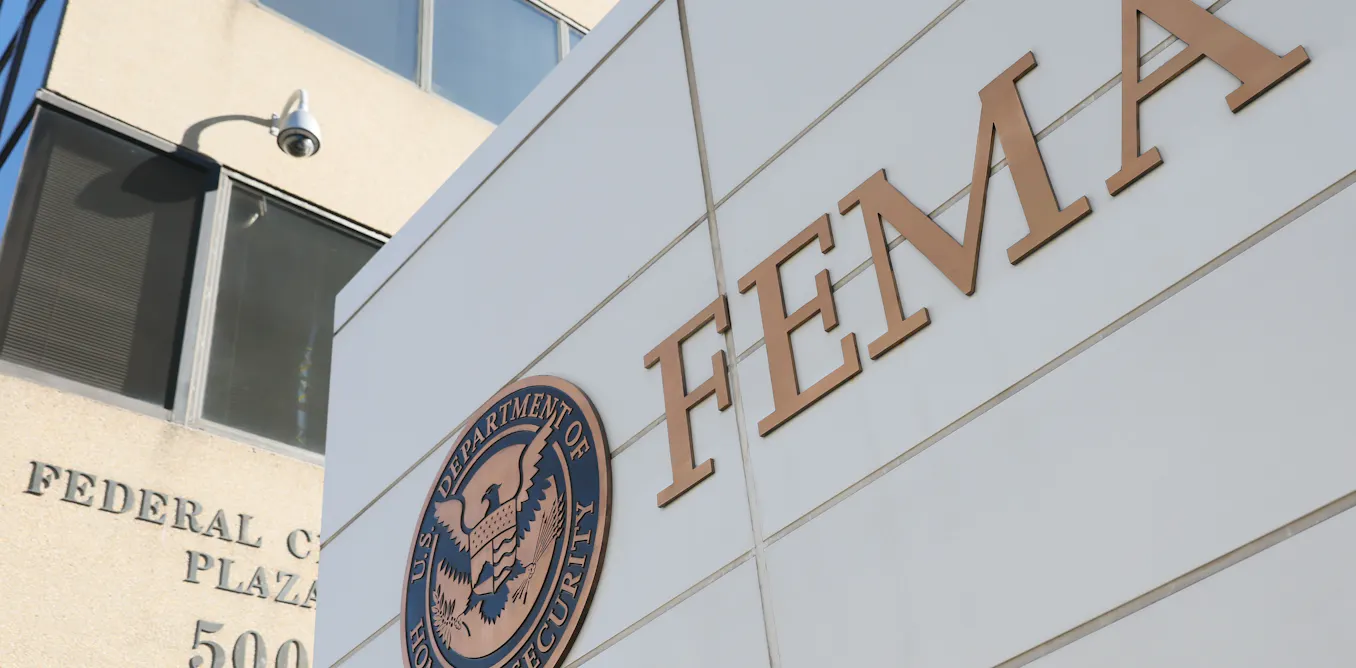
The Federal Emergency Management Agency has issued new grant guidelines that threaten to withhold counterterrorism funds from states that do not comply with federal election security directives, according to official agency documentation. Under the newly established requirements, states must reconcile the number of voters who participated in federal elections with the total number of ballots cast. Furthermore, agencies are directing states to use the federal SAVE database to verify the citizenship status of every registered voter, as well as poll workers and individuals operating election systems.
The funding at risk supports critical state and local operations, including cybersecurity upgrades, emergency planning, training exercises, and equipment purchases. Federal grants historically account for more than US$1 trillion annually, providing between one-quarter and one-third of overall state and local government revenues across the United States. States such as Louisiana, Arkansas, Arizona, and Montana rely heavily on Washington, D.C., for approximately 30 percent of their operating revenues, while states like California, Connecticut, and New York draw more than 20 percent of their budgets from federal assistance, according to data from public finance analyses.
Federal funding cutoffs historically remain rare and targeted due to administrative hurdles. Writing on agency reluctance, law scholar Eloise Pasachoff noted in 2014 that federal agencies typically worry that withholding funds will undermine their ultimate statutory goals, while complex political dynamics among state governments, Congress, the White House, and federal agencies make funding cutoffs difficult to execute. However, federal funding disputes have escalated following policy changes under the Trump administration, including a temporary freeze on broad federal assistance initiated by the Office of Management and Budget during the president’s second term.
Legal Precedents Governing Federal Spending Power
The legal framework governing federal funding conditions traces back decades through Supreme Court jurisprudence regarding Congress’s spending power under Article I of the U.S. Constitution. In the 1987 landmark case South Dakota v. Dole, the Supreme Court examined whether Congress could withhold five percent of federal highway funds from states that failed to adopt a minimum drinking age of 21. Writing for the majority, Chief Justice William Rehnquist established that federal spending power must be exercised in pursuit of the general welfare, that conditions must be stated unambiguously, and that conditions cannot be so coercive as to turn pressure into compulsion.
The court later applied this anti-coercion principle in 2012 in National Federation of Independent Business v. Sebelius, striking down a provision of the Affordable Care Act that threatened to revoke a state’s entire federal Medicaid funding for noncompliance with program expansion. Chief Justice John Roberts characterized the threatened loss of over 10 percent of a state’s overall budget as economic dragooning that left states with no real option to refuse. Legal commentators note that when executive branch agencies rather than Congress impose unilateral funding conditions, courts apply heightened judicial scrutiny to determine whether the executive branch has overstepped its statutory authority.
Recent Court Interventions and Congressional Pushback
Federal courts have recently intervened in several executive branch attempts to leverage federal funding for policy compliance. In August 2025, a federal district court blocked the Trump administration from withholding or freezing unrelated federal funding from municipalities and counties designated as sanctuary jurisdictions, ruling that the administration could not use federal funding leverage to enforce immigration policies. Similarly, in June 2026, a federal judge in New Jersey ordered the restoration of funding for a $16 billion Hudson River rail tunnel project, concluding that the sudden suspension of the project constituted political retribution.
Following FEMA’s announcement regarding election security directives, congressional Democrats denounced the move as potentially unlawful. In a joint statement, lawmakers argued that utilizing emergency preparedness funds for election compliance manipulates grants born out of national tragedy. Whether federal courts will agree with the administration’s authority to condition counterterrorism grants on voter database reconciliations remains to be tested through impending litigation. State and local officials awaiting upcoming grant disbursement cycles are advised to monitor announcements from the Department of Homeland Security and official federal court dockets for further developments.
Worth a look