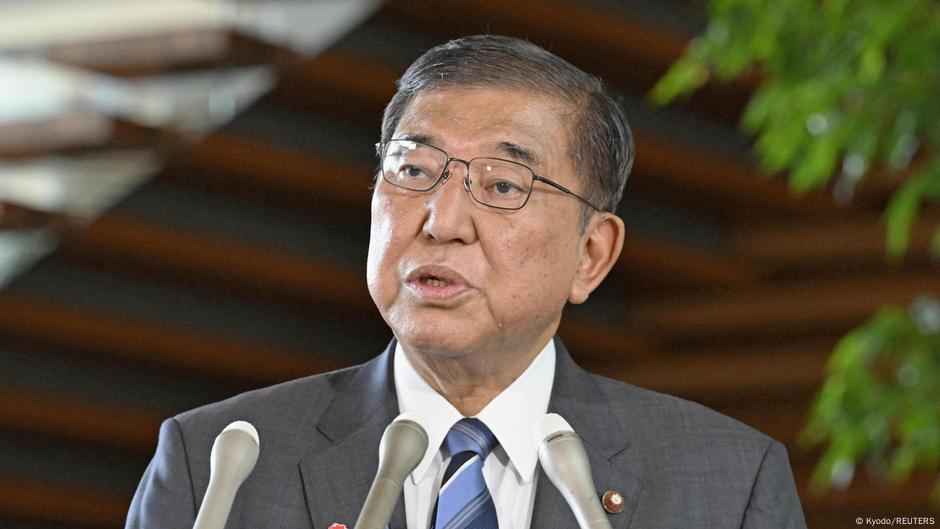
Shigeru Ishiba‘s resignation: Navigating Political Shifts in Japan (2025)
The Japanese political landscape is undergoing a significant transition as Shigeru Ishiba, leader of the Liberal Democratic Party (LDP), announced his intention to step down on September 7th, 2025, at 08:52 JST. This development, reported by leading news outlets like Deutsche Welle https://www.dw.com/en/japan/t-19035046, marks a pivotal moment for the long-dominant LDP and raises questions about the future direction of Japanese politics. This article provides an in-depth analysis of the circumstances surrounding Ishiba’s resignation,the implications for the LDP leadership race,and the broader context of recent electoral setbacks. Understanding this political transition is crucial for anyone following international affairs, Japanese policy, or global economic trends.
The Road to Resignation: A Loss of parliamentary Control
Ishiba’s decision follows a period of declining political fortunes for both himself and the LDP. Taking the reins of the party in 2024 at the age of 68, he quickly faced headwinds. A snap election in October 2024 resulted in the loss of control of the lower house, a significant blow to the LDP’s longstanding dominance.This was further compounded by the party’s failure to secure the necessary 248 seats in the upper house during elections held in July 2025.
The inability to maintain a majority in both houses of parliament effectively curtailed Ishiba’s ability to push through legislative agendas and signaled a growing dissatisfaction among voters. Members within the LDP swiftly began advocating for a new leadership contest, recognizing the need for a fresh face and a revised strategy to regain public trust. This internal pressure, coupled with the undeniable electoral results, ultimately led to Ishiba’s announcement. The situation mirrors, in some ways, the challenges faced by the UK Conservative Party in recent years, where a series of electoral disappointments led to multiple leadership changes.
The LDP Leadership Race: Potential Contenders and Key Issues
With Ishiba’s departure, the LDP is now poised to enter a period of intense internal competition. Several prominent figures are expected to vie for leadership, including:
Taro Kono: A popular figure known for his pro-reform stance and digital expertise. He previously served as Minister for Digital Transformation and is seen as a potential modernizer of the party. Recent polling data (september 2025) suggests Kono has a strong base of support among younger voters.
Fumio Kishida: The former Prime Minister, Kishida represents a more customary wing of the LDP. His experience and established network within the party make him a formidable contender.
Sanae Takaichi: A conservative voice within the LDP, Takaichi is known for her nationalist views and economic policies.
The key issues likely to dominate the leadership race include:
Economic Revitalization: Japan’s economy has struggled with deflation and slow growth for decades. Candidates will need to present credible plans to stimulate economic activity and address the challenges of an aging population.The Bank of Japan’s recent policy adjustments (August 2025) regarding yield curve control will undoubtedly be a central point of discussion.
National Security: Growing concerns about regional security, particularly regarding China and North Korea, will necessitate a robust defense policy. The debate over increasing defense spending and strengthening Japan’s alliance with the United States will be crucial.
Social Welfare: Addressing the needs of an aging population, including healthcare and pension reform, will be a major challenge for the next L
Worth a look