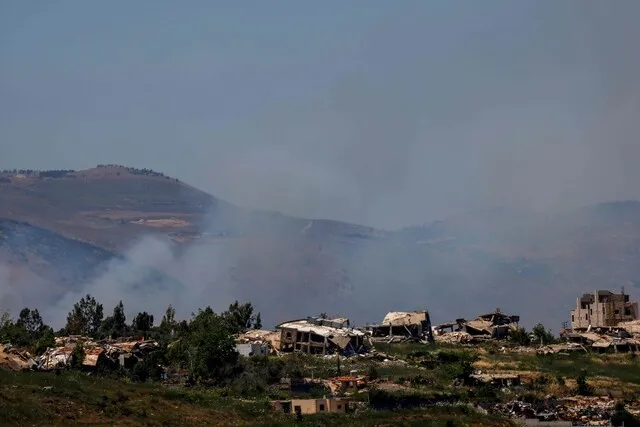
The geopolitical landscape of the Levant underwent a significant shift this week as news of a potential ceasefire agreement between Israel and Lebanon began to circulate, signaling a possible end to months of high-intensity hostilities. The announcement has not only sparked cautious optimism among regional diplomats but has also sent immediate shockwaves through global energy markets, where crude oil prices reacted sharply to the prospect of reduced Middle Eastern instability.
At the center of the diplomatic maneuvering is Nabih Berri, the Speaker of the Lebanese Parliament and a pivotal figure in the nation’s complex political architecture. In a statement that has since become the focal point of international scrutiny, Berri signaled that any movement by Hezbollah—the powerful Lebanese militant group and political party—in the southern border regions would be strictly reciprocal. According to reports regarding the ongoing negotiations, the Speaker emphasized that Hezbollah’s withdrawal from southern Lebanon is contingent upon the complete withdrawal of Israeli military forces from the same territory.
This “reciprocal withdrawal” stance highlights the delicate balancing act required to maintain a lasting peace in a region where sovereignty and security are deeply intertwined. As mediators work to finalize the specific technicalities of the ceasefire, the world is watching to see if this conditional framework can bridge the gap between the security requirements of Israel and the political and territorial demands of Lebanon.
The Terms of Reciprocity: Nabih Berri’s Strategic Stance
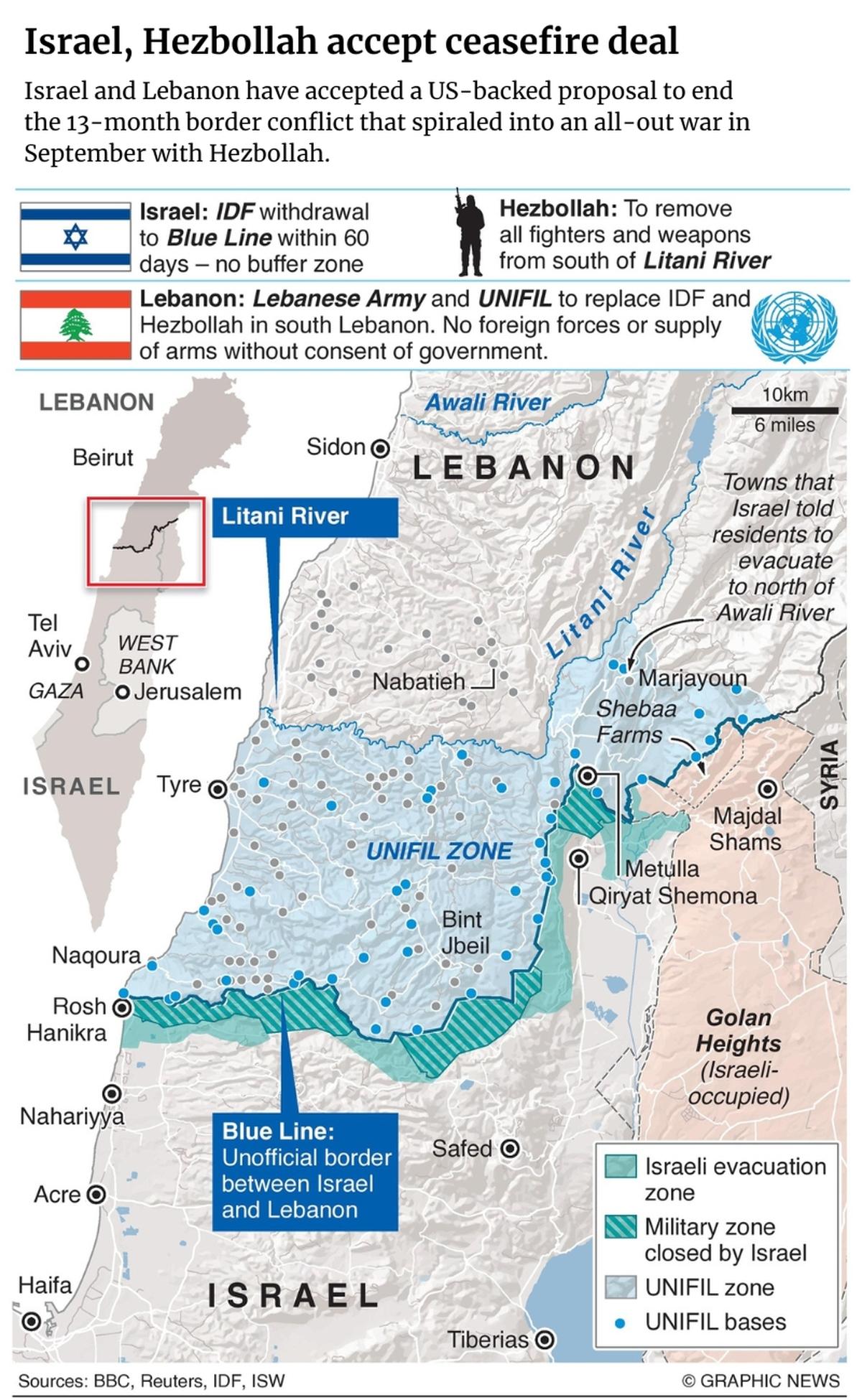
Nabih Berri, often viewed as a key mediator in Lebanese domestic and international affairs, has long occupied a unique position in the country’s confessional political system. His recent comments underscore the primary sticking point in the Israel-Lebanon negotiations: the physical presence of armed actors along the “Blue Line,” the UN-recognized border.
By framing Hezbollah’s potential withdrawal as a direct consequence of an Israeli pullout, Berri is attempting to establish a framework of parity. For the Lebanese government, the presence of Hezbollah in the south is a matter of national sovereignty and internal political stability; for Israel, the absence of Hezbollah’s influence near its northern border is a fundamental security necessity. The Speaker’s position suggests that a unilateral withdrawal by either side is unlikely to be viewed as a viable path toward permanent de-escalation.
Diplomatic sources indicate that the negotiations are focused on how to implement such a withdrawal without creating a security vacuum. The challenge lies in ensuring that the departure of one force is met by the orderly and verified departure of the other, a process that will likely require rigorous international oversight, potentially involving the United Nations Interim Force in Lebanon (UNIFIL) to monitor compliance along the border.
Energy Markets React: The WTI Price Correction
While diplomats grapple with the nuances of territory and sovereignty, global commodity traders reacted with remarkable speed to the news of the ceasefire. The prospect of a de-escalation in one of the world’s most volatile regions immediately dampened the “geopolitical risk premium” that had been inflating energy prices.
Following the reports of the ceasefire agreement, West Texas Intermediate (WTI) crude oil prices saw a notable decline, dropping approximately 3% in a single trading session. This downward movement reflects the market’s anticipation that a reduction in regional tensions will lead to more stable oil supply routes and a decrease in the likelihood of sudden disruptions in the Middle East.
Market analysts suggest that the 3% drop is a direct response to the removal of the immediate threat of a wider regional conflict involving major oil-producing or oil-transit nations. When the threat of war diminishes, the speculative “fear premium” embedded in oil prices tends to evaporate, leading to the kind of rapid correction seen this week. Investors are now looking toward upcoming OPEC+ meetings and global demand forecasts to determine if this price dip will persist or if it is merely a short-term reaction to the ceasefire headlines.
A Fragile Peace: The Geopolitical Landscape of Southern Lebanon
To understand why the withdrawal of forces is such a contentious issue, one must look at the historical and geographical significance of southern Lebanon. The region has been a theater of conflict for decades, characterized by a cycle of skirmishes, incursions, and large-scale military operations.
The “Blue Line,” established by the United Nations in 2000 following the Israeli withdrawal from Lebanon, serves as the demarcation point. However, the line has often been a source of friction, with frequent accusations of violations from both sides. The presence of Hezbollah in the south has historically been a cornerstone of Lebanese resistance against Israeli occupation, but it has also been a primary driver of the conflict with Israel in the post-2006 era.
The current negotiations are not merely about moving troops; they are about redefining the security architecture of the entire border. Key considerations include:
- The Role of the Lebanese Armed Forces (LAF): A central goal of many ceasefire proposals is to bolster the authority of the LAF in the south, ensuring that the Lebanese state—rather than non-state actors—holds the monopoly on the use of force.
- UN Resolution 1701: Much of the current diplomatic effort seeks to revitalize or expand upon the framework of UN Security Council Resolution 1701, which was designed to end the 2006 Lebanon War by calling for the disarmament of all armed groups in the area between the Litani River and the Blue Line.
- Buffer Zones and Monitoring: Establishing a verifiable buffer zone requires not just military movement but also technological and human monitoring to prevent accidental escalations.
Key Takeaways: The Impact of the Israel-Lebanon Ceasefire
As the situation continues to evolve, several critical themes have emerged from the recent developments:

- Conditional De-escalation: The Lebanese Parliament Speaker has explicitly tied Hezbollah’s withdrawal to Israel’s military pullout, establishing a framework of reciprocity.
- Economic Relief: The news of the ceasefire has provided an immediate cooling effect on global energy markets, evidenced by a roughly 3% drop in WTI crude prices.
- Sovereignty vs. Security: The core of the conflict remains the tension between Israel’s need for border security and Lebanon’s requirement for territorial sovereignty and state-led governance.
- International Mediation: The success of the ceasefire will depend heavily on the ability of international mediators to create a verification mechanism that both sides can trust.
The path forward remains fraught with complexity. While the ceasefire offers a reprieve from active combat, the transition from a state of war to a stable peace requires more than just the cessation of fire; it requires a fundamental realignment of the forces present on the ground. The world will be watching closely as the technical details of the agreement are hammered out and as the first movements of troops are reported.
Next Checkpoint: The international community is awaiting the formal announcement of the ceasefire’s implementation timeline and the specific roles to be played by UNIFIL in the monitoring phase. We will provide updates as soon as official diplomatic channels release the finalized terms.
What are your thoughts on the potential for a long-term peace in the Levant? Do you believe reciprocal withdrawal is a viable path forward? Let us know in the comments below and share this article to join the global conversation.
Worth a look