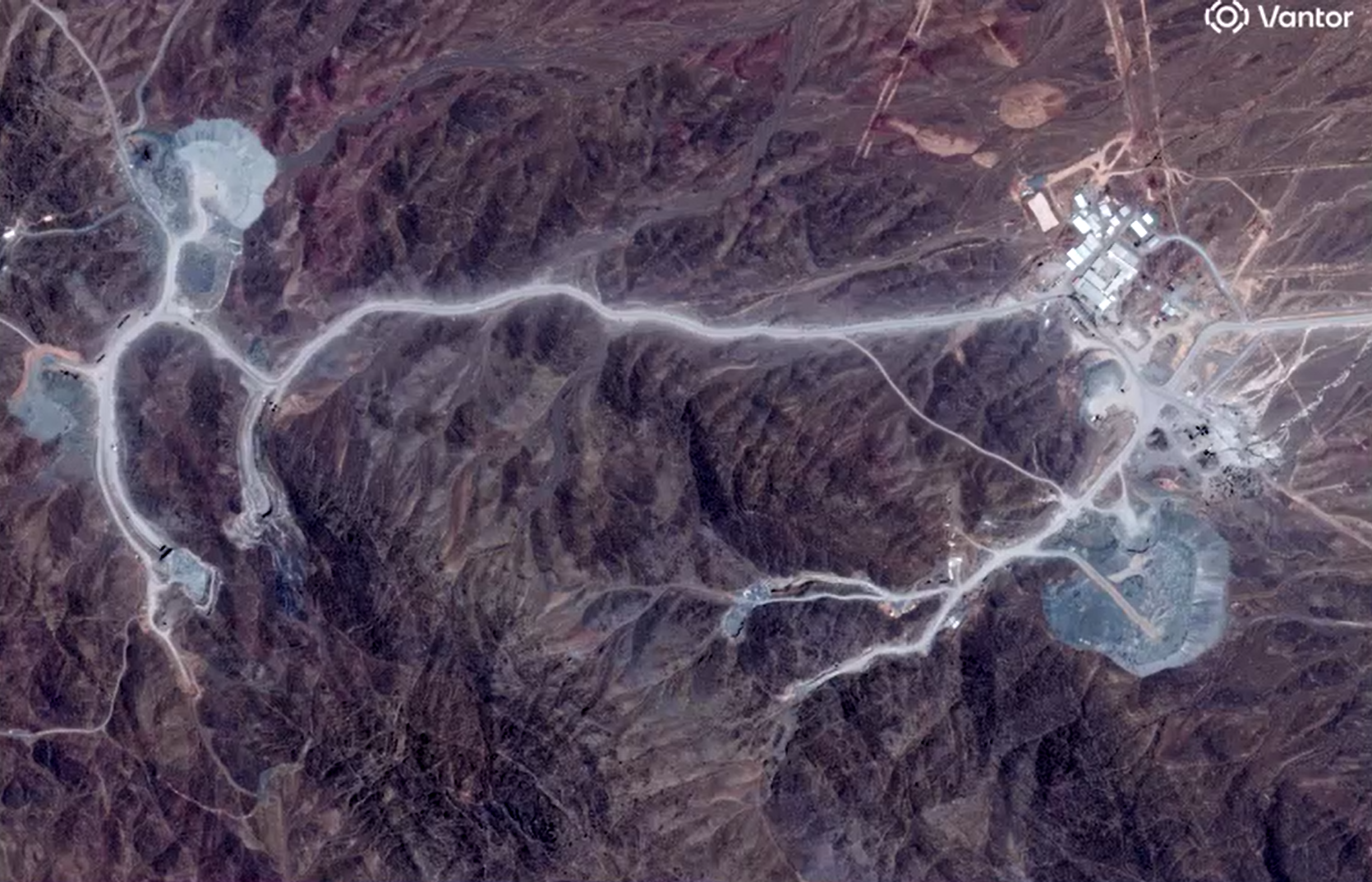
Israeli intelligence believes Iran transferred thousands of uranium-enrichment centrifuges into tunnels beneath Pickaxe Mountain last fall. The site, located south of the Natanz nuclear complex, remains a focal point of geopolitical tension following the June 2025 Midnight Hammer
operation, as Iran continues to restrict International Atomic Energy Agency access.
Intelligence Findings at Pickaxe Mountain
Israeli and U.S. officials say Iran moved thousands of uranium-enrichment centrifuges into highly fortified tunnels deep within Pickaxe Mountain during the latter months of 2025. According to reports, Israel shared these intelligence findings with the United States following the 12-day military conflict in June 2025. During that war, American and Israeli strikes pummeled three of Iran’s main nuclear sites in an operation the U.S. called Midnight Hammer.
The facility is situated south of the Natanz nuclear complex, which was the site of two of Iran’s uranium enrichment plants bombed in June 2025. While Tehran maintains that the Pickaxe Mountain site serves exclusively as a factory for the assembly and production of advanced centrifuges, rather than an active enrichment facility, the lack of oversight has fueled international skepticism. Satellite imagery reviewed by CNN shows construction vehicles operating at the site, which observers suggest may amount to a violation of the U.S.-Iran memorandum of understanding requiring Iran to maintain the status quo at its nuclear sites.
For more on this story, see Michael Flynn: Iran Conflict Delays Critical U.S. Strategic Pivot to Asia.
Structural Fortification and IAEA Access
The site’s structural depth has drawn significant concern from security analysts and the Institute for Science and International Security (ISIS), a U.S.-based think-tank focused on nuclear non-proliferation. Satellite data indicates the complex was carved to a depth of more than 100 meters below bedrock. This depth makes it deeper and more fortified than the Fordow enrichment facility—a site already known for its high level of fortification. According to reporting, reaching these depths is considered a complex task, even for the most advanced bunker-penetrating bombs in the U.S. arsenal.

The tunnel facility under construction at Pickaxe Mountain was not targeted in either of the wars, according to the Institute for Science and International Security. International Atomic Energy Agency (IAEA) Director-General Rafael Grossi has demanded that Iran provide answers regarding its activities at the site. Despite these requests, Iran has prevented IAEA inspectors from entering the facility. Furthermore, Iran has failed to provide answers that would allow the Iranian statements regarding the site’s purpose to be verified or the presence of nuclear material inside the mountain to be ruled out.
This follows our earlier report, 9 months into a ceasefire, Israel now controls nearly 70% of Gaza.
Escalating Tensions and U.S. Military Response
The relative immunity afforded by the rock’s depth has made the site one of the main targets in the confrontation with the United States. President Donald Trump has threatened to eliminate the site, adding that his administration was closely monitoring activity surrounding the tunnel’s entrances.

President Trump publicly addressed the broader conflict following the deaths of multiple U.S. service members over the weekend. The number of U.S. troops killed in the war, which began in February, rose to 17 over the weekend, marking one of the deadliest periods for U.S. forces. On Truth Social, President Trump wrote, Every time Iran kills an American Soldier they will pay for that killing many times over.
Read also: Was-was Ancaman Israel, Mojtaba Khamenei Tak Akan Hadiri Pemakaman Ali Khamenei – detikNews.
The President confirmed that this directive had been passed to Defense Secretary Pete Hegseth and Joint Chiefs Chairman Gen. Dan Caine. Amid the military buildup, Iranian Revolutionary Guard Corps (IRGC) media outlets have signaled a defiant stance, with reports stating there is no choice but to go nuclear
in the face of continued pressure.
Sources: WSJ, The Jerusalem Post.
Related reading