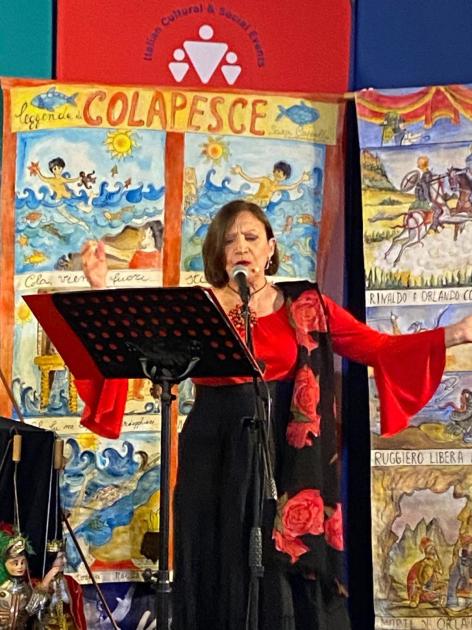
The vibrant traditions of Sicily are finding a new audience across the Australian continent, thanks to the artistry of cantora Sara Cappello and musicantore Fulvio Cama. Their tour, “Mediterraneo Dream: Voci dal Sud – Vento d’Australia,” is a captivating journey through the music, storytelling and ancient arts of Southern Italy, resonating deeply with the Italian diaspora and beyond. The performances, which began on February 21st, are bringing a piece of Sicilian and Calabrian heritage to communities in Melbourne, the Mornington Peninsula, and other regions of Australia.
Cappello and Cama’s work isn’t simply a performance; it’s a cultural bridge, connecting generations and continents through shared stories and melodies. The tour showcases the rich tapestry of Southern Italian folklore, including the songs of Rosa Balistreri, a beloved Sicilian folk singer, and the ancient sounds of instruments like the lira, aulos, and kalimba. The performances also feature the stories of legendary figures like Angelica and Orlando, brought to life through the traditional Sicilian puppet theatre, known as *Opera dei Pupi*. This art form, recognized by UNESCO as an Intangible Cultural Heritage of Humanity, is a cornerstone of Sicilian identity and a powerful symbol of the island’s history and resilience. UNESCO details the significance of the Opera dei Pupi here.
A Journey Through Southern Italian Traditions
The “Mediterraneo Dream” demonstrate is a carefully crafted narrative that weaves together song and storytelling, exploring the myths, legends, and age-old traditions of Calabria and Sicily. Fulvio Cama, a multi-instrumentalist and composer from Reggio Calabria, embodies the spirit of the ancient Aedi and Cantastorie – travelling storytellers and musicians – through his distinctive World Music style. He is the founder and president of Fabulanova and the artistic director of the Centre for Sicilian and Mediterranean Cultural Studies, and a member of the Scientific Committee of the Rosa Balistreri Foundation in Licata, Sicily. Cama’s mastery extends to a diverse range of instruments, including guitars, ancient lutes, the Calabrian lyra, kalimba, bouzouki, saz baglama, oud, kora, and even the didgeridoo, demonstrating a remarkable versatility and a commitment to cross-cultural musical exploration. More information about Fulvio Cama’s work can be found on his official website.
Sara Cappello, a cantora from Palermo, Sicily, adds another layer of depth to the performance. As a storyteller, singer-songwriter, and researcher, Cappello is dedicated to preserving and promoting the cultural heritage of her homeland. She is the founder of Teatro Cantunera in Palermo, a space dedicated to the performing arts and the celebration of Sicilian traditions. Cappello’s work focuses on bringing these traditions to life for new audiences, ensuring that they continue to resonate for generations to come. Her performances are infused with the passion and energy of Sicilian storytelling, captivating audiences with tales of love, loss, and resilience.
Connecting with the Italian-Australian Community
The tour is particularly meaningful for the Italian-Australian community, who often maintain a strong connection to their ancestral roots. For many, the performances offer a poignant reminder of their heritage and a chance to reconnect with the stories and traditions of their families. Cappello notes that the energy of the *pupi* and other folk arts is far from outdated, and that legends like Colapesce, a mythical protector of Sicily, continue to hold relevance for contemporary audiences. The show’s ability to weave together dreams, journeys, and identities resonates deeply with those who have built new lives in Australia even as preserving their cultural identity.
The impact of the tour extends beyond the performances themselves. Students from various schools have been involved, gaining a deeper appreciation for Sicilian traditions and understanding that these are not merely folklore, but a living memory and a vital part of cultural identity. This educational component underscores the importance of preserving and transmitting cultural heritage to future generations. The performances provide a unique opportunity for young people to connect with their roots and develop a sense of pride in their cultural background.
A Message of Peace Amidst Global Conflict
Cappello emphasizes that while the tour celebrates the beauty and richness of Italian culture, This proves also a statement of peace in a world grappling with conflict. She and Cama express their solidarity with nations experiencing the horrors of war, using their art as a platform to advocate for peace and understanding. This sentiment adds a layer of depth and significance to their performances, reminding audiences of the importance of empathy and compassion in a troubled world.
The Significance of *Opera dei Pupi*
The inclusion of *Opera dei Pupi* in “Mediterraneo Dream” is particularly noteworthy. This traditional Sicilian puppet theatre is a complex and visually stunning art form, with roots dating back to the 15th century. The puppets, often elaborately crafted and dressed in armor, depict knights, heroes, and villains from medieval romances, such as the tales of Charlemagne and his paladins. The performances are accompanied by music, narration, and dramatic sword fights, creating a captivating spectacle that has captivated audiences for centuries. The *Opera dei Pupi* is not merely entertainment; it is a repository of Sicilian history, mythology, and social commentary.
The puppets themselves are often family heirlooms, passed down through generations of puppeteers. Each puppet is a work of art, meticulously crafted from wood, metal, and fabric. The puppeteers, known as *pupari*, are skilled artisans and performers, who master the art of manipulating the puppets to create realistic and engaging performances. The *Opera dei Pupi* is a testament to the creativity and resilience of the Sicilian people, and its continued survival is a testament to its enduring cultural significance.
CO.AS.IT. And the Promotion of Italian Culture in Australia
The tour is being presented by CO.AS.IT., the Italian Cultural Association of Melbourne. CO.AS.IT. Plays a vital role in promoting Italian culture and language in Australia, offering a wide range of programs and events for the Italian-Australian community. The association’s support for “Mediterraneo Dream” underscores its commitment to showcasing the richness and diversity of Italian artistic expression. The concert took place on March 3rd, 2026, at CO.AS.IT.’s headquarters at 199 Faraday Street, Carlton, with tickets priced at $15. Registration was essential and could be completed through the CO.AS.IT. Website: https://www.coasit.com.au/mediterraneo-dream-cama.
The success of “Mediterraneo Dream” highlights the enduring appeal of Italian culture and the importance of preserving and promoting cultural heritage. Cappello and Cama’s tour is a testament to the power of art to connect people, bridge cultures, and inspire a sense of belonging. Their performances are a celebration of Sicilian and Calabrian traditions, and a reminder that our roots are an integral part of who we are, shaping our identities and guiding us towards our goals.
Looking ahead, both Cappello and Cama continue to be active in their respective fields, promoting Italian culture through their music, storytelling, and educational initiatives. Cappello’s work with Teatro Cantunera in Palermo and Cama’s leadership at Fabulanova and the Centre for Sicilian and Mediterranean Cultural Studies ensure that these traditions will continue to thrive for years to come. The ongoing efforts of artists like Cappello and Cama are essential for preserving the cultural heritage of Southern Italy and sharing it with the world.
The tour’s conclusion marks not an end, but a continuation of the dialogue between Italy and Australia, a testament to the enduring power of cultural exchange. We encourage readers to share their thoughts on the importance of preserving cultural heritage and the role of art in fostering understanding and peace. Join the conversation in the comments below.
Related reading