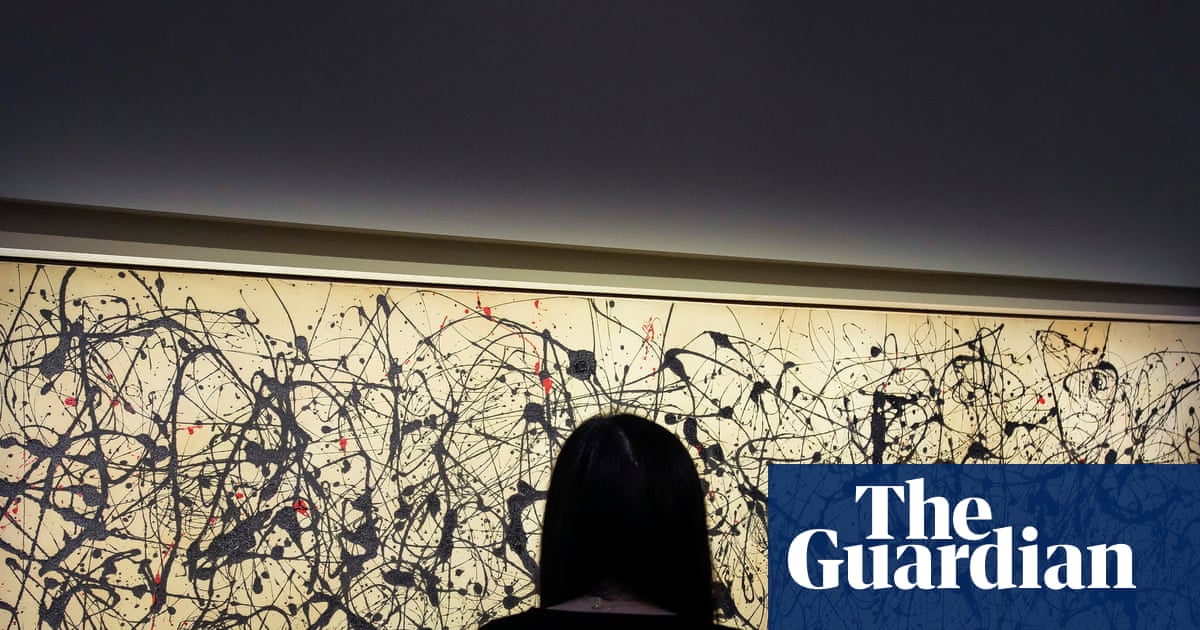
Jackson Pollock’s “Number 7A, 1948” Shatters Records at $181M Christie’s Auction: A New Benchmark in Modern Art
NEW YORK — In a landmark event that redefined the boundaries of modern art, Jackson Pollock’s masterpiece “Number 7A, 1948” achieved a staggering $181 million at Christie’s New York auction on May 19, 2026, establishing a new global benchmark for the artist and abstract expressionism. The sale, which concluded Christie’s Spring Marquee Week with a record-breaking $1.1 billion in total sales, underscores the enduring fascination with Pollock’s revolutionary drip-painting technique and the stratospheric valuation of 20th-century American art.
The auction not only eclipsed Pollock’s previous record—held by “No. 5, 1948”, which sold for $140 million in 2006—but also marked the highest price ever paid for a work by any American artist. The result surpassed expectations set by pre-auction estimates of $120–180 million, reflecting a bidding war among anonymous collectors and institutional buyers. Christie’s described the moment as “historic,” with the painting’s final price representing a 25% increase over its previous record.
This achievement comes amid a broader surge in high-value art sales, where works by Pollock, Mark Rothko, and Constantin Brancusi have collectively entered the $100 million+ club in recent auctions. The record sale coincides with a period of heightened interest in post-war American art, driven by both private collectors and museum acquisitions seeking to preserve cultural heritage in an era of economic volatility.
Why This Sale Matters: A Breakdown of the Record-Breaking Moment
Beyond the staggering price tag, the auction of “Number 7A, 1948” signals several pivotal developments in the art world:

- New Valuation Standard: Pollock’s work now holds the title of most expensive artwork by an American artist, surpassing even Rothko’s “Orange and Yellow” (sold for $107 million in 2023).
- Market Confidence: The sale reflects robust demand for modern masterpieces amid economic uncertainty, with buyers viewing art as a stable long-term investment.
- Institutional Impact: Museums and cultural institutions are increasingly competing with private collectors, driving up prices for works that can be acquired for public display.
- Legacy of Abstract Expressionism: Pollock’s technique—once controversial—is now celebrated as foundational to American art history, with his works commanding prices previously unthinkable.
- Global Art Market Trends: The auction aligns with a broader trend of record-breaking sales in 2026, including Brancusi’s “Bird in Space” (sold for $111 million) and a Rothko triptych (reportedly exceeding $100 million).
The Bidding War: Who Won the Pollock Masterpiece?
The identity of the buyer remains anonymous, a common practice in high-stakes art auctions where privacy is prioritized. However, industry insiders speculate that the purchaser is likely a high-net-worth individual or a consortium of collectors, given the painting’s size and the logistical challenges of private ownership. Christie’s auction house noted that the bidding was “exceptionally competitive,” with offers escalating rapidly in the final minutes.
Christie’s Spring Marquee Week: A $1.1 Billion Triumph
Christie’s Spring Marquee Week, which concluded on May 19, 2026, achieved unprecedented success with total sales exceeding $1.1 billion—a figure that underscores the auction house’s dominance in the global art market. The week featured not only Pollock’s record sale but also standout performances by other iconic artists:

- Constantin Brancusi: His “Bird in Space” sold for $111 million, reinforcing his status as one of the most valuable sculptors in history.
- Mark Rothko: A triptych from the artist’s late period reportedly surpassed the $100 million mark, joining Pollock and Brancusi in the elite tier of $100M+ artworks.
- Nicole Kidman’s Influence: While not a buyer, the actress’s presence at the auction—alongside other celebrities—added to the event’s high-profile allure, drawing media attention and potentially influencing bidding dynamics.
Christie’s CEO, Jasper Jolly, described the week as “a testament to the resilience and vibrancy of the art market,” noting that the sales reflected both historical significance and contemporary demand. The auction house attributed the success to a combination of strategic marketing, high-profile consignments, and the enduring appeal of modern masterpieces.
“This is not just a record for Jackson Pollock—it’s a record for the power of art to transcend time and capture the imagination of collectors worldwide.”
What Happens Next? The Future of “Number 7A, 1948”
The painting’s new owner now faces the challenge of preserving and displaying a work of such monumental scale and historical importance. While details remain private, industry experts suggest several possibilities:
- Private Collection: The buyer may opt to keep the painting in a dedicated gallery or climate-controlled environment, potentially opening it to public view through temporary exhibitions.
- Museum Loan: Some collectors enter into long-term agreements with museums to display their acquisitions, ensuring broader public access.
- Legacy Planning: Given the painting’s value, the owner may explore trusts or foundations to safeguard its future, ensuring it remains accessible to scholars and art enthusiasts.
Christie’s has not yet announced plans for a public exhibition of the work, but the auction house’s press team confirmed that they are in discussions with potential partners to explore future display opportunities. For now, the painting will undergo rigorous conservation to maintain its condition, a process that could take several months.
Expert Reactions: What the Record Sale Means for the Art World
Art historians and economists weighed in on the significance of the sale, offering diverse perspectives on its implications:
- Dr. Emily Carter, Curator of Modern Art at the Metropolitan Museum of New York, called the sale “a milestone that validates Pollock’s place in art history.” She noted that the price reflects not just the painting’s technical mastery but also its role in shaping 20th-century artistic movements.
- Richard Koss, Chairman of Christie’s Americas, emphasized the auction’s role in “democratizing access to art,” arguing that record sales often lead to increased donations to museums and cultural institutions.
- Economist Laura Chen, who specializes in art market trends, suggested that the sale indicates a “maturation of the market,” where even in economic downturns, high-value art remains a stable asset class.
Critics, however, caution against overvaluing the financial aspect of art. Professor Daniel Whitaker of Columbia University’s Art History Department warned that “while records are exciting, they should not overshadow the cultural and historical significance of the work itself.” He urged collectors to consider the broader impact of their purchases on art preservation and public access.
How to Stay Updated: Where to Find Official Information
For those interested in tracking the future of “Number 7A, 1948” or exploring other record-breaking art sales, the following resources provide reliable updates:

- Christie’s Official Website: For auction results, upcoming sales, and expert analyses.
- Artnet News: Comprehensive coverage of art market trends and record sales.
- The Guardian’s Art & Design Section: In-depth features on modern art and auction highlights.
- The New York Times Arts & Culture: Critical essays and market reports.
What’s Next for the Art Market?
With Christie’s Spring Marquee Week concluded, the art world now turns its attention to Sotheby’s Summer Sale in July, where additional modern masterpieces are expected to cross the auction block. Meanwhile, collectors and institutions will continue to monitor the impact of Pollock’s record sale on future valuations and acquisitions.
We invite our readers to share their thoughts: Does this record sale reflect the true value of art, or is it a symptom of speculative bubbles in the market? Join the conversation in the comments below or share this story with fellow art enthusiasts.
Worth a look