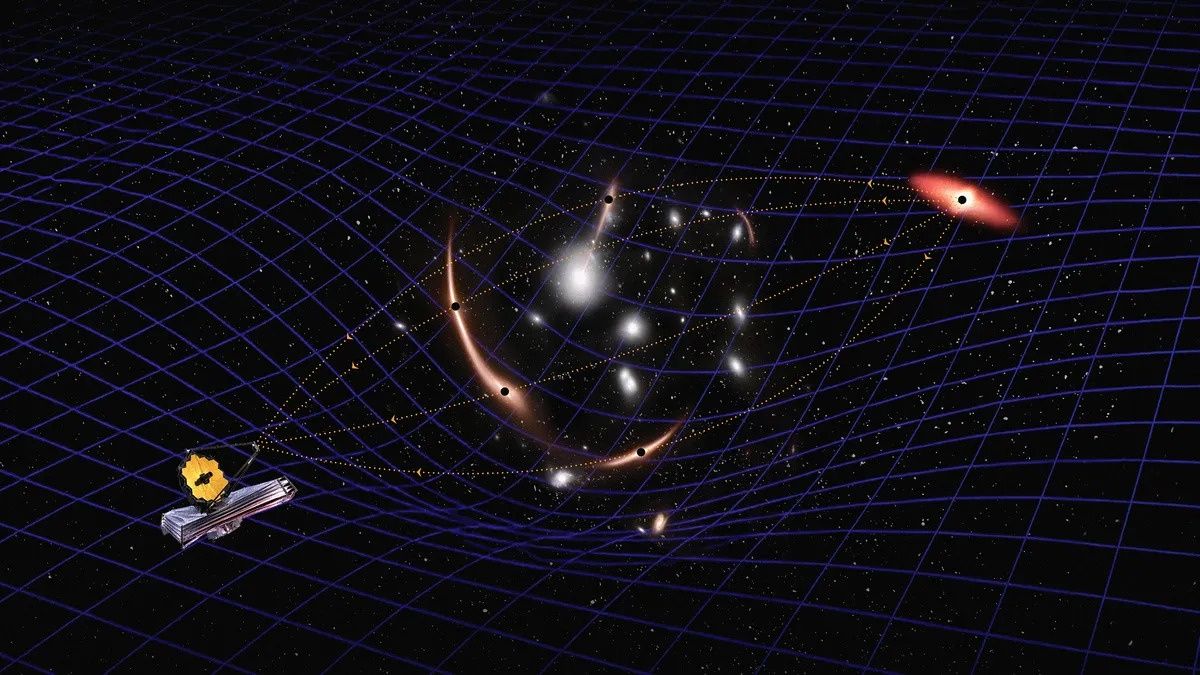
Astronomers have identified a truly massive entity at the edge of the observable universe, challenging our current understanding of how the cosmos evolved in its earliest stages. Using the James Webb Space Telescope (JWST), a global team of researchers has confirmed the existence of a record-breaking, dormant black hole that appears significantly larger than the galactic structures that surround it. This discovery of a massive, ancient black hole suggests that these gravitational titans may have played a more active role in shaping the early universe than previously theorized.
The core of this discovery centers on the galaxy GN-z11, located approximately 13.4 billion light-years away from Earth. According to findings published by the National Aeronautics and Space Administration (NASA), the black hole located at the heart of this galaxy is unexpectedly massive for its age, dating back to a time when the universe was only a few hundred million years old. This discovery forces astrophysicists to reconsider the standard models of black hole growth, which traditionally assume that these objects accumulate mass over billions of years through the slow accretion of surrounding gas and stars.
Challenging the Models of Cosmic Evolution
For decades, the standard cosmological model held that supermassive black holes grew steadily alongside their host galaxies. However, the data returned by the JWST indicates that the black hole in GN-z11 is roughly a million times the mass of our Sun. When we observe an object of this magnitude existing so soon after the Big Bang, the math simply does not align with conventional growth rates. As reported by the European Space Agency (ESA), this massive entity likely formed via a more rapid, direct collapse mechanism or began its life much larger than current theories account for.
This “dormant” state—meaning the black hole is not currently feeding on active, radiating matter in a way that creates a bright quasar—makes it even more difficult to detect. The telescope identified it by analyzing the spectral signatures of the surrounding gas, which revealed the characteristic “glow” of ionized atoms being pulled into a massive gravitational well. Unlike typical, active supermassive black holes that shine brilliantly across the spectrum, this object remains relatively quiet, yet its gravitational influence on the galaxy remains unmistakable.
Why the Size of Early Black Holes Matters
The primary scientific debate sparked by this observation concerns the “seeding” process of the early universe. If black holes were already massive just 400 million years after the Big Bang, it implies that the conditions of the early universe were far more conducive to the formation of high-density matter than we once believed. This discovery aligns with recent observations from other deep-field surveys, which have consistently hinted at the presence of “over-sized” black holes in the infant cosmos.

The implications are twofold. First, it suggests that the “seeds” from which these black holes grew were much larger than the remnants of individual dead stars, which are the typical building blocks of black holes in the modern universe. Second, it indicates that the relationship between a host galaxy and its central black hole was established much earlier than expected. Data from Nature highlights that this early co-evolution suggests black holes might actually act as catalysts for star formation, rather than just being passive consumers of galactic material.
What Happens Next in Deep Space Exploration
The scientific community is currently preparing for more targeted observations of GN-z11 and other similar candidates found in the early universe. The goal is to determine if this is an isolated anomaly or if the early universe was populated by a significant number of these “monsters.” Future observation cycles with the James Webb Space Telescope are expected to refine these mass estimates and provide higher-resolution data on the gas dynamics surrounding these objects.
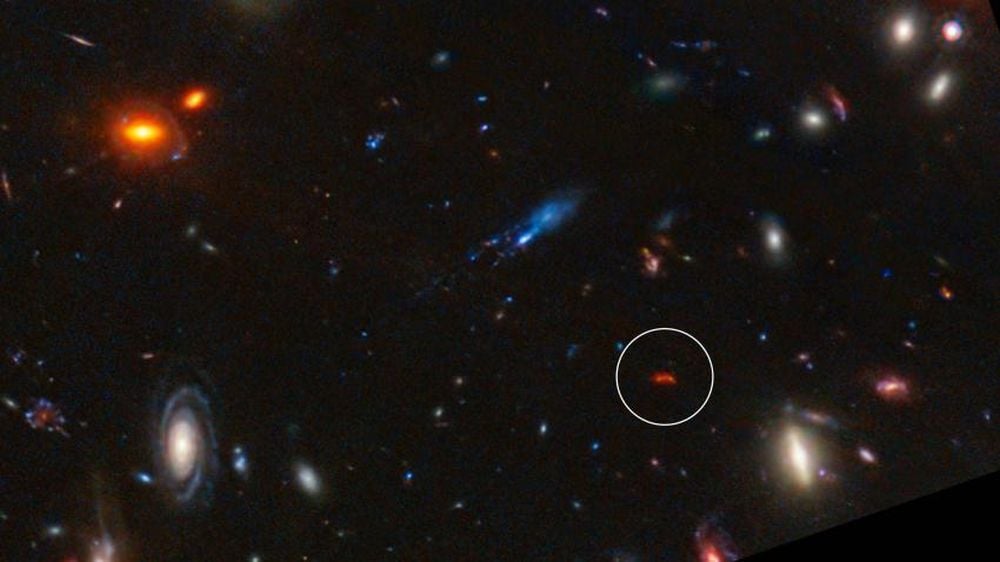
As we continue to peer into the “dark ages” of the universe, each new piece of data serves to test the limits of our standard models. Researchers are expected to present updated simulations of early galaxy formation at the upcoming American Astronomical Society meetings, where the focus will likely shift toward how these black holes might have influenced the reionization of the universe. The mission to understand the origins of these gravitational anomalies is far from over, and the data being collected today will likely define the next decade of astrophysical research.
We invite our readers to join the conversation regarding these cosmic mysteries. How do you think these findings change our understanding of the early universe? Share your thoughts in the comments below, and stay tuned to World Today Journal for the latest updates on deep space discoveries.
Keep reading
- Opinie: De tijd heelt alle wonden? Voor gen Z geldt die geruststelling niet meer – de Volkskrant
- 4. Update: Ein mutmaßlicher Tatverdächtiger konnte identifiziert werden. Nach bisherigen …
- SK Group Secures Massive AI Infrastructure Partnerships in San Francisco (archyworldys.com)
- NHL Trade Shakeup Looms: Blue Jackets at Center of Potential Massive Deal (archynewsy.com)