
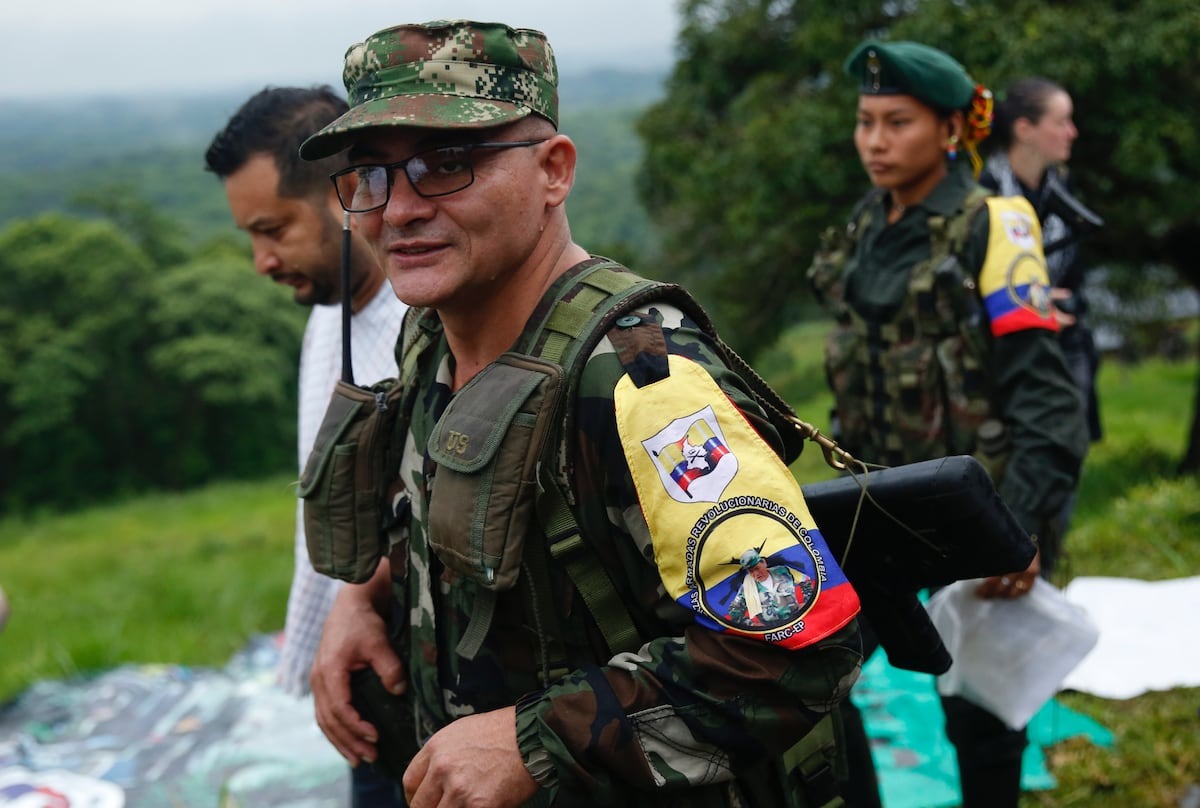
Colombian security forces have apprehended a high-ranking guerrilla leader, known as alias Mi Pez, who has been identified as one of the individuals responsible for a series of violent assaults in the southwest of the country. The capture marks a significant escalation in the government’s campaign to dismantle the criminal networks operating in the region, specifically those affiliated with the most wanted criminal in Colombia, Iván Mordisco.
The Colombian guerrilla leader arrest is closely linked to a devastating attack in Cajibío, Cauca, which resulted in the deaths of 20 people. Authorities have further connected alias Mi Pez to a massacre carried out on the Pan-American highway, highlighting a pattern of targeted violence against civilians in the southwest territories.
This operation is part of a broader, aggressive offensive by the National Police and military forces against the FARC dissidents led by Iván Mordisco. The capture of alias Mi Pez follows a string of high-profile arrests within Mordisco’s inner circle, signaling a concerted effort by the state to disrupt the command structure of this dissident faction.
Strategic Blow to the Mordisco Criminal Structure
The apprehension of alias Mi Pez is not an isolated event but part of a systemic crackdown on the structure overseen by Iván Mordisco. The Colombian government has intensified its focus on the southwest region, where dissident groups have increasingly utilized improvised explosive devices and targeted ambushes to exert control over local populations and transit routes.
The impact of these arrests is compounded by the recent capture of alias ‘José’, the brother of Iván Mordisco. In a lightning operation in Bogotá, security forces apprehended alias ‘José’, who is facing severe charges including aggravated homicide, kidnapping, and the illegal possession of firearms. This arrest represents the third brother of Mordisco to be captured within the current year, following another capture in 2025.
General William Oswaldo Rincón Zambrano, the director of the National Police, has emphasized that the state’s offensive will continue unabated. In a public statement, the General asserted that no individual is above the law, regardless of their family name or hiding place, stating that those who sow violence in the country will ultimately answer to the justice system.
The Cajibío Attack and Regional Instability
The violence in the department of Cauca has reached critical levels, exemplified by the attack in Cajibío where 20 people were killed. This event, alongside the massacre on the Pan-American highway, underscores the volatility of the region and the lethal nature of the FARC dissident operations.
The Pan-American highway, a vital artery for Colombian commerce and travel, has become a focal point for guerrilla activity. By targeting this route, groups affiliated with Iván Mordisco aim to disrupt state presence and intimidate both the local population and the national government. The arrest of alias Mi Pez is viewed by security analysts as a critical step in reducing the operational capacity of these groups to execute such large-scale civilian massacres.
Key Elements of the Security Offensive
- Targeted Command Capture: Focus on the immediate family and trusted lieutenants of Iván Mordisco to collapse the leadership hierarchy.
- Regional Focus: Prioritizing the southwest, particularly Cauca and the corridors surrounding the Pan-American highway.
- Legal Accountability: Moving rapidly from capture to formal charges of homicide and kidnapping to ensure judicial processing.
What This Means for Southwest Colombia
For the residents of Cauca and neighboring departments, the Colombian guerrilla leader arrest of alias Mi Pez offers a glimmer of hope for increased stability, though the region remains high-risk. The FARC dissidents have long exploited the rugged terrain of the southwest to maintain clandestine bases and launch attacks on civilians and security forces.
The capture of a leader responsible for the Cajibío massacre removes a key tactical coordinator from the field. However, the persistence of the Mordisco structure suggests that the conflict may shift toward smaller, more fragmented cells as the central leadership is eroded. The Colombian National Police continue to maintain a heavy presence in these areas to prevent retaliatory strikes following these high-profile captures.
The ongoing volatility is further complicated by the internal dynamics of the dissident groups, who often clash with other illegal armed actors over the control of drug trafficking routes and illegal mining operations in the southwest.
| Target | Location of Capture | Primary Allegations/Charges |
|---|---|---|
| Alias Mi Pez | Southwest Colombia | Cajibío attack (20 deaths), Pan-American highway massacre |
| Alias ‘José’ | Bogotá | Aggravated homicide, kidnapping, illegal weapons |
| Mordisco’s Brothers (2 others) | Various | Affiliation with FARC dissident criminal structure |
Next Steps in the Judicial Process
Following the capture of alias Mi Pez, Colombian authorities are expected to present the suspect before a judge to formalize charges related to the Cajibío attack and the Pan-American highway massacre. Intelligence gathered from these arrests is likely to be used to pinpoint the current location of Iván Mordisco, who remains the primary target of the national security apparatus.
The Colombian government has not yet announced a date for the next formal hearing, but officials have indicated that the evidence collected during the “lightning operations” will be central to the prosecution’s case.
World Today Journal will continue to monitor the legal proceedings and the security situation in Cauca. We invite our readers to share their perspectives on the regional stability of Colombia in the comments below.