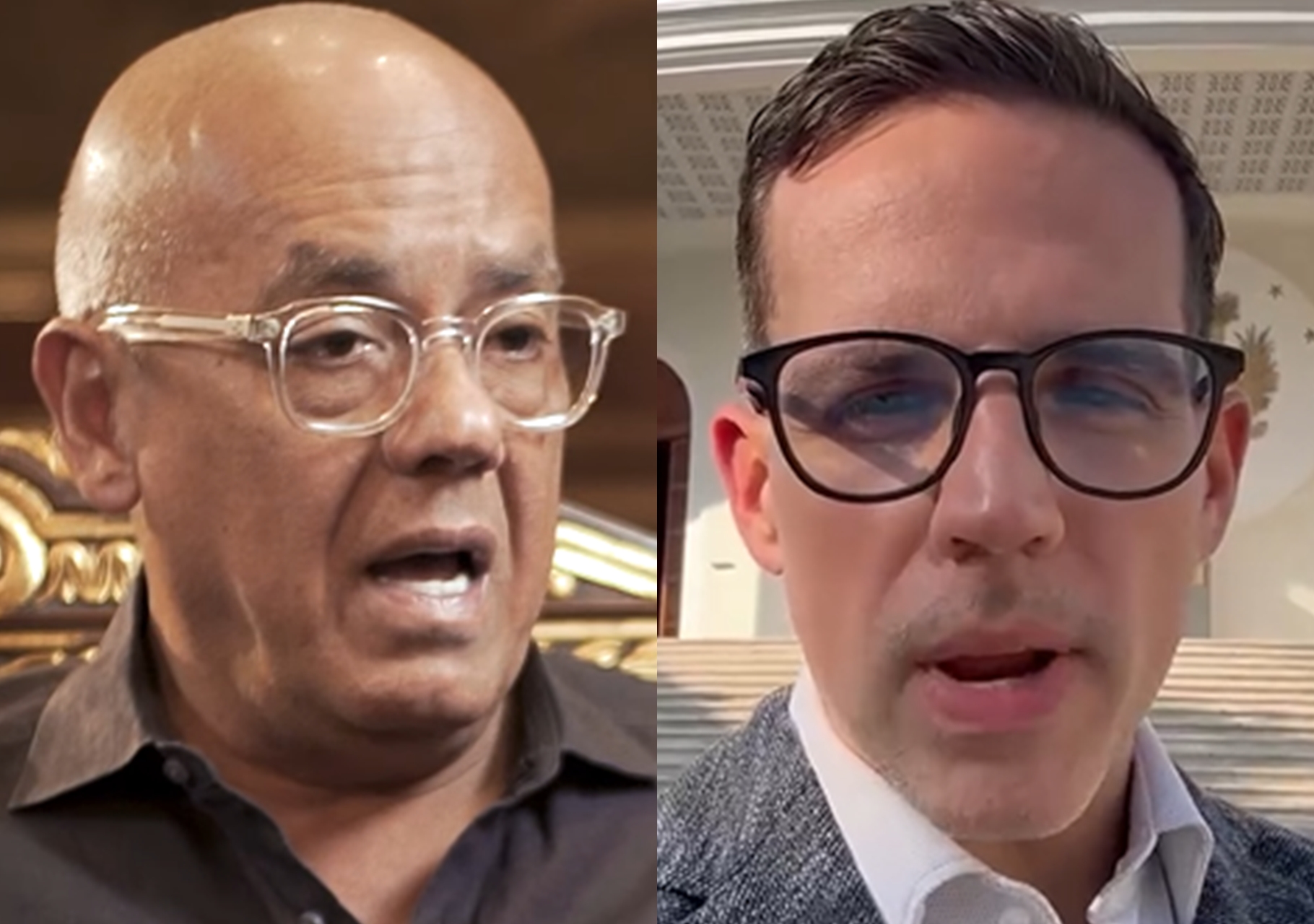
Caracas, Venezuela – Concerns over press freedom in Venezuela have been amplified following a recent exchange between a leading government official and a journalist, sparking condemnation from press organizations. The controversy stems from remarks made by Jorge Rodríguez, President of the National Assembly, regarding journalist Luis Olavarrieta and his recent interview with the high-ranking official. The incident underscores the ongoing challenges faced by journalists operating in a politically charged environment, where accusations of intimidation and pressure are frequently reported.
The dispute began after Olavarrieta publicly stated he felt apprehensive during his interview with Rodríguez. This admission prompted a sharp response from Rodríguez during a parliamentary session on Monday, March 9, 2026, where he questioned the journalist’s account and revealed details about pre-interview communications. The exchange has ignited a debate about the conditions under which journalists operate in Venezuela and the extent to which they can freely pursue their work without fear of reprisal. The core of the issue revolves around allegations of attempted pre-censorship and the broader climate of self-censorship that many Venezuelan journalists report experiencing.
Rodríguez’s Account of the Interview Request
During his address to the National Assembly, Rodríguez detailed the circumstances surrounding the interview request from Olavarrieta. He claimed the journalist approached him through an intermediary and, prior to the conversation, allegedly requested to review the questions and potentially modify certain terms, including the word “transition,” which Rodríguez described as a sensitive topic. According to Rodríguez, he rejected this request, asserting that Olavarrieta was free to ask any questions he desired. He characterized the journalist as a prominent opposition figure, using pointed language to suggest a political bias. Rodríguez stated, “I didn’t know there was a renowned opposition journalist who asked me for an interview through a friend. I didn’t know he was so famous in the opposition sphere, in the opposition universe, and even more famous in the extremist opposition planet.”
Rodríguez further referenced Olavarrieta’s subsequent comments about feeling fear during the interview, responding with the phrase, “Fear is free,” and criticizing what he termed “inflammatory rhetoric” within opposition circles. He also alluded to past events, specifically mentioning the 2007 closure of Radio Caracas Televisión (RCTV), claiming to possess evidence of conversations regarding the channel’s potential sale prior to the expiration of its broadcasting concession. The closure of RCTV in 2007, under the administration of Hugo Chávez, remains a contentious issue in Venezuelan media history, widely viewed as a demonstration of government control over media outlets. Reuters reported at the time that the government cited national security concerns as the reason for not renewing RCTV’s license.
Olavarrieta’s Response and Concerns About Press Freedom
Following the publication of the interview, Luis Olavarrieta appeared on the program “Factores de Poder,” hosted by Patricia Poleo, to provide context regarding his conversation with Rodríguez. He explained that his decision to proceed with the interview was motivated by a desire to address sensitive issues concerning the state of journalism and media in Venezuela. Olavarrieta emphasized that he approached the interview with caution, citing previous experiences that had negatively impacted his professional life. He revealed that past interviews had resulted in job losses, financial hardship, and even the necessitate to leave the country.
“I was very fearful, I was scared, because I have lived many events over the past 10 years that people don’t know,” Olavarrieta stated. “There are interviews I have published on my channel that have been more than uncomfortable, they have cost me a lot. Beyond freedoms, they have cost me jobs, economic profitability, leaving the country and other matters that I prefer to keep private.” He also mentioned receiving supportive calls from other media owners, including Marcel Granier, who reportedly congratulated him on raising essential concerns about the challenges facing the press in Venezuela. Marcel Granier is the owner of Globovisión, a privately owned television station in Venezuela that has often been critical of the government.
National College of Journalists Condemns Rodríguez’s Remarks
The Colegio Nacional de Periodistas (National College of Journalists), Caracas section, swiftly condemned Rodríguez’s statements, defending the right of journalists to carry out their work without pressure or personal attacks. Through a post on X (formerly Twitter), the organization criticized the official’s remarks and emphasized the importance of respecting the integrity of communicators and the freedom of expression. “The debate of ideas should not lead to disqualifications that violate the integrity of communicators and the free exercise [of journalism],” the college stated in its publication. This response highlights the growing concern within the Venezuelan journalistic community regarding the safety and independence of the press.
The condemnation from the Colegio Nacional de Periodistas reflects a broader pattern of concerns regarding press freedom in Venezuela. International organizations, such as Reporters Without Borders, have consistently ranked Venezuela low in its Press Freedom Index, citing censorship, intimidation, and violence against journalists. Reporters Without Borders’ 2023 World Press Freedom Index places Venezuela at 156 out of 180 countries, classifying the situation as “very bad.” The organization notes that the Venezuelan government maintains a tight grip on information and that journalists who criticize the government often face harassment, threats, and legal challenges.
The Broader Context of Media Control in Venezuela
The recent exchange between Rodríguez and Olavarrieta is not an isolated incident but rather part of a larger pattern of government control over the media landscape in Venezuela. Over the years, the Venezuelan government has implemented various measures to restrict press freedom, including the use of state-controlled media outlets to disseminate propaganda, the imposition of strict regulations on private media, and the use of legal mechanisms to silence critical voices. The closure of RCTV in 2007 served as a stark warning to other independent media outlets, and many journalists have been forced to self-censor or leave the country to avoid persecution.
the economic crisis in Venezuela has exacerbated the challenges faced by the media. Many independent media outlets have struggled to survive due to hyperinflation, shortages of essential supplies, and a lack of advertising revenue. This economic pressure has made it even more difficult for journalists to operate independently and hold the government accountable. The situation is further complicated by the increasing use of social media as a platform for disseminating information, which has also become a target for government censorship and control.
The incident also raises questions about the role of self-censorship in Venezuelan journalism. Many journalists report feeling compelled to avoid certain topics or frame their reporting in a way that avoids antagonizing the government. This self-censorship can have a chilling effect on the quality and diversity of information available to the public, undermining the principles of a free and independent press.
The recent statements by Jorge Rodríguez and the subsequent response from the Colegio Nacional de Periodistas underscore the ongoing struggle for press freedom in Venezuela. As the country continues to grapple with political and economic challenges, the ability of journalists to report freely and without fear of reprisal will be crucial for ensuring transparency, accountability, and informed public discourse.
Looking ahead, the situation requires continued monitoring and advocacy from international organizations and press freedom groups. The Venezuelan government must take concrete steps to protect the rights of journalists and ensure that they can operate without fear of intimidation or persecution. The ability of the press to function freely is essential for the health of any democracy, and Venezuela is no exception.
Next Steps: The National Assembly is scheduled to debate a new media law in the coming weeks, which could further impact press freedom in the country. World Today Journal will continue to monitor developments and provide updates as they become available.
What are your thoughts on this developing story? Share your comments below and help us spread awareness about the importance of press freedom.
Related reading
- UAE and Serbia Discuss Strengthening Comprehensive Strategic Partnership
- Catalan Gypsy Rumba: UNESCO Bid Highlights French Paradox
- Seattle Police Chief Shon Barnes Cancels Interview Amid Travel Controversy (time.news)
- 7.1 Magnitude Earthquake in Southwest Japan Claims At Least 30 Lives (newsdirectory3.com)