
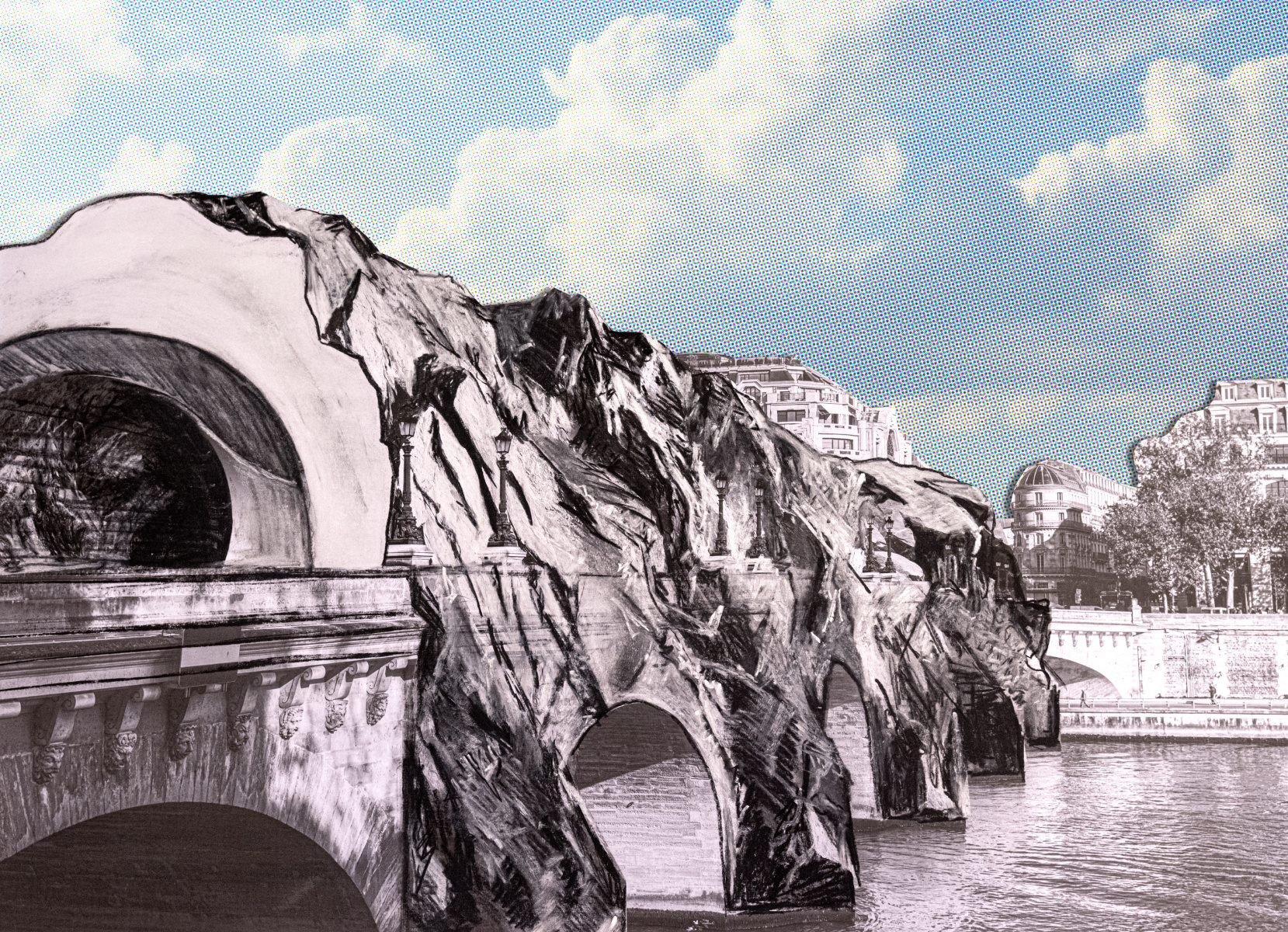
The Pont Neuf, Paris’ oldest standing bridge, became the site of a temporary, large-scale public art installation in May 2021 when the French artist known as JR transformed the structure with a monumental trompe l’oeil work. The installation, which depicted a massive, snow-capped mountain range appearing to drop into a deep, rocky abyss, covered the bridge’s iconic stonework and provided a 24-hour visual illusion for pedestrians and river commuters alike. According to official reports from the City of Paris, the project was designed to animate the urban landscape following the extended closures and social restrictions implemented during the COVID-19 pandemic.
The Mechanics of the Illusion
The installation relied on a technique known as anamorphosis, where an image is distorted to appear three-dimensional only when viewed from a specific vantage point. JR, whose real name is Jean René, utilized large-format photographic prints to wrap sections of the bridge, creating the appearance of a geological chasm beneath the feet of those crossing the Seine. As noted by The Guardian, the artwork was crafted to be interactive, allowing members of the public to walk directly into the “cave” and take photographs that made them appear as though they were hanging over a precipice. The project required precise engineering to ensure the scaffolding and adhesive materials did not damage the historic limestone of the bridge, which dates back to its inauguration in 1607.

Public Art and Urban Recovery
This intervention was part of a broader effort by the Parisian municipal government to revitalize public spaces and encourage foot traffic in the city center after months of limited tourism and lockdowns. The City of Paris confirmed that the installation was authorized as a temporary cultural event intended to offer a moment of “escapism” for residents. By turning a historic landmark into an immersive set, the project highlighted the role of large-scale, accessible art in urban planning. Reports from Reuters indicated that the installation remained on view for several weeks, serving as a prominent backdrop for locals who were beginning to return to the streets of the capital in late spring of 2021.
Historical Context of the Pont Neuf
Despite its name, which translates to “New Bridge,” the Pont Neuf remains the oldest stone bridge in Paris. Construction began in 1578 under the reign of King Henry III and was completed in 1607 under Henry IV. The structure is recognized as a Monuments Historiques, a classification managed by the French Ministry of Culture that protects the site from structural alterations. JR’s installation was temporary, and upon its removal, the bridge was restored to its original state, adhering to the strict conservation requirements mandated for such heritage sites. The project stands as a notable example of contemporary street art interacting with 17th-century architecture, bridging the gap between historical preservation and modern cultural expression.
Why Temporary Installations Matter
The use of ephemeral art in historic districts serves as a strategy for cities to engage with modern audiences without permanently altering protected landmarks. Urban planners often utilize such projects to test how pedestrians interact with public thoroughfares, providing data on traffic flow and space utilization. The Pont Neuf project, by creating a “walkthrough” experience, effectively turned a transit point into a destination. According to archives maintained by the Paris Convention and Visitors Bureau, such temporary exhibitions have historically been used to celebrate cultural anniversaries or to highlight the city’s commitment to artistic innovation during periods of social transition.
The installation was dismantled in June 2021, and the bridge has since returned to its standard operation as a central artery for Parisian traffic. No further large-scale modifications to the structure’s facade have been announced by the City of Paris as of late 2024. For updates on current cultural programming in the city, residents and visitors are encouraged to check the official Paris Culture portal for ongoing exhibits and public art initiatives. Readers are invited to share their thoughts on the integration of modern art into historic urban environments in the comments section below.
Worth a look