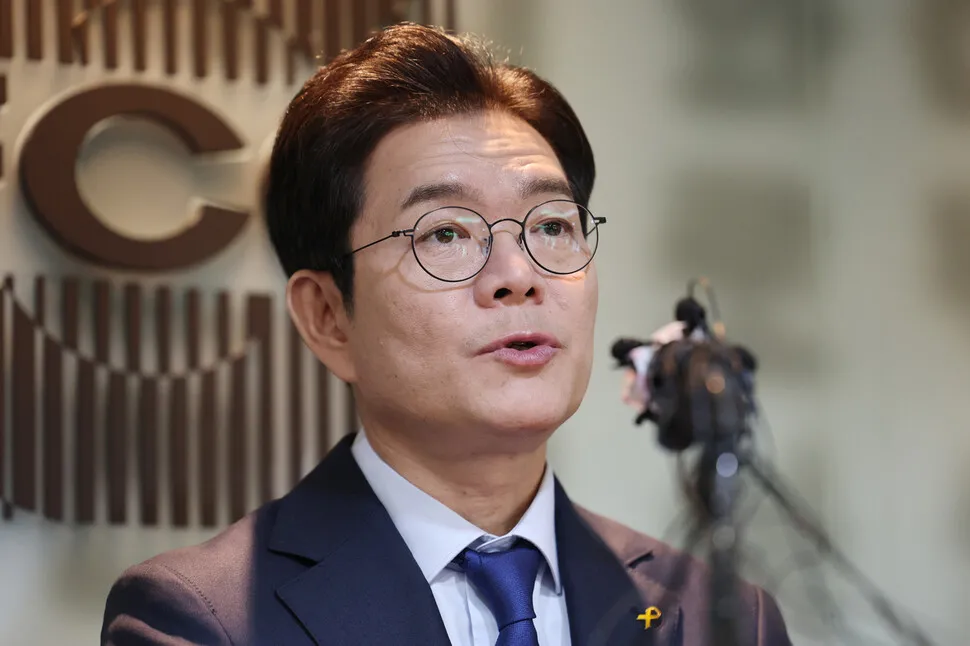
In a sweeping vision for the future of South Korea’s capital, Jung Won-oh, the Democratic Party candidate for Seoul Mayor, has outlined an ambitious roadmap to elevate the city into a “Global G-2 City” whereas pledging a commitment to equal civic rights. Speaking on Thursday, April 16, 2026, at a press conference hosted by the Seoul Foreign Correspondents’ Club (SFCC) at the Korea Press Center in Jung-gu, Jung positioned Seoul as a direct peer to New York City in terms of global influence and economic dynamism .
The candidate’s remarks touched upon two distinct but critical pillars of urban governance: the promotion of inclusive human rights and the aggressive pursuit of global economic competitiveness. While his economic plans focus on structural incentives to attract international firms, his stance on social issues—specifically the contentious use of Seoul Plaza for the Seoul Queer Culture Festival—emphasized transparency and fairness in municipal administration .
For a global audience watching the trajectory of East Asian urban centers, Jung’s proposal suggests a shift toward a more open, diplomatically active Seoul that seeks to bridge the gap between the three major capitals of Northeast Asia. By integrating cultural soft power with hard economic incentives, Jung aims to transform Seoul from a regional hub into a primary global destination for innovation and diversity.
Human Rights and the Seoul Plaza Dispute
One of the most pointed moments of the SFCC gathering occurred when Jung was questioned on whether he would permit the Seoul Queer Culture Festival to use Seoul Plaza. The issue has remained a flashpoint in city politics, as the Seoul municipal government denied the festival’s applications to use the plaza in 2023 and 2024, forcing the event to move to the Namdaemun area in Jung-gu .

Jung responded with a principle of equity, stating, “Equal opportunities should be given to all citizens.” While he stopped short of an immediate guarantee of permit approval, he criticized the current lack of transparency regarding why the festival has been barred from the city’s central square. Jung noted that because the specific reasons for the denials have not been publicly disclosed, it is currently difficult to determine if the restrictions constitute discrimination .
The candidate pledged that if elected mayor, he would review the administrative processes governing the use of public spaces. He reiterated that “all citizens have equal rights,” suggesting that the criteria for granting access to Seoul Plaza must be applied consistently and without bias .
The Roadmap to a ‘Global G-2 City’
Beyond social policy, Jung Won-oh presented an aggressive economic blueprint designed to place Seoul on par with New York City. He cited the organic success of neighborhoods like Seongsu-dong—now a “hot place” for international travelers—as a scalable model that can be expanded across the entire city to create a “G-2” urban status .

Central to this economic strategy is the creation of four major special zones located in Yongsan, Hongneung, Yangjae and Guro/Gasan. Jung intends to use these zones to attract global innovative companies by offering significant incentives, including corporate tax cuts and family visa benefits .
When asked how he would handle corporate tax cuts—a matter typically under the jurisdiction of the central government—Jung explained that he would pursue a “Special Zone Act” (특구법). He emphasized his position as a candidate of the ruling party, asserting that as mayor and a member of the State Council, he would be uniquely positioned to collaborate closely with the national government to implement these legislative changes .
Jung proposed expanding Seoul’s urban core. In addition to the existing three major centers—Gwanghwamun, Gangnam, and Yeouido—he plans to establish two new innovation hubs in the Cheongnyangni-Wangsimni and Sinchon-Hongdae areas to decentralize economic growth and foster localized innovation .
Reviving ‘BeSeTo’ Shuttle Diplomacy
In a move to strengthen regional stability and cultural exchange, Jung announced his intention to restore “BeSeTo” shuttle diplomacy. Named after the capitals of Beijing, Seoul, and Tokyo, this cooperation framework was established in 1993 and remained active through the 2010s before stalling due to geopolitical tensions and the COVID-19 pandemic .
Jung envisions the revival of BeSeTo as a means to establish Seoul as the “K-culture capital” and a primary content platform for the three East Asian nations. This diplomatic push is not limited to cultural exports; Jung also proposed a “Green City Alliance” under the BeSeTo framework, focusing on joint efforts toward climate action and carbon neutrality .
Key Takeaways from Jung Won-oh’s Vision
- Civic Rights: Pledges “equal opportunity” for all citizens regarding the use of Seoul Plaza, promising to investigate the reasons behind the Seoul Queer Culture Festival’s permit denials.
- Economic Zones: Proposes four special zones (Yongsan, Hongneung, Yangjae, Guro/Gasan) with corporate tax cuts and visa benefits to attract global firms.
- Urban Expansion: Plans to add two new innovation hubs (Cheongnyangni-Wangsimni and Sinchon-Hongdae) to the city’s existing three major business districts.
- Regional Diplomacy: Aims to restore the 1993 BeSeTo (Beijing-Seoul-Tokyo) shuttle diplomacy to promote K-culture and a “Green City Alliance” for carbon neutrality.
- Global Status: Sets a goal to develop Seoul a “Global G-2 City” alongside New York.
As the campaign progresses, the feasibility of Jung’s “Special Zone Act” and his ability to navigate the complexities of tri-city diplomacy will likely be under intense scrutiny. His approach suggests a candidate attempting to balance the progressive values of the Democratic Party with a pragmatic, business-centric vision for urban growth.
The next major checkpoints for the Seoul mayoral race will include the detailed unveiling of the candidate’s legislative strategy for the proposed special zones and further clarification on the administrative guidelines for public space usage.
World Today Journal encourages readers to share their thoughts on Seoul’s potential as a G-2 city in the comments below.
Keep reading