
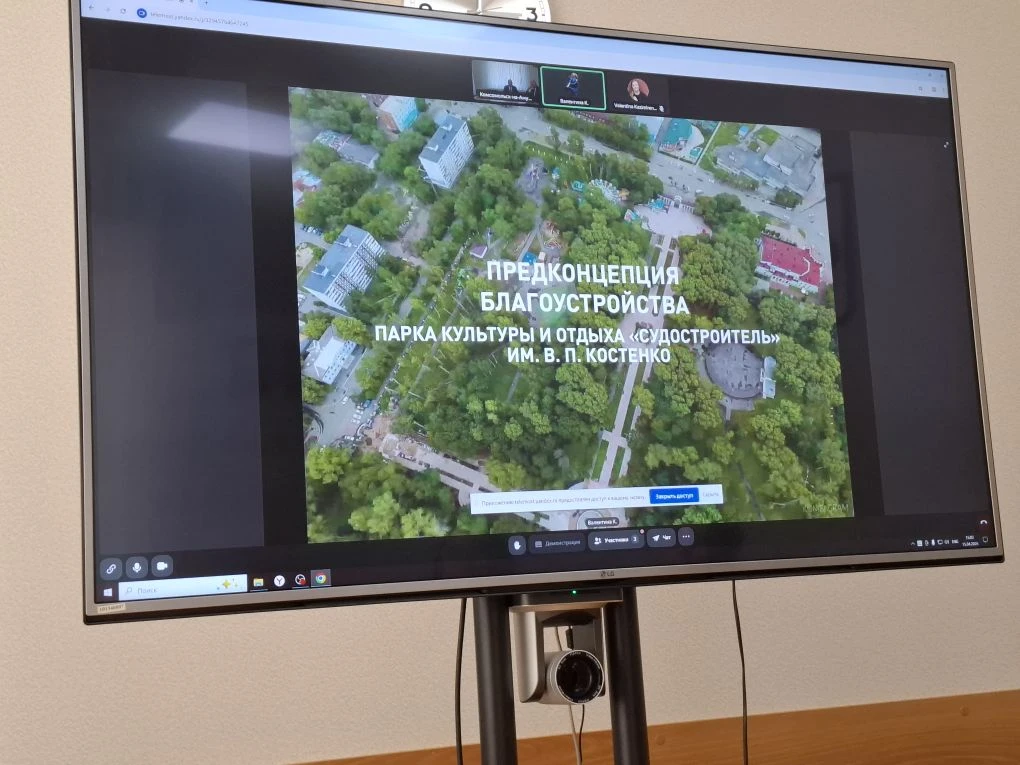
In the Russian Far East, residents of Komsomolsk-on-Amur have been presented with a conceptual plan for the redevelopment of Shipbuilder Park (Судостроитель), a green space long associated with the city’s industrial heritage and community life. The proposal, unveiled during a public presentation in late 2023, emerged from an extensive participatory process designed to incorporate local input into the park’s future layout and amenities. According to regional media reports, the initiative included two public surveys, a creative competition, a project seminar and a design game involving architects, urban planners, and citizens.
The concept aims to modernize the park whereas preserving its historical character, reflecting broader trends in Russian urban revitalization that emphasize community engagement and sustainable design. Shipbuilder Park, located near the Amur Shipbuilding Plant — a cornerstone of the city’s economy since the Soviet era — has served as a recreational hub for generations of factory workers and their families. Its redevelopment is part of a larger municipal effort to improve public spaces in Komsomolsk-on-Amur, a city of approximately 250,000 people in Khabarovsk Krai.
Local officials stated that the feedback collected through surveys and workshops highlighted residents’ desires for improved lighting, accessible pathways, children’s play areas, and spaces for cultural events. The design game, a participatory tool increasingly used in Russian urban planning, allowed participants to manipulate physical models of park elements to express preferences for layout, vegetation, and functionality. Such methods are aligned with guidelines promoted by the Ministry of Construction, Housing and Utilities of the Russian Federation, which encourages inclusive planning in federal urban improvement programs.
While the specific budget and timeline for the Shipbuilder Park redevelopment have not been publicly disclosed in verified sources, similar projects under the “Comfortable Urban Environment” federal program typically range from 50 to 150 million rubles, depending on scope and scale. This initiative, launched in 2017, has funded thousands of public space upgrades across Russia, including parks, embankments, and recreational zones in regional centers like Khabarovsk, Vladivostok, and Yakutsk.
Officials from the Khabarovsk Krai Ministry of Construction have emphasized that public participation is a mandatory stage in projects receiving federal co-financing. In Komsomolsk-on-Amur, the administration reported that over 1,200 residents participated in the initial surveys, with additional engagement through school workshops and online forums. The creative competition, which invited submissions from local artists and students, reportedly received more than 80 entries focused on themes of shipbuilding, river life, and industrial pride.
The winning concepts from the competition were integrated into the final design proposal, which features a central promenade lined with interpretive panels detailing the history of the Amur Shipbuilding Plant and its role in constructing naval and civilian vessels for the Russian fleet. Proposed amenities include outdoor fitness equipment, a small amphitheater for performances, and designated zones for seasonal markets and winter ice skating — adaptations responsive to the region’s harsh continental climate.
Environmental considerations as well shaped the plan, with proposals to retain mature trees, introduce native shrubbery suited to the Amur River basin, and install permeable paving to manage stormwater runoff. These elements reflect growing attention to ecological resilience in Russian urban planning, particularly in flood-prone areas near major rivers. The Amur River, one of the longest in Eurasia, has seen fluctuating water levels in recent years, prompting increased scrutiny of riverside infrastructure.
Urban planners involved in the seminar noted that the park’s proximity to residential neighborhoods and industrial zones presents both opportunities and challenges. While the site offers a valuable green corridor for workers and families, any redevelopment must account for noise, air quality, and access limitations tied to the active shipyard. Mitigation strategies discussed included vegetative buffers and timed access to certain zones during shift changes.
As of early 2024, the conceptual design remains under review by municipal authorities and the regional architectural council. No construction permits have been issued, and officials have not announced a definitive start date for operate. Residents seeking updates are advised to monitor the official website of the Komsomolsk-on-Amur City Administration or attend public hearings hosted by the Khabarovsk Krai Committee for Architecture and Urban Planning.
The Shipbuilder Park project exemplifies a shift toward more democratic and context-sensitive urban development in Russia’s regions, where top-down planning is increasingly supplemented by grassroots input. Similar processes have been observed in cities like Nizhny Novgorod, where park renovations incorporated veteran memorials and local folklore, and in Kazan, where Tatar cultural motifs were integrated into riverside promenades following public consultations.
For now, the concept stands as a vision shaped by collective imagination — one that seeks to honor Komsomolsk-on-Amur’s identity as a city built on labor, engineering, and the rhythms of the Amur River. Whether the final realization matches the presented designs will depend on funding, administrative timelines, and continued community oversight.
As the city awaits the next official update on the park’s redevelopment, residents and observers alike are encouraged to engage with ongoing dialogues about public space, memory, and the future of industrial cities in Russia’s Far East.
Have thoughts on the Shipbuilder Park proposal or experiences with urban renewal in your community? Share your perspective in the comments below or join the conversation on social media using #ShipbuilderPark. Your voice helps shape the cities we live in.