
For millions of people worldwide, the progression of osteoarthritis or the aftermath of severe joint injury leads to a common, debilitating reality: the loss of mobility. When conservative treatments—such as physical therapy, weight management, and anti-inflammatory medications—no longer provide relief, total knee arthroplasty (TKA), commonly known as total knee replacement, becomes a life-altering option. While the surgery is one of the most successful procedures in modern orthopedics, the difference between a “functional” knee and a “natural-feeling” knee often comes down to two critical surgical decisions: ligament balancing and implant selection.
Achieving a successful outcome in knee replacement is not merely about replacing worn-out cartilage with metal and plastic. It is a sophisticated exercise in mechanical engineering and biological harmony. The surgeon must ensure that the prosthetic joint mimics the complex kinematics of a human knee, which requires precise tensioning of the surrounding soft tissues. If the ligaments are too tight, the joint feels stiff and the range of motion is limited; if they are too loose, the knee becomes unstable, increasing the risk of the implant loosening over time.
As medical innovation advances, the focus has shifted from simply achieving “straight” alignment to achieving “balanced” alignment. This nuance is central to the current discourse among orthopedic specialists, who emphasize that the success of an operation is heavily dependent on how well the surgeon manages the tension of the collateral ligaments and matches the implant design to the patient’s unique anatomy.
The Critical Role of Ligament Balancing in Joint Stability
The knee is not a simple hinge; it is a complex joint that involves rolling, gliding, and rotating. This movement is governed by a network of ligaments, including the medial collateral ligament (MCL) and the lateral collateral ligament (LCL), which provide stability against side-to-side movement. During a total knee replacement, the removal of bone and cartilage alters the tension of these ligaments.
Ligament balancing is the surgical process of adjusting these soft tissues to ensure that the “gap” between the femoral and tibial components is equal and stable throughout the entire range of motion—from full extension (straight leg) to deep flexion (bent leg). When a knee is properly balanced, the prosthetic joint distributes weight evenly across the surface of the polyethylene insert, which significantly reduces the risk of premature wear and tear.
Research indicates that a balanced knee contributes to improved postoperative alignment and stability, which are primary indicators of long-term prosthetic survival. Failure to achieve this balance can lead to “mid-flexion instability,” a condition where the patient feels the knee “give way” or shift during activities like walking or climbing stairs. By meticulously releasing tight ligaments or adjusting bone cuts, surgeons can create a joint that feels more stable and allows for a more natural gait.
Implant Selection: Matching Hardware to Anatomy
Not all knee prostheses are created equal. One of the most pivotal decisions a surgeon makes is selecting the specific type of implant based on the state of the patient’s remaining ligaments, particularly the posterior cruciate ligament (PCL).
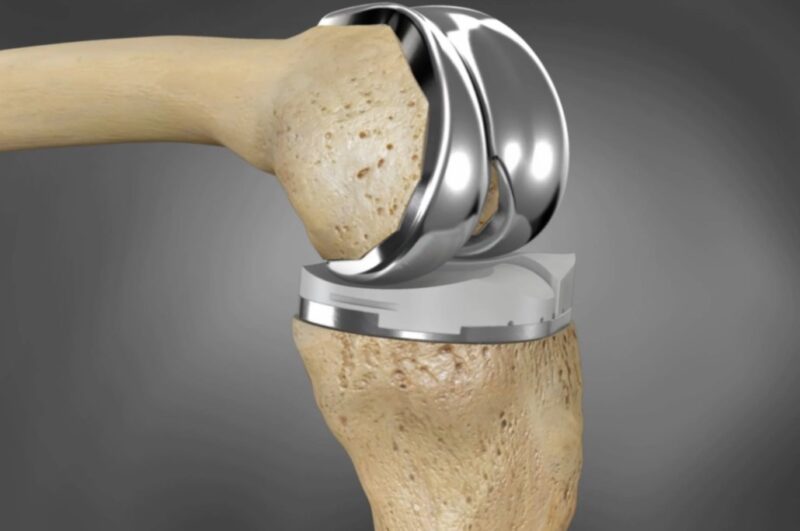
You’ll see two primary philosophies in implant design: Cruciate-Retaining (CR) and Posterior-Stabilized (PS).
- Cruciate-Retaining (CR) Implants: These are designed for patients whose PCL is still healthy and functional. By preserving the PCL, the surgeon maintains a more natural “roll-back” of the femur on the tibia during bending, which some patients find feels more like their original knee.
- Posterior-Stabilized (PS) Implants: If the PCL is damaged or removed during surgery, a PS implant is used. These prostheses feature a mechanical “cam-and-post” system that replaces the function of the PCL, providing the necessary stability to prevent the femur from sliding forward during flexion.
The choice between CR and PS implants is not universal; it depends on the patient’s bone quality, the degree of deformity, and the integrity of the soft tissues. Selecting the wrong implant for a specific anatomical profile can lead to instability or a restricted range of motion, highlighting why a personalized approach to implant selection is essential for surgical success.
Factors That Determine Surgical Success
While the hardware is important, the success of a knee replacement is the result of a synergy between surgical precision, implant technology, and postoperative recovery. Several key factors influence whether a patient returns to a high level of function.
Precision Alignment: For decades, the gold standard was “mechanical alignment,” aiming for a perfectly straight leg. However, many surgeons are now moving toward “kinematic alignment,” which seeks to restore the patient’s original constitutional alignment. This approach acknowledges that not everyone’s knee is naturally perfectly straight and aims to reduce the “stiff” feeling often reported after traditional TKA.
Soft Tissue Management: The ability of a surgeon to perform “selective releases”—small, precise cuts to specific ligaments—can mean the difference between a knee that reaches 120 degrees of flexion and one that stops at 90 degrees. This precision is what allows patients to return to activities like cycling or gardening.
Patient-Specific Factors: Factors such as Body Mass Index (BMI), diabetes, and smoking status can affect the healing process and the longevity of the implant. High-authority medical guidelines emphasize that preoperative optimization—managing blood sugar and improving muscle strength through “pre-habilitation”—can significantly improve outcomes according to the American Academy of Orthopaedic Surgeons.
Comparison of Implant Types
| Feature | Cruciate-Retaining (CR) | Posterior-Stabilized (PS) |
|---|---|---|
| PCL Status | Preserved | Removed/Replaced |
| Stability Mechanism | Natural Ligament | Mechanical Cam-and-Post |
| Feel | Often described as more “natural” | Highly stable, consistent |
| Indication | Healthy PCL, mild deformity | Damaged PCL, severe deformity |
What In other words for the Patient
For the patient, these technical details translate into the quality of their daily life. A “successful” surgery is no longer defined simply by the absence of pain, but by the restoration of function. When ligament balancing is executed correctly and the implant is matched to the anatomy, patients experience less postoperative swelling, a faster return to walking, and a higher degree of satisfaction with the “feel” of the joint.

It is also important for patients to understand that the surgery is only half of the equation. The most precisely balanced knee can still fail if the patient does not adhere to a rigorous physical therapy regimen. Postoperative exercise is required to maintain the range of motion that the surgeon created in the operating room and to strengthen the quadriceps and hamstrings, which provide the dynamic stability the ligaments once offered.
The Future of Knee Arthroplasty
The field is moving toward even greater personalization. Robotic-assisted surgery is becoming more prevalent, allowing surgeons to map the patient’s unique anatomy in 3D before the first incision is made. These systems can provide real-time feedback on ligament tension during the operation, reducing the reliance on manual “feel” and increasing the predictability of the balance.
the development of new materials for the polyethylene liner is extending the lifespan of these implants. While older prostheses often lasted 15 to 20 years, newer materials and better balancing techniques are pushing that window further, reducing the need for complex revision surgeries in younger, more active patients.
As we look toward the next decade of orthopedic care, the integration of AI-driven planning and patient-specific implants promises to further refine the balance between mechanical stability and biological fluidity.
For those considering a knee replacement, the most important step is a detailed consultation with an orthopedic surgeon to discuss the state of their ligaments and the specific implant options that fit their lifestyle and anatomy. Understanding these factors allows patients to be active participants in their surgical journey.
The next major milestone in the field will be the release of updated clinical guidelines regarding kinematic alignment, which are expected to further standardize how surgeons approach individual anatomy to improve patient satisfaction scores.
Do you or a loved one have experience with knee replacement? We invite you to share your recovery journey or ask questions in the comments below to help others navigating this process.
Worth a look